

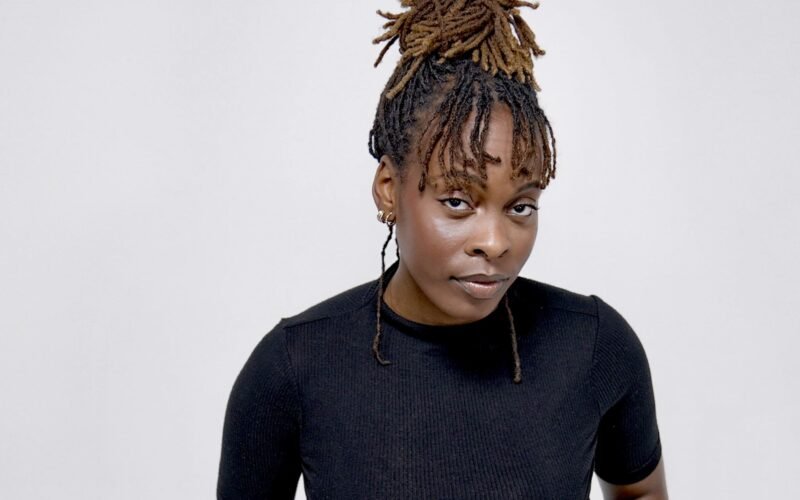
IndieWrap spoke with Chieke about drawing from her own creative journey, using comedy as a “Trojan horse” for heavier conversations, collaborating with her cast and cinematographer Wren Rene, and the ideas of love, reconciliation, and authenticity that continue to shape her work.
Food for the Soul explores the tension between personal happiness and familial expectations through the lens of a Nigerian-American and Black American relationship. How did your own experiences shape the emotional truth of Ada’s journey, and where did you consciously allow fiction to take over?
In many ways, becoming a full-time filmmaker and artist was a result of telling this story. It’s kind of meta, but as I did the work of developing the project, Ada and I became more and more alike. The journey I imagined for her pushed me to pursue the creative life I had always wanted for myself. Fiction took over in her family dynamics. Unlike Ada, I come from a pretty open-minded and multiethnic Black family, so I had to lean more into the experiences of my broader community and the cultural norms I observed growing up.
The film balances comedy with deeply personal conversations about identity, culture, and generational expectations. Why was humor the right vehicle to explore subjects that can often be emotionally heavy or even painful?
When I give my four-year-old niece cough medicine, sometimes I’ll mix it into juice so she’ll finish it. Just like the juice, I think comedy can act as a buffer that helps us receive. The topics we’re exploring in Food for the Soul are actually pretty heavy and deeply rooted in colonial trauma, so I wanted to use comedy as a kind of Trojan horse to invite people into those conversations. Once we’ve laughed together, we’re often more open to asking harder questions: How do our biases impact our ability to heal? What do we need from one another? What does repair look like? How do we become more whole?
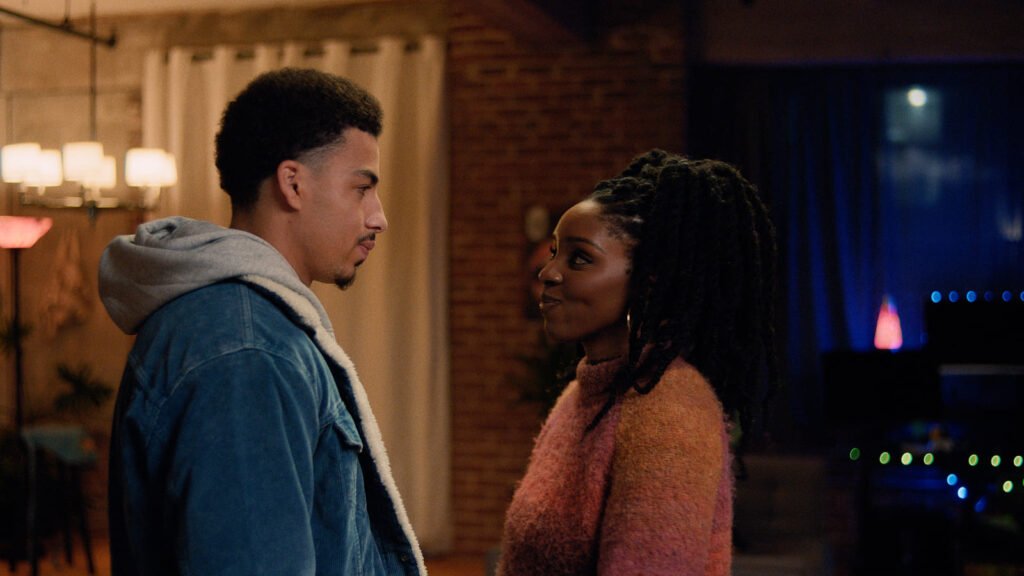
One of the film’s strengths is that neither family is presented as a villain. Instead, everyone believes they’re acting out of love, even when they’re causing pain. How important was it for you to avoid simplifying these generational and cultural conflicts?
It was very important to strike that balance because every character has a story, and everyone has a truth. I spent time writing backstories for each of them so my actors could bring them to life with empathy and a deeper understanding of the fear and trauma shaping their choices. I think the audience feels that, which makes it harder to vilify anyone. Instead, they’re reminded of the people in their own lives who love deeply, mean well, and still sometimes cause harm.
Food itself becomes much more than a meal—it becomes a language of love, identity, and reconciliation. At what point did you realize that food could serve as the emotional and symbolic heart of the story?
I actually don’t remember. I don’t think I had to think so much about it. I just know that food carries memory and care. Having Ada and Trey genuinely love each other’s food felt like another expression of them loving on each other. It also became a powerful way to reflect misalignment when they were no longer on the same page. I feel lucky that food ended up carrying so much of the emotional weight of the film and expressing its heart so easily and naturally.
The film touches on a question that resonates far beyond this specific relationship: how do you honour your heritage while still giving yourself permission to build a life that looks different from what previous generations imagined? What conversation were you hoping audiences would leave the theatre having with themselves or with their own families?
I’m trying not to think too much about what happens after people watch the film. Of course, I hope they laugh and genuinely enjoy the ride, but after that, I don’t have any control. It’s always going to be a practice of surrender. Just hearing that people see themselves in the story, especially in Ada, a dark-skinned Black woman, has made me smile. To me, there’s a lot in that alone.
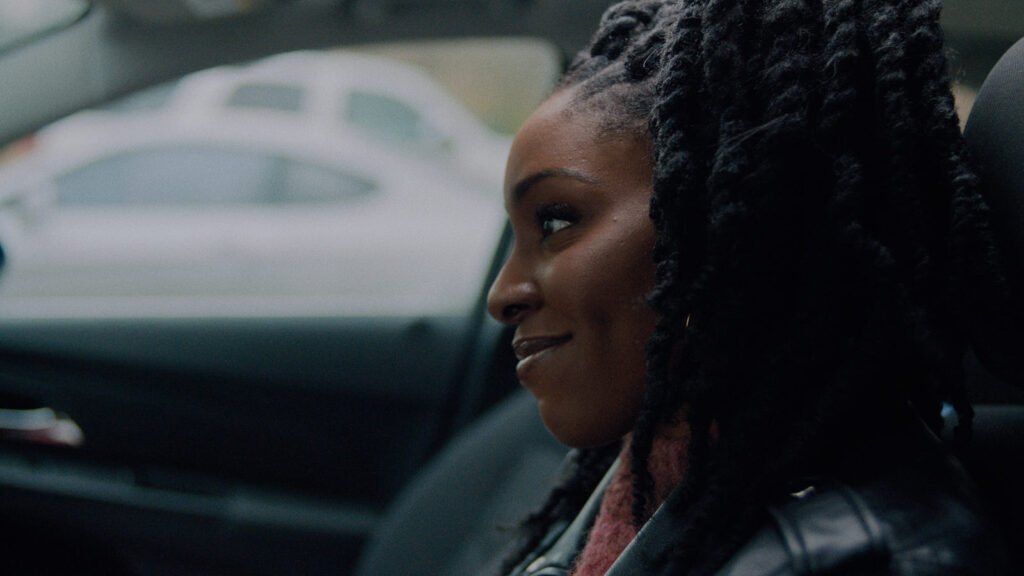
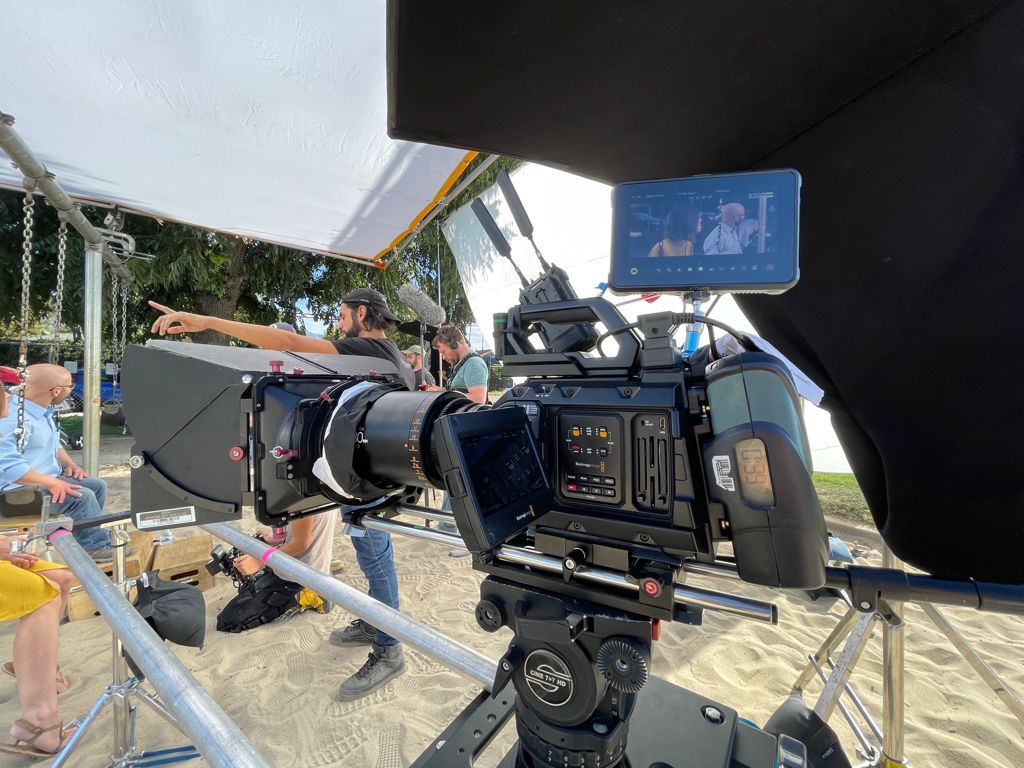
Visually, the film has an inviting warmth while also using the camera to heighten comedic beats through framing, reveals, and whip pans. How closely did you collaborate with cinematographer Wren Rene to create a visual language that could support both the romance and the comedy?
I love this question. I’ve been a huge fan of Wren’s ever since I met him and saw his work on The Command Center to Bring Women Home. I loved his compositions, the movement, and the beautiful truth with which he captured Black women. It was stunning. I knew then that he was someone I wanted to work with, and I feel incredibly grateful that just two years later he agreed to help bring this vision to life.
During pre-production, we quickly found a shared visual language that balanced the romance and the comedy, and the shot list naturally grew from those conversations. I’ll never forget him letting us block scenes at his home so that we could maximize our time in production. And then on set, he brought so many thoughtful ideas and instincts that elevated the story while always protecting the tone of the film. His eye, during post, helped secure that inviting warmth everyone loves. Wren is truly an incredible and intentional collaborator. I look forward to our next one.
Karen Obilom, Marcus Scribner, and Richard Mofe-Damijo each bring very different acting backgrounds—from Hollywood television to Nollywood cinema. How did those different influences enrich the performances and the cultural authenticity of the film?
I really lucked out. Karen and Marcus both move so effortlessly between comedy and drama. They’re just such amazing actors, and they each understood their characters so well as a Nigerian-American woman and a Black American man, respectively. They brought Ada and Trey to life with so much ease and care, and their chemistry was just wondrous.
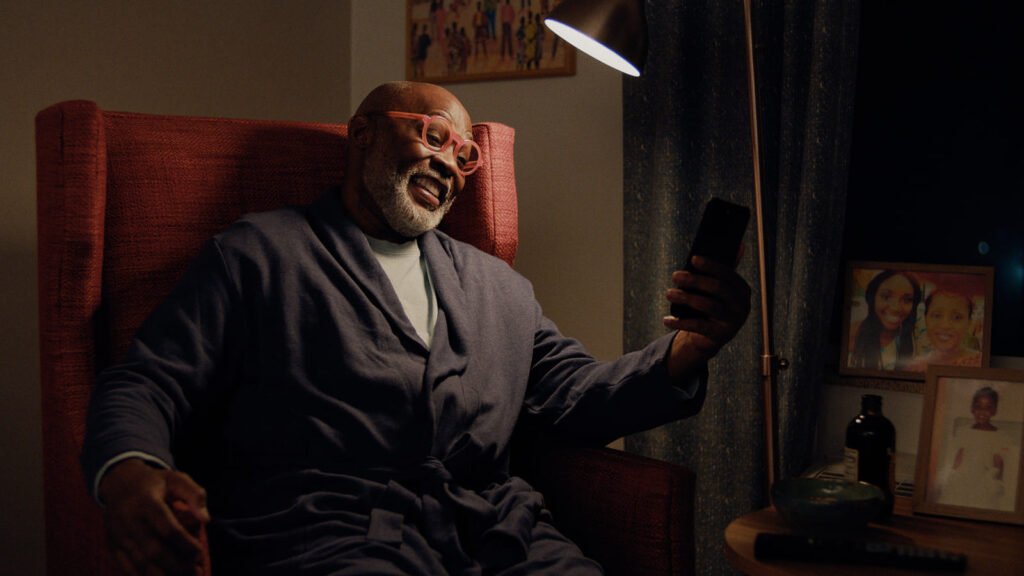
When it comes to Uncle Richie, he is a class act. As a Nigerian dad, I’m sure the role didn’t feel too far from home. He understood the humor, the love, and the banter that can exist in our families and delivered.
All this to say, everyone did exactly what they do best, and I think the film is stronger because of it.
Ada’s decision to leave medical school in pursuit of art reflects a conflict many creatives know all too well: choosing passion over security. As someone who has navigated a creative career yourself, what message did you hope artists and dreamers would take away from her story?
I can only hope they enjoyed the story. Maybe it’ll encourage artists, dreamers, and really anyone watching to keep digging deeper into who they truly are and to have the courage to live as their most authentic selves, whatever that looks like for them.
Your work consistently explores Black diasporic identities, radical love, and intergenerational experiences across genres. Looking at Food for the Soul within your broader body of work, do you see this film as the beginning of a larger conversation you want to continue exploring?
Absolutely. I am so moved by the throughlines of life, especially the throughline of Black consciousness that adapts while enduring across the diaspora. I am a student of love, connection, reconciliation, and repair. I am also a storyteller. Those are the things I carry with me into every project, and I imagine they always will be.
Following its world premiere at BlackStar Festival and the film’s warm reception, what has surprised you most about the conversations audiences have had after screenings? Has there been a reaction or story from a viewer that has particularly stayed with you?
Honestly, what has moved me most is the overwhelming support and interest from people who haven’t even yet seen the film. So many people have reached out asking where they can watch it since it began touring. There’s a young man from Brazil who has been tracking the film and regularly DMs our page to ask when it’ll make its way there. Most recently, a British-Ghanaian film curator in London reached out after learning about the film and asked if she could screen it this summer. Now we’ll be showing the film as part of her program, Lumière Noire, during Notting Hill Carnival weekend, continuing the conversation across the Black diaspora. It’s been so amazing to see people from all over the world connecting with the film before they’ve even watched it. I love that.