



Photography: Shirin Tinati
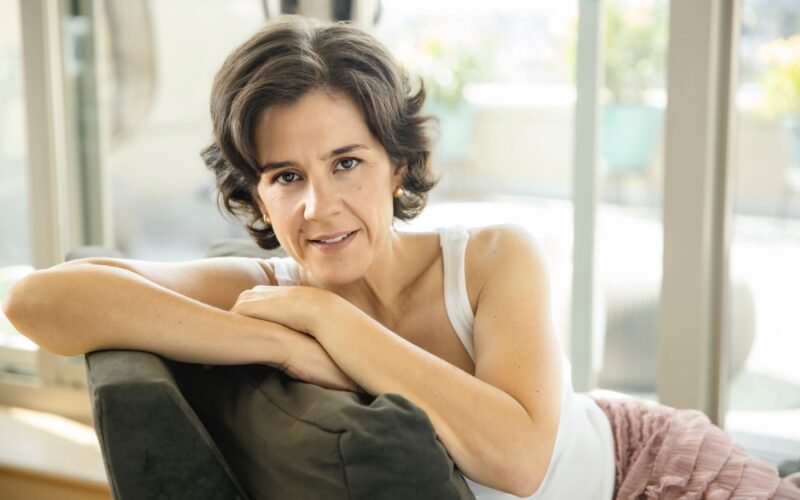
In this interview, writer, co-director, producer, and actress Maite Uzal discusses bringing her fiercely personal first film to life, embodying both the young mother and adult Mariana, and creating a cinematic universe shaped by Buñuel, Lorca, and Dalí.
Mariana Ant began as a submission for the Desafío Buñuel competition but ultimately came to life independently. Did not being selected give you greater creative freedom to push the film’s surrealism and unconventional tone further than you initially imagined?
Not necessarily, no. The script changed very little from the version submitted to Desafío Buñuel, to the version that was produced independently. What producing outside the competition gave me the freedom to do, was to do it just exactly as I had imagined, free from the restrictions any restrictions. In the film rally, you have to shoot and edit in 48 hours, whereas outside of that it took me about a year from pre-production until the final cut to be ready. One of the reasons why they didn’t select the piece in the rally, and it makes total sense, was because they must have thought it was almost impossible to shoot what I
had written, how I had written it, in only two days. We would’ve made something work, for sure, but it would have been nothing near to what it ended up being when produced without the pressures of the rally. So, for that, I’m grateful I got rejected.
The film draws inspiration from Buñuel, Lorca, and Dalí while still establishing a universe of its own. How did you absorb those influences without allowing them to overpower your personal voice as a filmmaker?
I am not aware of a specific way in which I achieved that, and I appreciate that you believe I was able to do that: I stood on the shoulders of giants and not in their shadow. Now that I think about it, to answer your question, the only thing that makes sense to me is that, given that they’re three elements that I’ve grown up with and have always been so present in my life and education, they became part of me and therefore I was able to express myself, having incorporated them in my creative system long ago. Like Sinatra would say, “I’ve got them under my skin”, and then I was simply able to be comfortable in my skin.
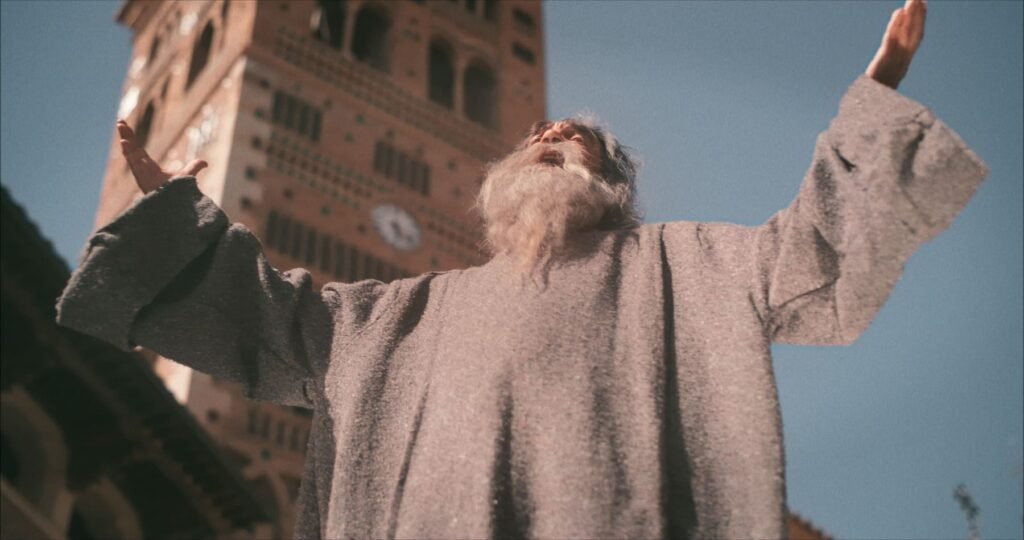
Thorbat is fictional, yet the film is deeply connected to Teruel and the folklore of Aragón. Which traditions, landscapes, music, or cultural details were most important in making this invented region feel authentic?
I believe that having Young Marian sing live was a very important aspect. The folk style that she sings, the “jota”, has a very specific soul and color to it, that not everyone can make happen, no matter how good of a singer you are. That’s why I refused to dub that in post and I looked for a real “jotera” child to play that part. Additionally, the work that the Art department did recreating some totally invented spaces such as the kiosk or the pawn shop was also key in creating this fictional universe. And last, but not least, the book: it’s the first element we see on screen and what serves as bridge between reality and fiction, so its design was very well researched, and it was all made by hand.
The mother dreams of becoming wealthy without working, while Mariana admires ants precisely because of their diligence and collective purpose. What did this contrast allow you to express about labor, class, and society’s relationship with wealth?
This contrast allows me to really lean into the satirical aspect of the film, because it’s something I wanted to strongly criticize about certain cultures and work environments where the “law of minimal effort” and selfishness prevails over the values of hard work, discipline, sacrifice, and companionship or sense of community. Additionally, through the mother-and related to class-I wanted to depict the tragedy of what having money without having an education means. And by education I don’t only mean encyclopedic knowledge, but education of the heart and in spiritual values.
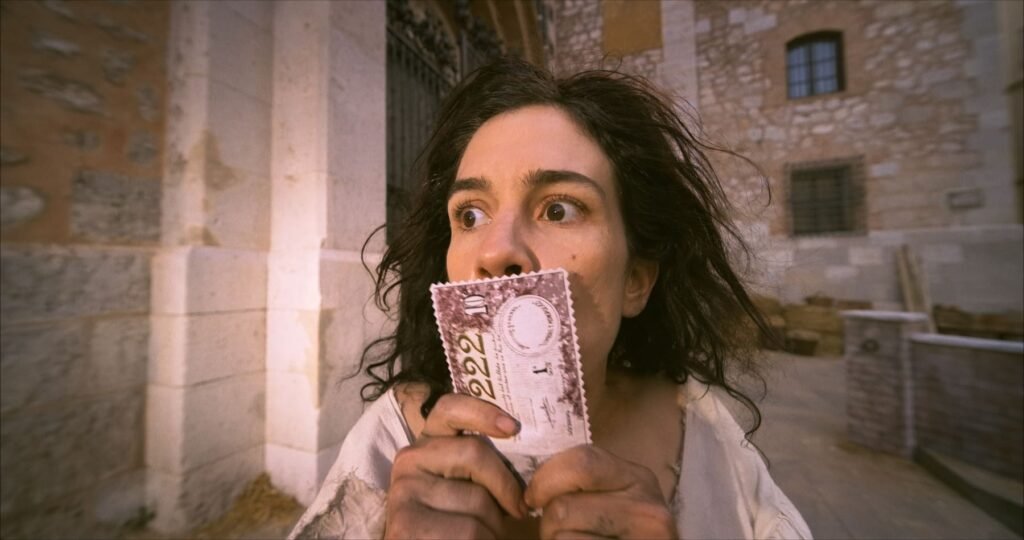
Mariana’s wish to become an ant can be interpreted as innocence, transformation, escape, or even madness. How much ambiguity did you want to preserve around what is truly happening to her?
Mariana’s wishes come true (so do her mother’s) but let’s not forget this happens with the intervention of magic, of a spell…a curse really. I hope that clue helps decipher the enigma of what’s happening to her, because we did purposefully leave that as something that could have several different readings on purpose: I’d rather each spectator pick its own.
The film adopts the familiar structure of a fairy tale but leads its characters somewhere much darker than a traditional happily-ever-after. What interested you about using childhood storytelling conventions to explore temptation and the consequences of desire?
The fact that the flaws or virtues that these characters display are “as old as humanity”, have always existed and will sadly continue to exist, fits the “tale as old as time” structure and allure. The fatal consequences of desire or ambition or of yielding to temptation, have been called out as early as myths go. Moreover, many tales in their original versions are actually pretty dark (if not very) so, again, it was just a question of making things as authentic as possible.
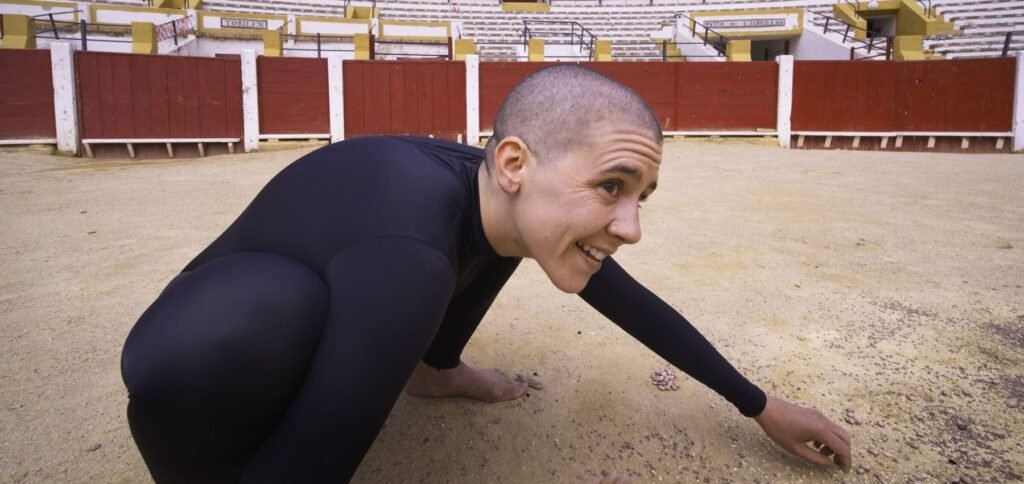
You play both the young mother and the adult Mariana, two characters who appear to embody opposing values. What did inhabiting both roles reveal to you about their relationship, and how did you balance performing with directing?
In a way, having to be a mother to Mariana before she grows up, made me have even more admiration and compassion for her as an adult. It was also interesting to realize how I am more of a Mariana on the inside but more of a Mother the way I carry myself and express myself many times (I’m known to be very forward, a lot people would describe me as cold, especially when meeting me for the first time. I don’t easily warm up to people), so it was fun to know what side of myself to draw from depending on who I was playing. Balancing directing with performing was easy because having written the film and being its codirector I knew exactly what I wanted and I had put a lot of previous work into it as an actress. On top of that, I had Rubén for extra support. A lot of times actors must guess a lot of information that is not given to them in order to create a character and then they walk on set and the director wants something completely different than what the actor had prepared. That’s normal and it’s your job to adapt as an actor and serve the director’s vision, but that can be
challenging if you’re not explained what this vision is previously. In this case, it was very easy because all the questions that I had as an actress could be immediately answered by me as a director and scriptwriter.
How did your collaboration with co-director and editor Rubén Pascual Tardío shape the film, particularly when deciding how far to take its absurdity without losing its emotional core?
It was a pleasure to collaborate with Rubén. It wasn’t the first time we worked together, we have been good Friends for a very long time, about ten years. He understood my vision and I think we make a good team precisely because we have opposing personalities, but we have a strong commitment to make things work. We actually never thought about taking the absurdity too far or not far enough, because for both of us it was always in the right amount: we had other points of disagreement that we always managed to overcome with the motto “story first” in mind, but the degree of absurdity wasn’t one of them.
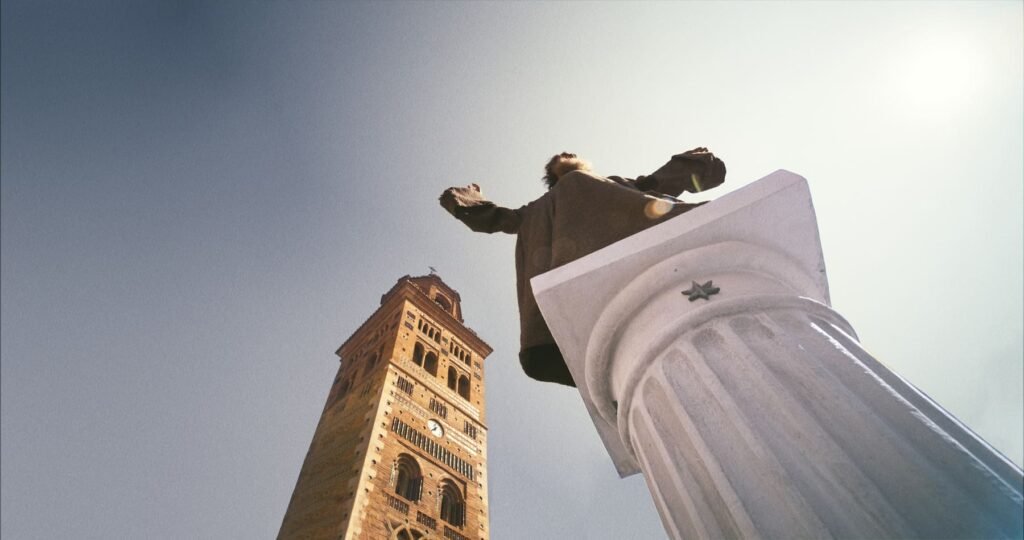
The widescreen compositions, exaggerated perspectives, detailed production design, and ambitious bullring sequence give the story an unusually grand visual scale. How did you and cinematographer Ismael Issa develop a visual language that could feel simultaneously folkloric, cinematic, and playfully surreal?
Again, it was a true privilege to work with Issa and his team. All that I can say is that he is always at the service of the director’s vision, even when that may clash with his personal views (which speaks highly of him as a professional and as a creator having the ability to put his ego aside). In this case, there weren’t any significant moments where this clash happened: Issa and his team merely take in your ideas and take them to the next level and to the best possible level of technical excellence in the context of the shoot, fiercely and relentlessly weathering all its potential difficulties and challenges
In your director’s statement, you describe making the film without regard for trends, algorithms, political correctness, or the desire to please. Now that Mariana Anthas reached festival audiences, what has this fiercely personal first experience as a director taught you about the kind of filmmaker you want to become?
Thanks for describing as fiercely personal, because that was my sole objective when making the movie: to be like that no matter what, against all odds and potential criticisms. Because of upcoming projects, I was just yesterday watching Woody Allen’s “Zelig” and it gave me such joy that it criticizes the desire to be liked and that it claims the need for people, not only creators, to fearlessly stick to their own genuine personalities. After having reached festival audiences I can only affirm myself in my purpose and continue to pursue it, because it is most rewarding to see how well people react to authenticity.