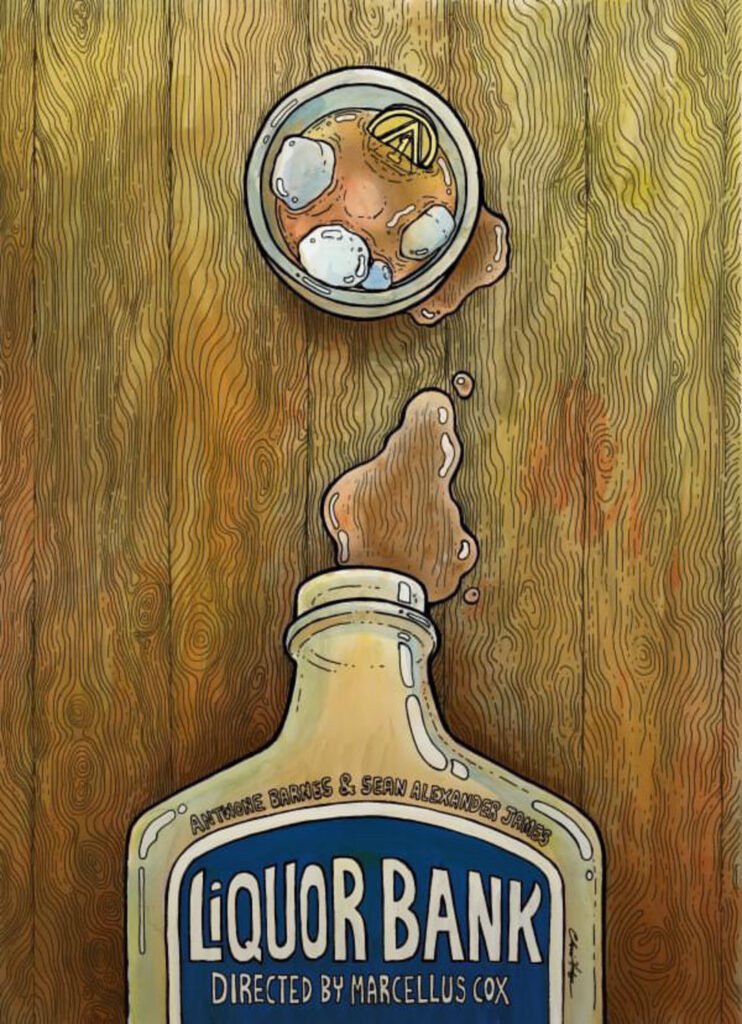




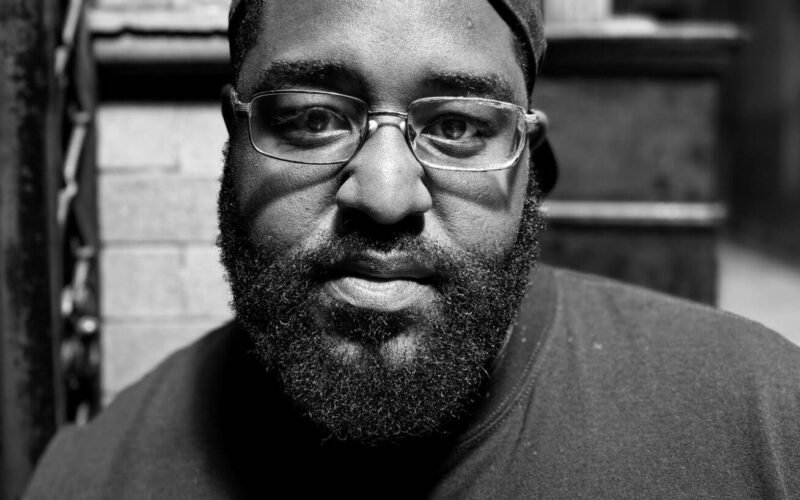
Liquor Bank is based on a true story. How did that story come to you, and what made you want to bring this particular moment in Eddie’s life to the screen?
I was at an event in Hollywood in 2023 and I met Brian Sherwood who at the time was a producer at PBS and now works for A24. He was the one that introduced me to Eddie Mohler, me and Eddie really hit it off and being able to hear his story and his struggles with Alcohol really hit home especially since I’ve had my own shared issues with drinking over the course of my life. So it was a story that to some may seem relatedtable and predictable but I always see more in someone’s journey and this was one I wanted to explore and capture on camera.
Eddie relapses just before his first anniversary of sobriety. What interested you about the pressure surrounding that milestone, and how did it shape the way you wrote his character?
It was the flawed journey that interested me. Not to make fun of but to showcase were human and even when we do our best to stay the course there’re obstacles we simply can’t defeat and have to deal with and that was what I used to shape Eddie’s circumstance creating his character. I want to tell these stories but at the same time tell the truth and reveal all so that when you look at him, you see a real person with real issues that needs to be felt and hopefully be used as a teaching tool for someone who’s dealing with that same problem.
Eddie’s background as a Marine adds another dimension to his struggle. How did you approach his relationship with vulnerability and asking for help without reducing him to familiar portrayals of veterans onscreen?
You only reduce someone like Eddie as a portrayal of other veterans if you don’t do the research and meet these folks who have been in these situations. Having been granted the chance to go to Memorial West in San Diego to meet other former Marine’s and hear their stories and what they’ve been through and what their life was like coming home. The stories were incredible, moving and life changing. But the number one takeaway was they are human and they go through day to day issues just like we all do. I always wanted to approach the human aspect of Eddie no matter what and spending as much time as I did with him and getting to know him more personally really helped bring out the vulnerability in his character and the rest was the perfect blend.
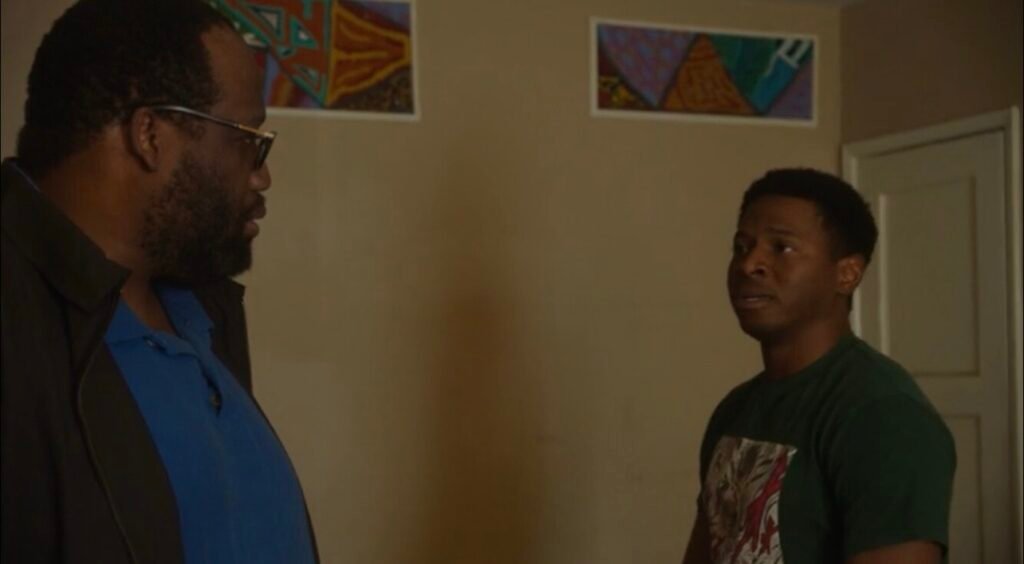
Baker has to balance compassion with confrontation. How did you find his voice as a sponsor who cares deeply about Eddie but is also willing to challenge him?
I never got the chance to meet with Baker in person. We got to me online in 2023, as I was asking him questions about Eddie you can sense the level of love he has towards Eddie and wanting to see him on the right track. Baker reminded me of a lot of men that have been in my life from my Pops on down. They’re honest, they’re firm, they’re not afraid to get in your face if they have to but they care and many of them know what it’s like to be on that side of things that you’re going through especially at this point in your life. So Baker in a way was a combination of all of those men who have helped shape my life and others. But it’s so much easier to put together when you actually have a conversation with the person you’re building the creator on and they are exactly what you envision them to be haha.
So much of the film depends on the connection between Antwone Barnes and Sean Alexander James. What drew you to these two actors, and how did you work together to suggest a shared history within such a short running time?
Antwone and Sean are both brilliant actors. The look of the two of them were close to Eddie and Baker for sure haha but both of their acting really drew me in the most. Both are very skilled and professional in their approach to getting into character. I really didn’t have to give either one much guidance at all. They were ready once I broke the story down and the characters it was just letting them get into the roles and just finding their footing. I’m very collabtive so it wasn’t hard at all getting to work with them, just give them as much information on the character, allow their input on the script to help better their performance and have trust and faith in them, you picked them for a reason so you have to allow them that trust and space to bring your vision to life and these two did that and thensome.
The story unfolds within the confines of Eddie’s apartment. How did you and cinematographer Fabian J. Tehrani use that space to shape the shifting dynamic between the two men?
That was such a small apartment haha it was not the biggest space at all. But one of the things I told Fabian was since it gives the feel to us just being in here we have to shoot it and make it look claustrophobic. Make it look tight throughout the apartment like the walls are closing in on Eddie and Baker with every waking second, if you notice in the film in each room the frame becomes tighter and tighter from the living room to the kitchen, the only time they have space is towards the end when it appears that Eddie has seen the light and coming to reason with his situation. I feel in moments like that when you are being confronted with your issues especially when you don’t want to even begin thinking of them the walls begin to cave in on you.
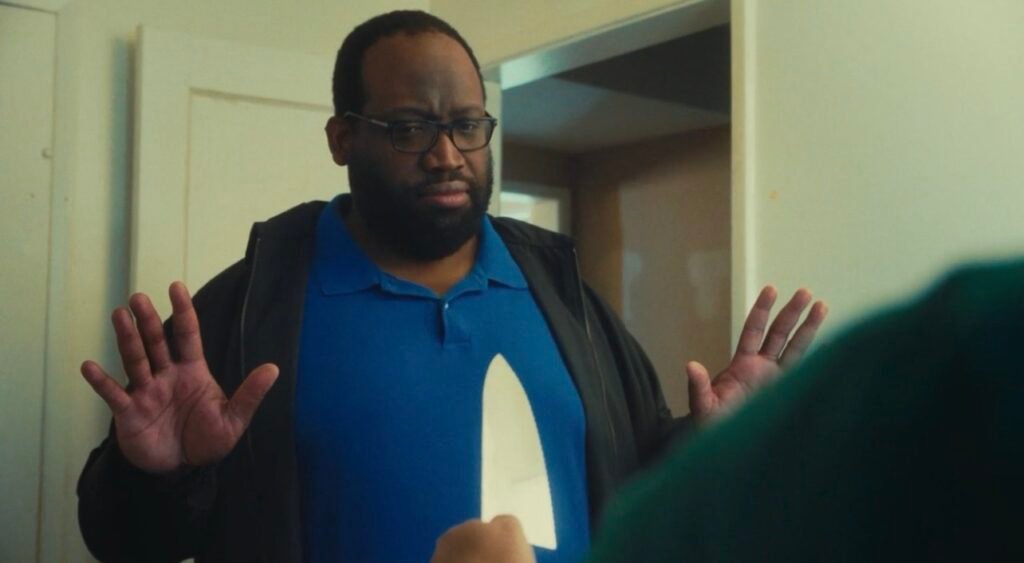
Addiction and recovery are subjects audiences bring very personal experiences to. What research or conversations informed your writing, and were there any screen portrayals of addiction you consciously wanted to move away from?
I went to a few AA meetings in San Pedro, California. I was lucky enough to meet a few of the folks who had been struggling with alcohol and hearing their stories where some of the issues I was going through personally so it made it even more personal when crafting the script. I wanted a true reflection on screen and how this disease does the worst kind of damage to a broken soul. I’ve seen numerous shows and movies that aren’t sincere with showing the real struggles of addiction, making it feel like a joke and a punchline to hammer down some pointless view of other subject matters that shouldn’t even be tied with Alcohol, so I wanted to get as close as humanly possible to the truth and stay the course on it without sugar coating anything because that’s not real life and the folks who I got to interview who’s watched the films approves of the honesty which was the most important thing in the world to me.
In a 15-minute film built around a difficult encounter, changes in tone and rhythm can carry considerable weight. How did you decide when to let silence linger and when to push the confrontation forward?
I think the best way to answer this is how I would approach someone to comfort them and how I would respond when being confronted by them. I hope it doesn’t sound selfish or self-centered. But that’s the only way I could even really find the proper beats when crafting a script like this on such a powerful yet sensitive subject. Because everyone responds differently to moments like that and I know that first hand meeting with so many folks going through these issues. I take all of those elements into consideration but the tones and the rhythm of the moments I honestly have to put myself into the equation. I stay true to the facts, I stay true to the vision, I stay true to others who see themselves but for me to get it right I just have to include myself and how would I handle any of this from both angles otherwise it would just be another typical ripoff of everything else you see.
Following Mickey Hardaway, what did making Liquor Bank allow you to explore or reconsider as a filmmaker, particularly in how you approach characters experiencing emotional distress?
It allowed me and reminded me to make sure that every character matters from the largest to the smallest; everyone matters when crafting the story and you have to respect it as such. The story is the most important aspect of any film, the script matters and if you’re not in tune with that your film is going to fail 10 out of 10 times. When it comes to dealing with emotional distress it’s important to make it known but not a handicap. There has to be more to the characters within their distress and not make that the entire vocal point of who they are and if you can find that balance the better the character is and more rich the performance from the actor or actress will be when they’re finding their arcs finding the soul of the character.
The film places human connection at the centre of a story about relapse. What conversations do you hope it opens up, both for people navigating recovery and for those trying to support someone they love?
For someone in recovery don’t be afraid to embrace support even at your lowest point. For some it’s a pride thing and they don’t want people near them but you need that support to overcome the demons from within so let those who do care, care for you. Nobody does anything in this world by themselves so let the ones that truly want to embrace you be there for you. For those who want to support, I hope that you keep in mind to have patiences. It’s going to take patiences as someone is rebuilding their life so I pray that you continue to fight as much as they do but remain patient while doing so and it’ll be as rewarding for you helping people as it will be for the individuals in survival mode.