




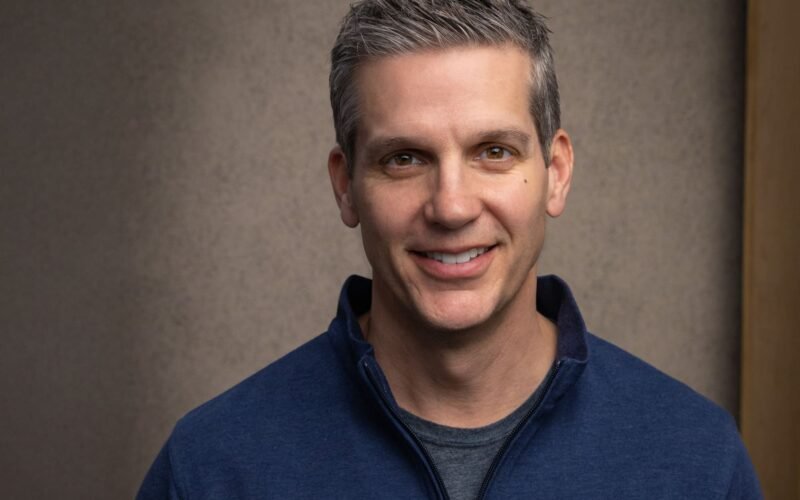
Self-funded and filmed without knowing how the season would end, the five-part docuseries follows the Paladins as they chase their first SoCon title in 43 years. In this interview, Weaver discusses embracing uncertainty, capturing the vulnerability behind the game, and why the most powerful sports stories are ultimately human ones.
What was the moment that convinced you this wasn’t simply a story about basketball, but about resilience, leadership, and human nature?
The moment came when Bob Richey and I spoke in May 2022 and he kept referencing “the shot”—the devastating overtime loss to Chattanooga. I asked him if that heartbreak was the fuel igniting the team, and he immediately confirmed that star seniors Mike Bothwell and Jalen Slawson were returning specifically because of unfinished business. Having experienced a similar last-second loss on staff at Clemson, I knew that pain intimately. But waking up at 4:00 AM with a conviction that “they’re going to win” pushed me to self-fund the project. It became clear that this wasn’t about basketball tactics; it was a universal story about how people respond when life knocks them flat and how shared vulnerability can drive true redemption.
One of the most striking aspects of Better Together: Furman’s Championship Quest is that it unfolds without a traditional narrator, relying instead on raw moments, interviews, and the natural rhythm of the season. What led you to embrace such an immersive storytelling approach?
We wanted a raw, immersive feel rather than an overproduced, corporate look with talking-head handholding. Audiences are sharp—they know when athletes are performing for social media, so we wanted to cut through the polish and deliver true authenticity.
We blended wide broadcast angles with floor-level cameras to capture the physical velocity of the game, while mic’ing up coaches and players for candid huddles. My lead cinematographer, Brian Fannin, and editor, David Stapp, helped capture and weave together natural court audio, quiet hallway conversations, and silent tension. Allowing the natural rhythm of the season to carry the narrative lets the audience feel what the players feel rather than telling them what to think.
The series begins with devastating failure rather than triumph, allowing audiences to sit with disappointment before redemption ever feels possible. How important was it for you to resist the temptation of turning the story into a conventional sports fairy tale?
It was critical because a glossy, feel-good PR story isn’t reality. Success isn’t a straight line, and failure isn’t a death sentence. To make redemption mean anything, you have to sit in the heavy aftermath of disappointment.
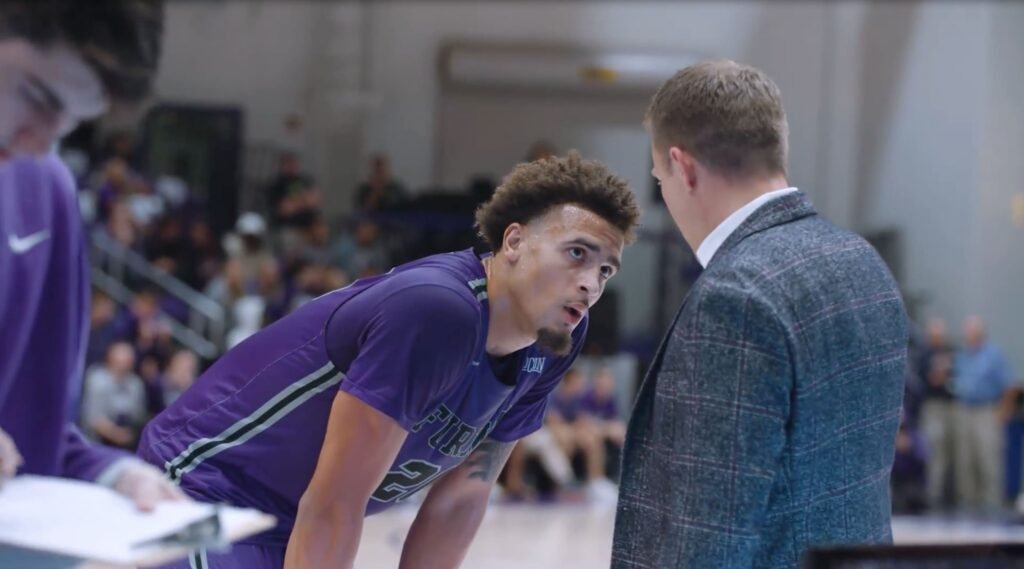
From day one, I told Bob that what we capture is what happened—no manufactured drama, but no hiding the trials either. When Mike Bothwell was pouring his heart out in tears after a loss, we used longer focal lenses to give him space while capturing the emotional gravity. Showing that unpolished pain makes the ultimate championship victory feel earned rather than scripted.
As both the director and producer, how did you balance documenting real life with crafting a compelling narrative, especially when you had no idea how the season would ultimately end?
It was terrifying. I invested my own money through a home equity line into a completely unscripted outcome. If Furman had been eliminated early in the SoCon tournament, the entire narrative arc would have collapsed. During the tournament—especially when they fell behind big against Mercer and got pushed to overtime by Western Carolina—I was courtside calling the games on ESPN Radio, trying to stay objective while knowing our story hung in the balance. My background as a coach and analyst helped me anticipate pivotal moments on the bench and in the locker room. Ultimately, I had to stop overthinking plan B and trust the reality to unfold.
Head coach Bob Richey’s “Better Together” philosophy becomes the emotional backbone of the series. Did that message naturally emerge during production, or did you recognize early on that it would become the film’s central theme?
It emerged naturally, but it was anchored from day one in the return of Mike Bothwell and Jalen Slawson. They didn’t return for individual accolades; they came back because of the collective unity of the group.
That philosophy was tested in the quiet moments—how the team gathered at Bob’s house before summer workouts, or how teammates stood beside each other in silent heartbreak after a loss. Triumph in this series doesn’t come from a corporate sports machine; it comes from mutual trust and refusing to give up on the people next to you.
You’ve described the goal as exploring the psychological aftermath of losing a championship with just 4.3 seconds remaining. Were there any conversations or moments with the players that particularly changed your own understanding of resilience?
Seeing how Mike Bothwell and Jalen Slawson processed that heartbreak changed my perspective. After the overtime loss to Chattanooga, they didn’t run from the pain or hide from the cameras; they allowed themselves to be completely vulnerable.
Watching them survive a brutal overtime test against Western Carolina in the semifinals was another turning point. The emotional relief after that win was palpable—they knew their dream had almost been stripped away again. Experiencing that raw emotion proved that resilience isn’t about avoiding fear, but driving right through it together.
Your background as a Division I player, coach, broadcaster, and analyst gives you a rare perspective on sports. How has wearing all of those hats influenced the kinds of stories you choose to tell as a filmmaker?
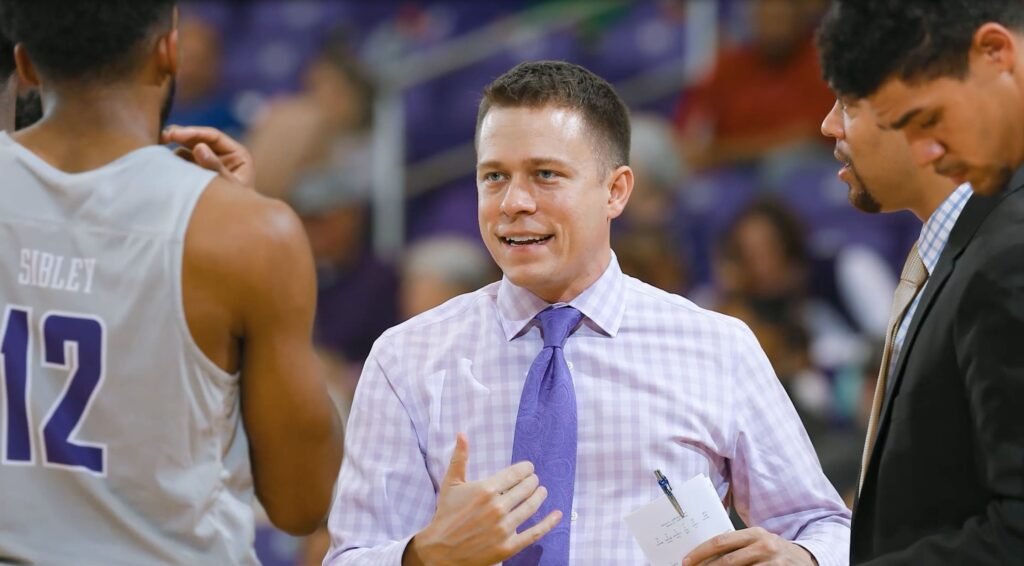
Having walked in all those shoes—as a student manager at Clemson, a Division I assistant coach, a podcaster, and a broadcast color analyst—I understand the sanctity of the locker room and the natural rhythm of a team.
That background allowed me to earn the players’ and coaches’ trust so we could embed quietly without being a distraction. It also guided my lens as a director. I knew precisely when to look at the bench, when to catch a subtle exchange with an official, and when to pull back to respect a private moment.
Rather than focusing solely on the victories, the series spends significant time on uncertainty, repetition, and the day-to-day work that often goes unseen. Why do you think audiences connect so strongly with those quieter moments?
Because winning isn’t easy, and fans rarely get to see the immense toll it takes behind the scenes. People connect with raw humanity, not highlight reels. When you show the unglamorous grind—the summer workouts, the quiet bus rides, and the unspoken tension in the hallways—it strips away the polished veneer of modern athletics. Those quiet moments build the emotional baseline, making the high-stakes action on the court resonate on a personal level.
The docuseries has been recognized with EMMY® honors and has demonstrated impressive audience engagement through organic promotion rather than large-scale marketing. Looking back, what do you think audiences connected with most—the basketball itself, or the universal themes behind it?
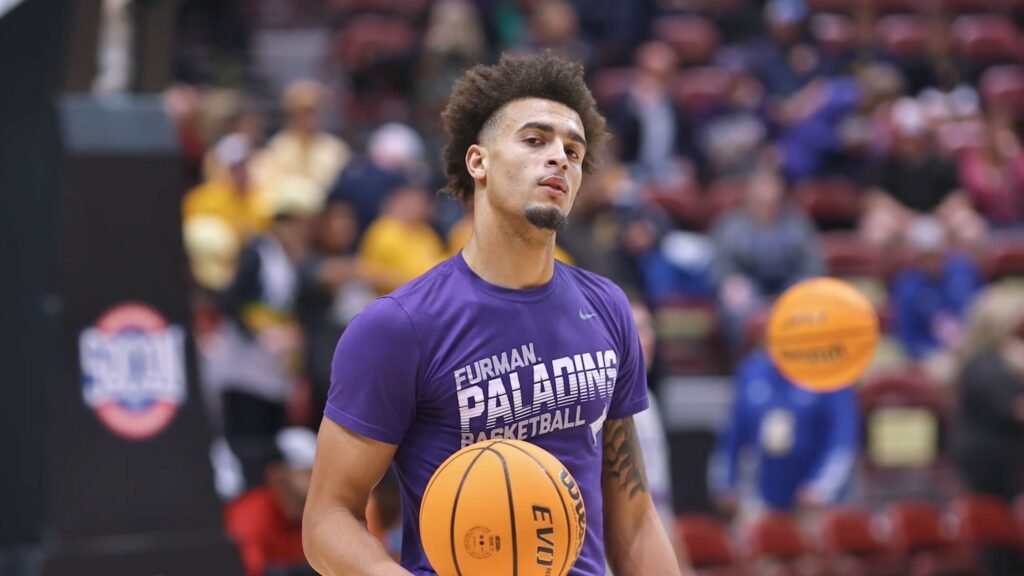
They connected with the universal human themes. As JP Pegues hit the improbable shot to beat Virginia in the NCAA tournament, people called it a Cinderella story. But as I’ve always said, beating Virginia was just icing on the cake. The heart of this journey was breaking a 43-year drought and winning the SoCon Championship.
When we premiered the series at the Peace Center in Greenville, players, parents, and fans were moved to tears rewatching Episode 4. Hearing players say the series captured the exact heartbeat of their locker room proved that shared vulnerability and perseverance resonate far beyond basketball.
After the success of Better Together: Furman’s Championship Quest, what kinds of stories are you hoping to explore next, and do you see yourself continuing to blur the line between sports documentaries and broader human- interest filmmaking?
I’m currently hosting The Richmond Weaver Show on Fox Sports Upstate, covering the Southern Conference on my YouTube channel, and visiting all 11 SoCon head coaches on my summer tour. But long-form documentary storytelling is where my heart truly lies. I’m actively exploring new regional documentary projects around Clemson and South Carolina basketball. I definitely want to keep blurring the line between sports and human-interest filmmaking. Better Together proved that when you focus on psychological depth and authentic human redemption, the story carries far beyond just wins and losses.