

Màquina is both a documentary and an intensely personal family portrait. At what point did you realize you couldn’t tell this story as an observer—you had to become part of it yourself?
It was not really a conscious decision. The project came together very quickly, and in the early stages of shooting things were very hectic and disorganized. The priority was the treatment itself and the wellbeing of my father and brother. The direct engagement of the camera, rather than taking a passive observational role, came very intuitively and out of necessity.
As the project progressed, I really started to feel that the intimacy and vulnerability that resulted from the direct acknowledgment of the camera—or the camera as me, the younger brother—was what made this project special. I wanted it to feel like you were just dropped into the middle of this family dynamic and seeing the story unfold through the eyes of a member of that family.
I did mess around with a more traditional approach. We did formal sit-down interviews throughout the filming process, but they were really more a way to organize and contextualize the story and mainly just ended up being used as voice-over.
As we refined the edit, we ended up feeling like there should be a little bit more insight into me as the younger brother, so we added a few voice-over sections that are directly from my perspective.
The film avoids presenting addiction through simple narratives of failure or redemption. How conscious were you of challenging the way addiction is usually portrayed in documentaries and mainstream cinema?
I guess as conscious as you can be when making a film like this. As I said, the style was very intuitive and I really had no idea what the outcomes from the treatment or the film would be.
From the beginning I did feel a strong desire to explore the complexity of addiction and family dynamics. I really wanted to try and illustrate the nuances of what it’s like to be addicted or codependent with someone who is struggling.
It’s highly complex, and I think from the outside we are often told that these things are very clear. You either cut someone off or get dragged down with them. Tough love and self-preservation. In many ways that sentiment is true. You can’t help someone until they are ready to help themselves.
But I guess what the film is exploring is the journey of arriving at that conclusion yourself and learning how to set boundaries within a family dynamic fractured by addiction.
As both the director and cinematographer, you were constantly balancing filmmaking with your role as a son. Were there moments when you had to choose between continuing to film and simply being present with your family?
I tried to never put the camera away. It was always out or in my lap, ready to go. I wanted it to become part of our daily routine so that it sort of blended into the background.
We spent quite a lot of time together, and I tried to simply be present with my family and just film in little moments or bursts when it felt right. It really just came down to trying to be as present as possible and aware of how Marcel and Xavi were doing and feeling in any given moment.
Unsurprisingly, I do know them both really well and was constantly trying to read where the line was between capturing an intimate perspective and being overly intrusive or crossing a line. It definitely was not perfect. Even though we talked about it and tried to check in about boundaries, inevitably I made mistakes and probably filmed some things that I shouldn’t have.
However, most of the time it was pretty clear when to roll and when to just be there as a member of the family.
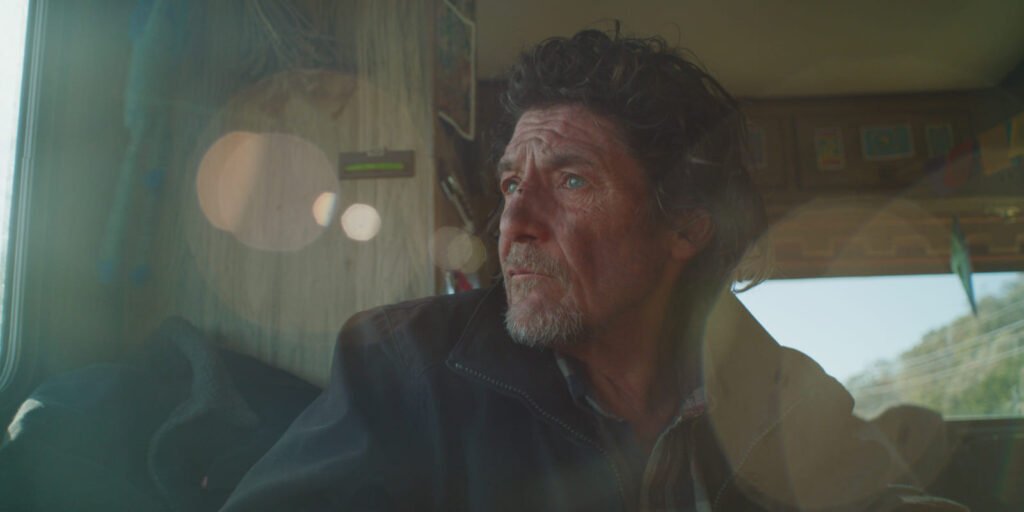
The aging Winnebago almost feels like another character in the film, repeatedly breaking down as your family confronts years of emotional baggage. How much of that symbolism emerged naturally during filming, and how much did you recognize later in the edit?
To be honest, the Winnebago was a very conscious and potentially unethical decision that was made in service of visual storytelling. My brother Marcel had purchased it many years earlier and lived in it off-grid, but had never taken it on a road trip. It was a present fixture through a lot of turmoil and trauma.
We didn’t really get into this in the film, but Marcel had actually lost almost everything in the Complex wildfires in 2020. The property where he was living off-grid burned down and, miraculously, by literal inches, the RV survived.
When I first reached out to Marcel about putting the project together, we both immediately fixated on the RV as our mode of transport. It just felt like it worked on many levels as a visual metaphor and seemed, at the time, like the best and most affordable transport option.
It’s hard to illustrate just how much work went into getting the RV roadworthy and nursing it to Colorado and back. It quite literally broke down almost every day and needed constant maintenance. You could easily make an argument that the responsible and ethical thing to do would have been to simply fly or rent a van, and I think in retrospect Marcel and I would agree with you.
I guess it’s a good example of the strange and obsessive decision-making that can surround addiction. You get clean and feel like you need to catch up on everything, solve world hunger, prove something to yourself and others—you get obsessive. It’s really hard to slow down and make objective decisions in that state.
For us, and I think particularly for Marcel, it had to be that RV.
Psychedelic-assisted therapy has become an increasingly discussed subject in recent years, but your film never turns it into a simple solution. Why was it important for you to keep the focus on the emotional journey rather than the treatment itself?
I had many ideas of what this film could be, and early on I definitely thought that it would be a lot more focused on psychedelic-assisted therapy and the mechanics of the treatment itself.
The deeper we got into the filming process, and later the edit, the more it became apparent that the film was more about making the decision to change rather than the change itself.
While I believe psychedelics, and particularly Ibogaine, can be enormously beneficial in helping break the patterns of addiction, they are not a miracle cure or something that’s going to be the right fit for everyone.
I like that the film is not telling you what’s right and what’s wrong or offering solutions. It’s more a deeply vulnerable exploration through the process of attempting to make a change and the true costs and consequences of doing so.
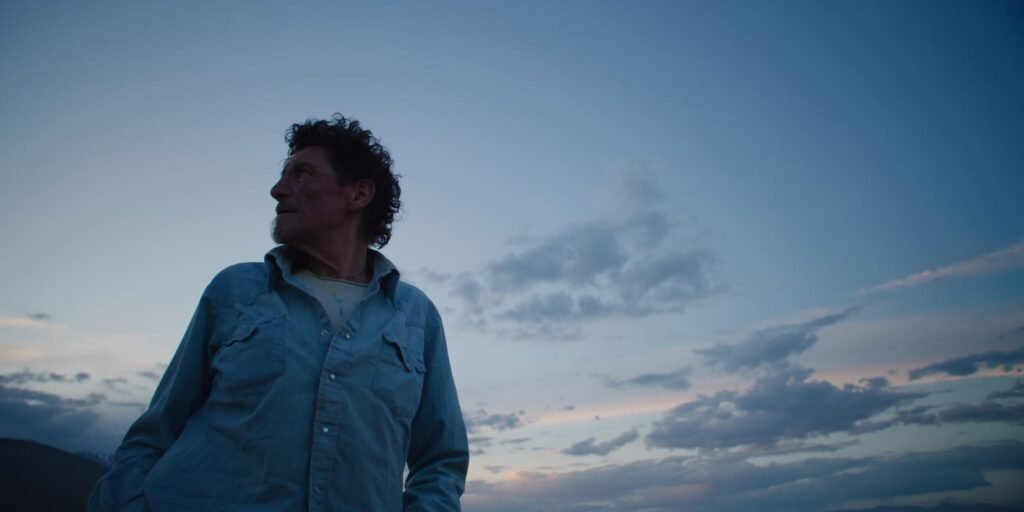
Your work as a cinematographer on documentaries like Common Ground demonstrates a strong visual sensitivity. How did your experience behind the camera shape the intimate and almost poetic visual language of Màquina?
My work on Common Ground and later on Groundswell took me all over the world over the last few years. Particularly on Groundswell, we worked a lot with farmers in very rural areas across Africa, India, and South America.
It’s a great privilege to be invited into these people’s lives and spend time documenting their ordinary world and perspectives. It’s hard to articulate exactly, but it’s almost like you don’t want to be extractive with the camera. You are not there to capture the story and leave with it. You’re there to be present and form a connection with the subjects. You’re there to listen with the camera rather than take something away.
With Màquina I already had the connection and deep levels of trust built between Marcel and Xavi. They are my family, and I have been documenting them in one way or another for many years.
In a lot of ways that actually allowed me to experiment more with camera techniques I learned from doing narrative work. Normally on the soil films (Common Ground and Groundswell) we have multiple cameras and not a lot of time with the subjects.
With Màquina I had no crew, a single camera, and an immense amount of time with the subjects. This led me to, at times, shoot it more like a traditional narrative film rather than a documentary and simply have more time to experiment in order to find the visual language of the film.
Some of the film’s most powerful moments come from silence and observation rather than dialogue. How did you know when to let the camera simply witness instead of asking questions or directing the moment?
Sort of a continuation of the last answer. Spending so much time with a wide range of people and telling their stories, you learn to listen with the camera and intuitively feel out when to let things play out and when to interject. Or at least you get better at intuiting those moments.
For me, a lot of it is just feeling. In retrospect, and especially when reviewing footage, there are many times where it’s apparent I made the wrong choice and interrupted the moment.
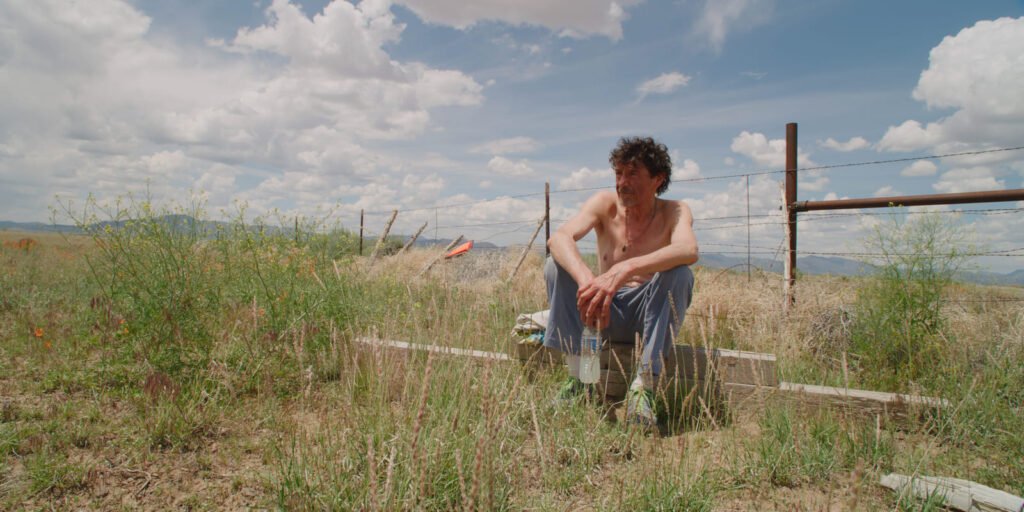
Making a film this personal inevitably means exposing parts of yourself as well as your family. What conversations did you have with your father and brother about vulnerability, consent, and where to draw the line?
We had some very clear and direct conversations about boundaries at the beginning of the project and checked in throughout the filming process.
I’m sure that I crossed the line a few times, but overall they never asked me to stop filming or put the camera down throughout the project. Both Marcel and Xavi put a huge amount of trust in me to tell this story and trusted the creative process.
Throughout the entire edit and finishing process we didn’t show them any cuts or scenes from the film. Once the film was locked, our colorist Kalvin was very kind to set up a private theatrical screening at Picture Shop for Marcel and Xavi to watch the film privately.
After the private screening, Xavi, Marcel and I talked for about seven hours about the film and whether there was anything they felt should be changed. In the end we all agreed to release it exactly as it was, and that’s the version you watched.
Many viewers may recognize aspects of their own families in Màquina, even if addiction isn’t part of their experience. What do you hope audiences ultimately take away from this story about generational trauma, forgiveness, and healing?
I’m not really sure I want anyone to take anything away from the film. I’m not sure it’s really saying anything or has a message.
I feel like it’s more of an invitation to share your own stories about stigmatized or difficult topics and perhaps gain some perspective about your own experiences, or to help contextualize or empathize with the experiences of people close to you.
I guess, in short, my hope is that the film starts conversations.
Looking back now that the film has begun its festival journey, has making Màquina changed your relationship with your father—or even with yourself—in ways you never expected?
I think Marcel says it best in the film: “It’s like you’re breaking up with your father.”
But what it really is—or at least what the process was for me—is separating my relationship with the addiction from the individual.
For a long time those two things were inseparable. Every interaction, every conversation, every disappointment eventually found its way back to the addiction. I don’t think I fully understood how much of my identity within the family had become wrapped up in trying to help, fix, or support—you know, the typical patterns for children of alcoholics.
Making the film forced me to look at my own place within those dynamics. Loving someone and feeling responsible for them are not the same thing. You can care deeply about someone while also accepting that there are parts of their journey you have no control over.
I still have a good relationship with Xavi, but I have much clearer boundaries now. He is very proud of the film, even though it’s quite a raw and vulnerable portrayal of his struggles and the relationship with his sons.
I started making the film because I could see a lot of the same patterns of addiction and codependency beginning to surface in my own life. In retrospect, I think I was making the film as much for myself as I was for Marcel or Xavi, even though at the beginning I didn’t really see it that way.
The process of making the film became a way of confronting and contextualizing issues that had been ignored or suppressed. I don’t think making the film really provided any of us with answers or conclusions. It’s more that the process of making it created space for conversations and self-realization that probably never would have happened otherwise, and for me that’s one of the most meaningful things it could have done.