



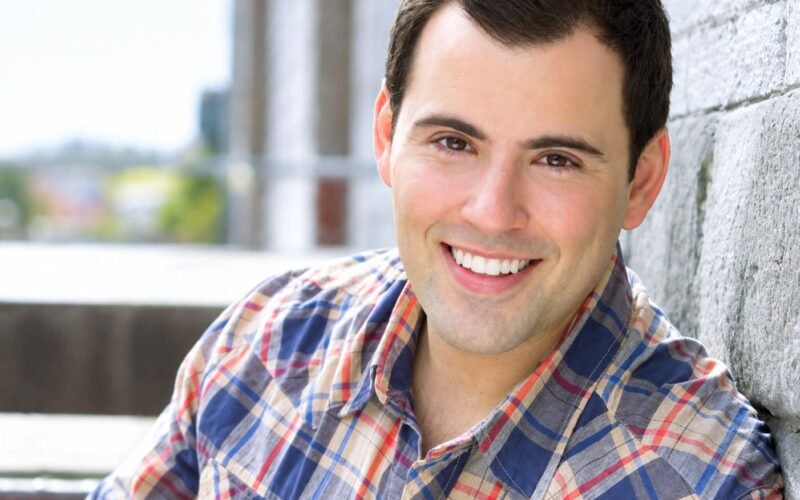
Speaking with IndieWrap, Malawer discusses the film’s “happy-sad” sensibility, his collaboration with actress and executive producer Jamie Brewer, and finding humanity in characters who don’t always get things right.
Happy For You centers on the possible end of a friendship, a loss that rarely gets the same attention onscreen as a romantic breakup. What interested you about that particular kind of heartbreak, and where did Abby and Mark’s story begin?
Some of the most devastating breakups in my life have been the collapse of meaningful friendships. There is so much less cultural dialogue about that. If you’re getting a divorce, people know what that means, more or less. But if you say that you and your best friend stopped speaking, it might not seem like a big deal when, in reality, it’s absolutely heartbreaking. I wanted to write a story where all the emotions you might feel about reconnecting with an ex are present—fear, longing, resentment, pain, hope—but centered around two best friends who are now more like strangers.
The title suggests generosity, but “happy for you” can also be something we say when our feelings are much more complicated. What drew you to that phrase as the title of this film?
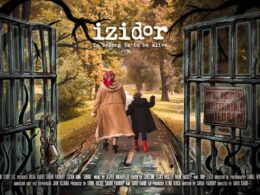
I love to write about an emotion I call “happy-sad.” I had the idea for the title from the very start, and I never wavered from it. Maybe at one point I did wonder if it was bold enough. But our brilliant poster designer, Ben Wiseman, used an emoji as a jumping-off point—and when I saw his illustration along with the title, it was all so perfect that I never looked back.
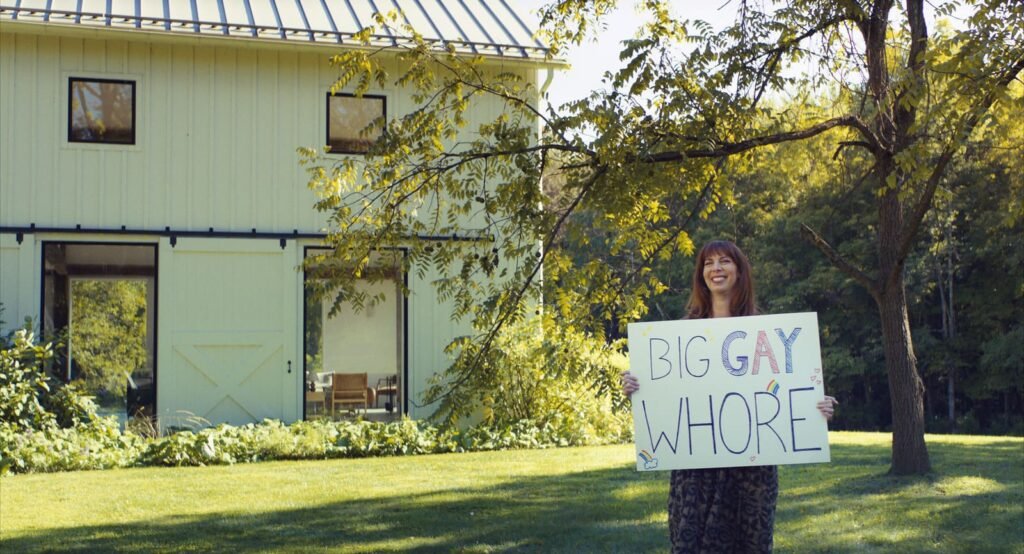
Abby and Mark share a history that audiences enter in the middle of a difficult night. How did you work with Mallory Portnoy and Phillip James Brannon to make that history feel present without explaining every detail of their friendship?
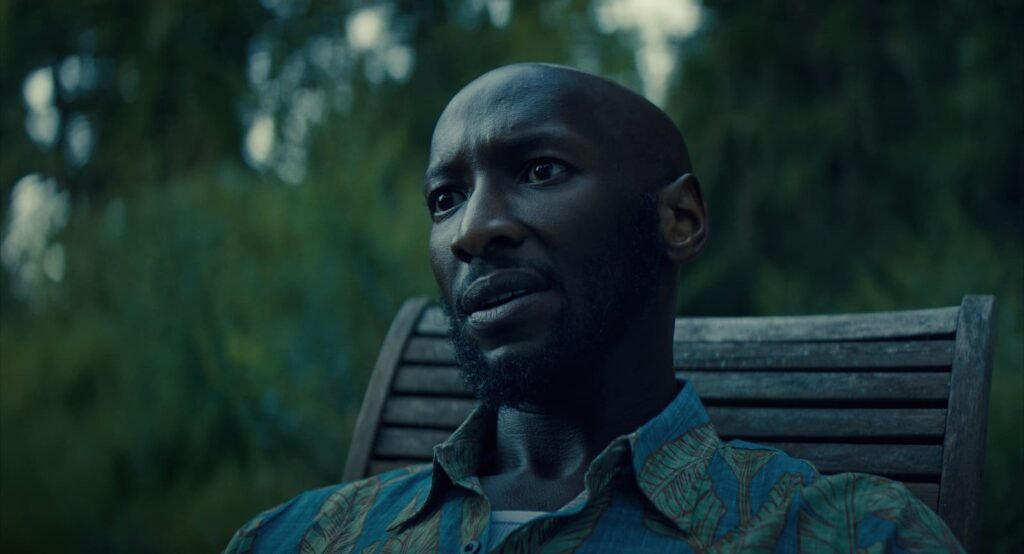
Mallory and Phillip are two of the most extraordinary actors working today. We had minimal rehearsal, and most of what you see onscreen came from their talent and understanding of the material. While there was no improvisation in terms of the scripted lines, there were so many moments that we found during the shoot—physical ones, expressions—that helped bring their chemistry as friends to life. Our insanely talented cinematographer Ryan De Franco worked diligently to shoot, capture, and frame them in ways that suggested their distance when that was intended, and also to hint at the potential for closeness.
You’ve spoken about wanting marginalized characters to simply live their lives, without making their difference the entire story. How does that philosophy guide your writing when a character’s identity is relevant to a conflict but shouldn’t define everything about them?
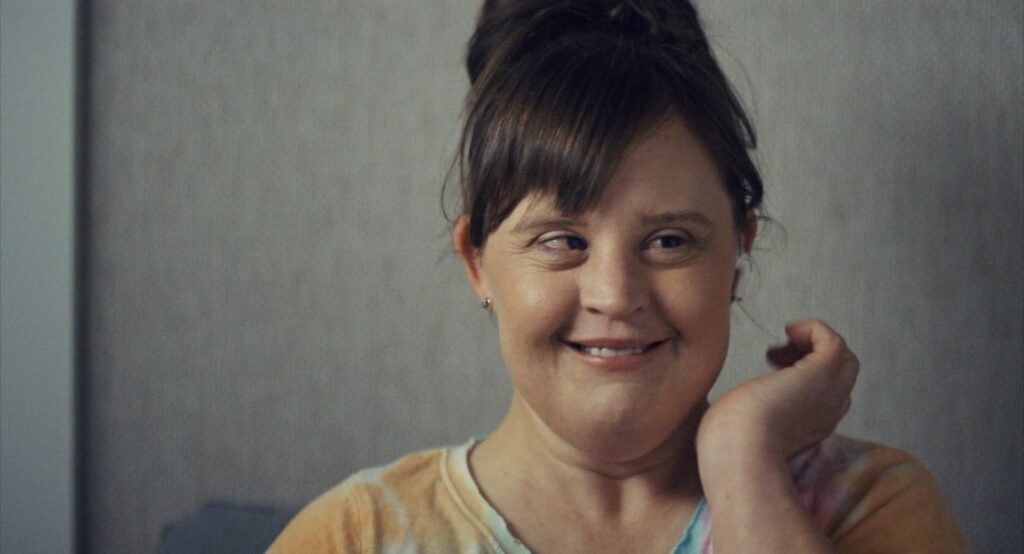
I first came to writing through fiction and playwriting. Most of my plays deal with characters who don’t often get their stories told—whether those are queer stories, disabled stories, or both. In this case, so much is said about Abby’s sister Ali in the film that—when we finally meet her—the moment has been building so long that I wanted it to feel like both a surprise and a warm welcome. The most important thing, I think, in writing any character is to remember that we are all complex people made up of so many different parts.
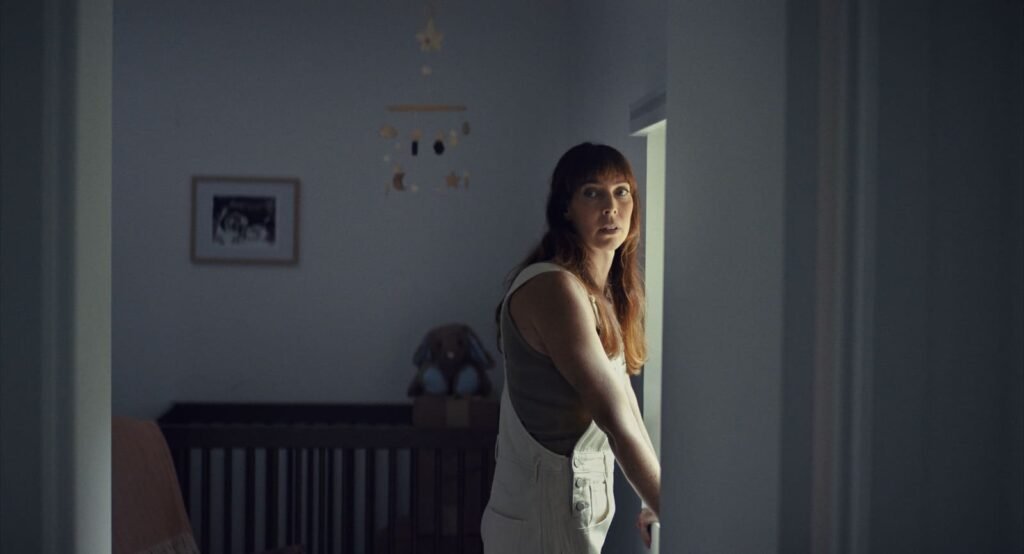
You wrote Ali specifically for Jamie Brewer, who also became an executive producer. What did she bring to your understanding of Ali that went beyond the character you had originally written?
I would not have made this film if Jamie hadn’t been a part of it. I was such a huge fan of hers—and am now an even bigger one! It was important that not only her character but the entire film was something that she felt represented her experience and would spark conversation and understanding. Specifically in terms of character, Jamie’s ideas and thoughts about who Ali is outside of her relationship to her sister were invaluable.
Your years volunteering alongside your mother helped shape the film’s perspective on disability. How did you approach giving Ali her own desires and point of view within a story where other people’s assumptions about her are part of the conflict?
Because Ali is so central to the story but has a brief amount of screen time, the challenge was how to hint at who she is and what her life is like in subtle ways before we meet her. Which ultimately allows her presence to color the story from the second she’s mentioned. The most important part of seeing Ali’s relationship with Abby was to feel their love for one another as sisters, and for the audience to realize that Ali is also an emotional caretaker of Abby.
The film allows flawed characters to express uncomfortable beliefs. How did you navigate the line between helping audiences understand where those characters are coming from and asking viewers to question what they say?
Both leads in this film are right in certain ways, and wrong in others. The journey of pinballing between whose side you’re on at any given moment was difficult to accomplish but also what got me so excited about making this film. I think, and hope, that the decisions made by our entire creative team help you understand why Abby and Mark each believe their actions and words are justified, leaving the viewer to ultimately decide who they’re rooting for.
You and cinematographer Ryan De Franco drew inspiration from the stillness and intimacy of Past Lives and The Peanut Butter Falcon. As someone with a background in playwriting, how did you decide when dialogue should carry a moment and when the camera or silence could say more?
This is a very dialogue-driven film. It’s spare in the way it’s shot to let the characters shine through. From the beginning, Ryan and I were inspired by the stillness and pacing of European cinema. Knowing that so much of our film is one long (and intense) exchange of words, the challenge became how to balance that with smaller moments where little was said, using the location to help us as well as choosing lenses, angles, and a color palette to aid in our characters’ emotional journeys. I love the balance of how it all came together; of course, we learn so much through dialogue but we also learn incredible plot points and emotional reveals in scenes without dialogue. Our fantastic and deeply talented composer Fitz Patton also crafted a score that allowed us to bring out emotion without words, and our brilliant sound designer Gene Park did the same with our soundscape.
As Happy For You approaches its world premiere at the 2026 Austin Film Festival, what conversation would you most like audiences to have afterward about forgiveness and whether a friendship can remain meaningful even if it cannot be repaired?
My first hope is that people see it and want to discuss it afterward. My second is that it challenges perceptions around disability and queerness and families. Specifically regarding friendship, it would be incredible if someone watched this film and was inspired to reach out to a friend they haven’t connected with in a while. Really, Happy For You is a love letter to the importance of friendship, and a goodbye to the ones that no longer serve us.
With just two days to shoot, you had to make quick decisions on your first film as a director. Was there a moment when you let go of something on the page or in your original plan and discovered a better way to tell the story?
Too many to count! There were scripted moments we weren’t able to shoot, scenes that had to be condensed, jokes that I loved that didn’t make the cut. And so much more. Having incredible producers like Jamie, Susie Talbot and Dylan Flasowski helped so much, as well as Alex Backus, our super-skilled AD, who worked alongside me to make sure we captured as much as we could. Luckily, the actors in this film—including our fourth, Mark Junek—were so prepared and engaged that we were able to make everything look and feel better than I ever imagined.