

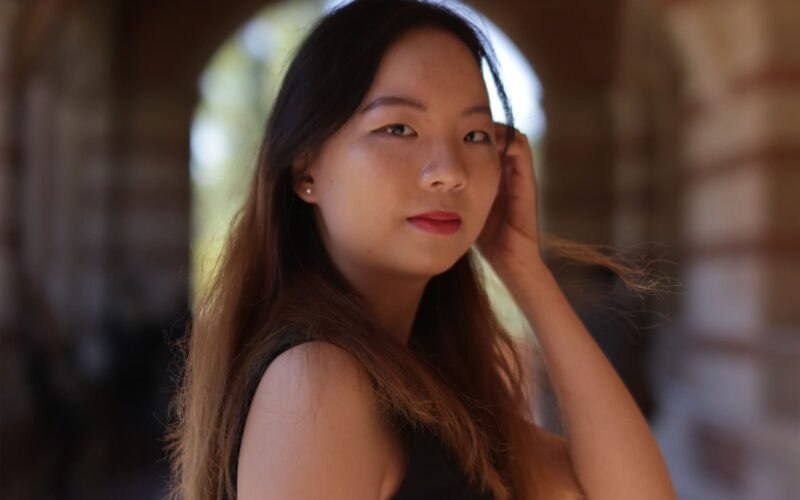
Heading to the East began as a stage play inspired by a personal separation, and you returned to it several years later. How had your understanding of that experience changed by then, and how did that distance influence the story you wanted to tell?
I think my understanding of that experience had definitely changed over the years, mainly because I started to forget a lot of the details. I couldn’t really remember exactly what we did, or when and where certain moments took place. What stayed with me was more the feeling of that experience.
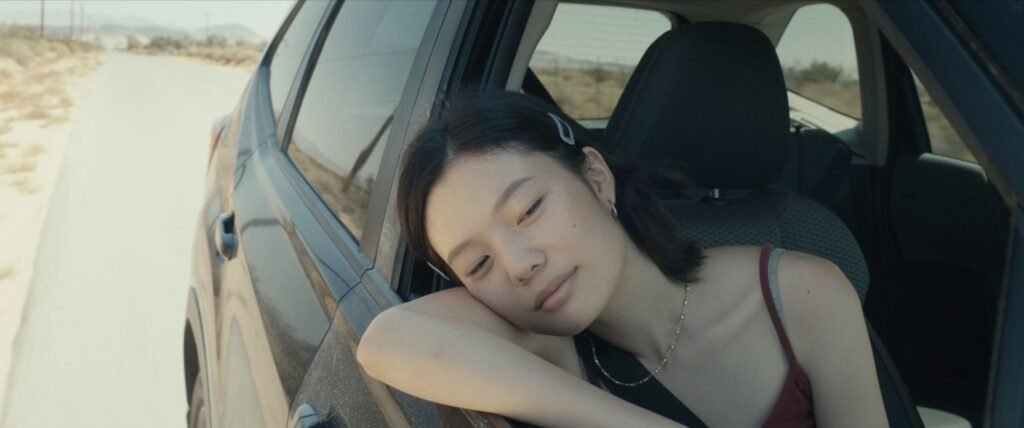
And I think that distance really influenced how I wanted to tell the story. Instead of recreating exactly what happened, I wanted to tell it from the perspective of someone in the present looking back at a memory. That’s actually where the idea of using blurry imagery came from. I wanted the visuals to reflect the way I was remembering that experience.
You’ve spoken about the uncertainty that accompanies saying goodbye when immigration circumstances can determine whether people meet again. How did you decide how much of that context to make explicit, and how much to leave beneath Jinna and Alex’s everyday interactions?
Honestly, looking back, I would probably add a little more of that context if I were making the film today. But I’m also happy with how it turned out, because keeping it subtle allows the audience to bring their own experiences into the story.
When I was writing the script, I wanted the reason behind their separation to be something both Jinna and Alex already knew, but neither of them wanted to talk about. They would rather spend their remaining time together doing ordinary things than constantly talking about their goodbye.
And I also wanted to keep it broad enough that the audience could relate to the story through their own experiences of separation, even if their circumstances were completely different.
You share the screenplay credit with Weiting Tian. What did that collaboration bring to a story rooted in your own experiences, and were there moments when it helped you see the characters differently?
I actually really enjoy working with a co-writer. For one thing, having someone to work with definitely helps me procrastinate less!
But more importantly, I love brainstorming with other people, especially in the early stages of developing a story. Tian brought a different perspective, and our collaboration was almost like a conversation between a storyteller and an audience. I would share my ideas with him, and he would give me immediate feedback.
I think that’s especially important when you’re writing something so personal, because sometimes things make perfect sense to you, but they might not necessarily translate to someone who wasn’t there. Having Tian as that first audience helped me make the story authentic to my own experience, but also emotionally accessible to other people.
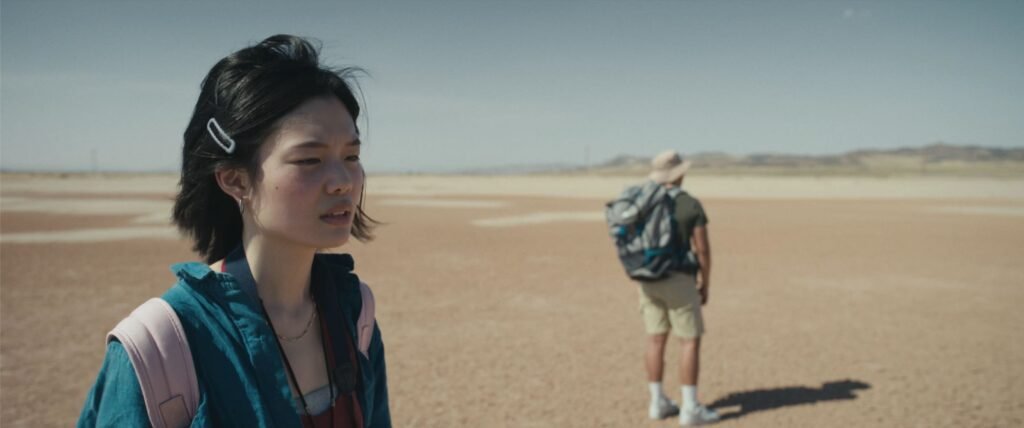
Jinna insists on continuing the search for the oasis, while Alex wants to give up. How did you work with Michelle Jones Lee and Arnold Setiadi to make both positions emotionally understandable, without making either character seem responsible for everything the couple is losing?
This is one of the most emotionally intense scenes in the film. During casting, I actually gave the actors the scenario without specific dialogue and asked them to improvise from their characters’ perspectives. I think that really helped us explore both sides without making it seem like either person was at fault.
During rehearsals, we focused a lot on their individual motivations. For Jinna, she’s the one staying, and finding the oasis was her idea, so she’s almost obsessively determined to continue the journey. But Alex is the one leaving, and he doesn’t fully realize how much this relationship means to both of them until later.
I think they both eventually realize that their relationship is fading away, but they reach that realization at different times with Jinna already feeling it and frustrated about it during the searching, while Alex feels it later when he sees the dried lake (spoiler alert). And that’s really where their disagreement comes from.
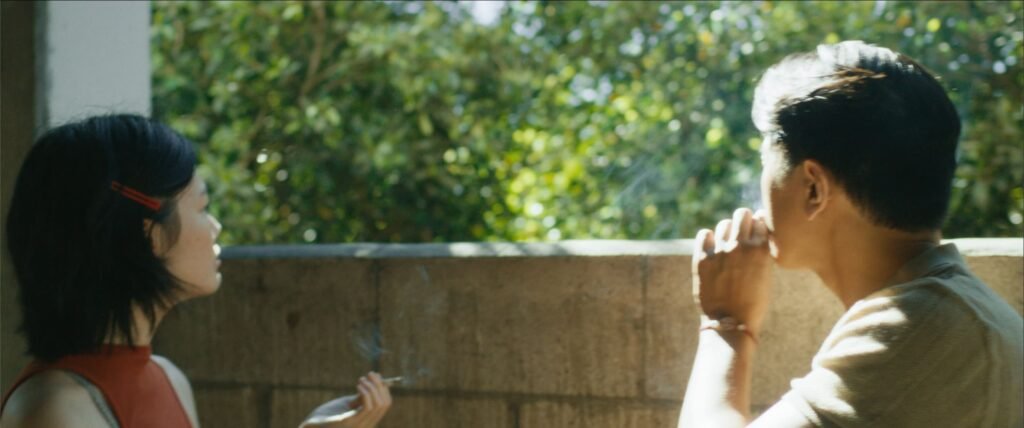
Photographs offer the characters a way to carry their love forward. What interested you about the tension between preserving a moment through a camera and being fully present with someone—and how did that shape Jinna’s relationship with photography?
I used to carry a really heavy camera with me whenever I traveled. I think the intention behind taking a photograph is often to preserve something we might not be able to see again, whether it’s a beautiful landscape or someone we’re going to miss.
I brought that idea into Jinna’s character. She wants to photograph things that won’t last, and that becomes a setup and payoff at the end of the film, when she finally takes a photo of Alex. To me, that moment symbolizes her realization that she has to let him go.
You’ve mentioned adapting parts of the script to the landscapes you found while scouting. Can you share a specific discovery that changed the story, or gave a scene an emotional meaning you hadn’t anticipated?
Scouting was actually a really long process. We went to so many different places before we finally found this man-made spring in the middle of nowhere. It happened to be half-dry when we were filming, which was perfect because we could shoot it in a way that made it look completely dry, but also use the remaining water for the memory sequences.
And that actually inspired something that wasn’t in the original script. During scouting, I realized we could use the reflection in the water to show flashbacks of Jinns and Alex enjoying their time at the oasis and falling in love.
The moving train was also another element we found on location. Initially, I was going to have them eat their tacos at the parking lot where they bought the tacos, but we found this nicer lot next to the Chinatown metro station. That when those train shots were born.
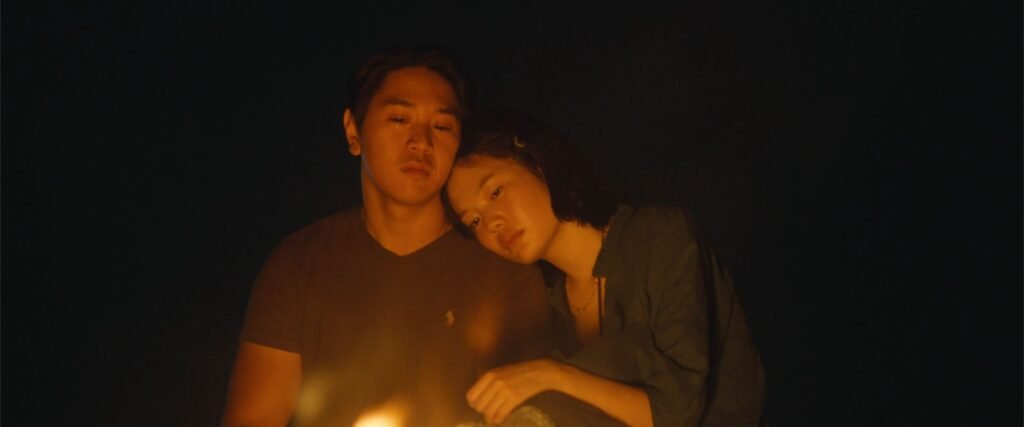
The film places an intimate relationship within expansive desert landscapes, using a 2.35:1 frame. How did you and cinematographer Rocky Huang use space and the characters’ placement within the image to express changes in their connection?
We chose the 2.35:1 aspect ratio because the desert landscape is so massive, and we wanted to capture that sense of emptiness.
In terms of composition, Rocky and I designed a lot of shots where Jinna is closer to the lens while Alex is further in the background. As the story progresses, we gradually increase the physical distance between them to reflect their growing emotional distance.
By the time they argue about whether to continue searching for the oasis, they’re so far apart that we can see Alex’s full body in the background while Jinna is framed in a close-up in the foreground.
We wanted to use the depth of the frame and the characters’ placement within it to visually express how they’re gradually losing their connection. And a lot of the composition is inspired by Terrence Malick’s To the Wonder.
In a film where so much remains unspoken, sound can influence how we read a gesture or a landscape. How did you approach the relationship between environmental sound, silence, and Shengyuan Li’s score, particularly when deciding whether a moment needed music at all?
We spent a lot of time experimenting with the balance between environmental sound, silence, and music.
During the picture edit, I actually cut a lot of dialogue that was originally in the script, which gave us more room to explore silence. I personally love silence, so we prioritized environmental sound and did a full pass of sound design before bringing in the score.
That allowed us to feel which moments still needed more emotional support. That’s where the music came in — to fill those emotional gaps that environmental sound alone couldn’t quite express. There was also a lot of experiments done in finding the right texture of the music. I didn’t want to use raw sound from piano or strings. I wanted it distorted in some way like memory does, so Shengyuan ended up using a lot of synthesizers and reversing play many melodies he wrote.
You’ve described spending a year editing the film and discovering its structure through repeated revisions. Was there a particular cut, transition, or change in scene order that transformed your understanding of the relationship—not just how the story unfolded, but what it meant?
There were definitely a lot of changes throughout the editing process. One scene I remember cutting was a beautiful moment where Jinna and Alex were chasing each other through the bushes when they first arrived at the entrance of the desert. It was really cute, and the sunlight was gorgeous, but I eventually decided to take it out because I felt those happy moments should stay in their memories.
I also rearranged the car scene where they talk about photography. Originally, it came much earlier, before the market scene, but I moved it closer to their arrival in the desert. That way, when we see Jinna choosing not to take a photo, their earlier conversation is still fresh in the audience’s mind. I think moving that scene helped the emotional flow of the film.
With Heading to the East selected for the 2026 LA Shorts International Film Festival, what does sharing such a personal work in that setting mean to you, and what questions from this film would you like to explore further in your next project?
I was very lucky to have a full house when my film screened at LA Shorts, so I was really thrilled to see so many people show up for the short films.
I also invited a few friends to the screening, and it was really meaningful to have them experience the film on a big screen for the first time, rather than just watching it through a private link I shared with them. We had some really interesting conversations afterward, and it was helpful for me to understand how they felt related to my work and what they thought about it. Meeting the audience is always one of the most exciting parts of filmmaking for me.
For my next project, I want to explore moments of intimacy a little more, but instead of focusing on separation, I want to explore two strangers getting closer to each other. It’s going to be a story about two women and how they explore physical intimacy through dance.