





For Serra, however, gambling is only one piece of a much broader conversation. Through flawed characters, moral ambiguity, and an increasingly chaotic situation captured with deliberate visual restraint, Luxor examines the everyday compulsions that shape contemporary life. IndieWrap spoke with Serra about crafting tension within a short runtime, finding humor in uncomfortable places, directing across generations, and why addiction remains such a recurring theme in his work.
One of the most striking aspects of Luxor is how quickly it builds tension despite its eight-minute runtime. How do you approach pacing when every second matters, and what did this project teach you about storytelling economy?
A challenge for me on this project was really trying to keep the runtime down to a minimum. My last project was about 18 minutes, and for a short, that’s rather long. This time around, I wanted to make sure the project was airtight in terms of runtime. When you’ve got a short runtime, you’ve got to start building tension pretty quickly.
Victor is surrounded by people chasing luck, money, or validation, yet he often feels like an observer caught in everyone else’s chaos. Was it important for you to have a protagonist who reacts more than he acts, and what does that reveal about him?
That’s a really good thing to point out. A big part of the comedic element of this was having this kind of passive character stumble into everything he ever wanted. I think although Victor is a slacker, he’s also an opportunist, and his decisions do ultimately help him, whether he intends them to or not.
The film explores addiction through everyday behaviors rather than traditional substance abuse. Do you think modern audiences are becoming more aware of these quieter forms of addiction, or are they still largely invisible to us?
Yeah, that right there is really the key to why I wanted to tell this story. Addiction nowadays can be found in so many niche things, and I think it’s interesting to point out that what isn’t traditionally considered an addiction can become one because of what’s available to us in the contemporary world. I think audiences are becoming more aware of these forms of addiction as people, myself included, are falling into them more and more. Everything nowadays is meant to keep you coming back, and it’s far bigger than just the liquor store or the casino. I made sure to give every character a vice in this film.
Dark comedy often asks audiences to laugh at situations they would normally find uncomfortable. Have you ever had to remove or rethink a joke because it crossed the line from provocative to distracting?
I’ve had to do this a few times, but only because I found it more distracting to the story than supportive.

Your cast includes seasoned Hollywood veterans alongside younger performers from very different backgrounds. How did those contrasting experiences influence the atmosphere on set and the performances that ultimately made it into the film?
Jenny and Jack were both such a pleasure to work with. And yes, it is an insane clash of backgrounds. Jenny has been in some amazing Hollywood classics and television series. She’s just a legend. And Jack is an icon in his own right. I’d been watching his content for years before ever reaching out to him. Having them on set together was very scary at first because you never know how two actors are going to interact, especially when they come from such different backgrounds. But I was pleasantly surprised not only by how well they got along, but by their on screen chemistry as well.
The lottery ticket is obviously a physical object, but it also feels symbolic throughout the story. Beyond its monetary value, what did the ticket come to represent for you as you developed the screenplay?
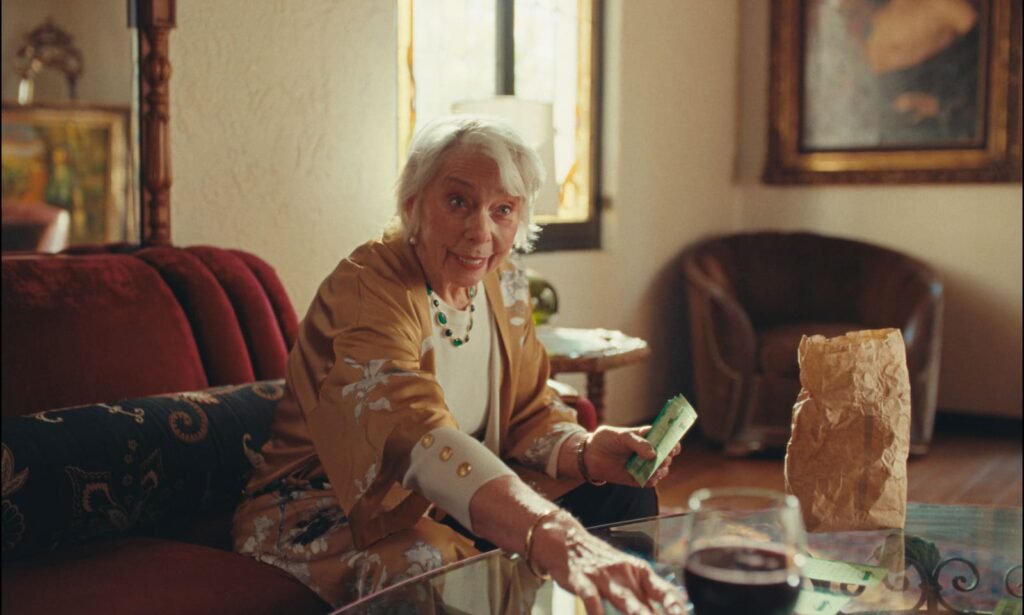
Well, the ticket is Anne’s white whale. It’s something she doesn’t necessarily need as a wealthy woman, but something she still chases simply for that high. But the ticket also represents an out for Victor, something real and tangible that could change his and his wife’s life. Not to sound cliché, but I believe the ticket represents that thing we all chase, the reason we get hooked on the things we’re hooked on. The idea that a different life, a better life, is right around the corner.
Many filmmakers try to make their characters relatable by giving them clear goals or redeeming qualities. In Luxor, the characters often feel messy, contradictory, and impulsive. Why do you find that kind of imperfection more compelling to write?
I’m really drawn to these sad but real characters, people who act on impulse, because in real life, people do. It’s very hard for me to write a villain or a hero, which may be an issue and is something I’d like to work on. I really enjoy that moral ambiguity in each character. That’s the kind of stuff I like to write and explore.
Visually, the film maintains a sense of restraint even as the story becomes increasingly chaotic. Were there any specific choices in framing, color, or camera movement that helped reinforce that growing tension without overwhelming the audience?
Yeah, there’s a very frantic pace change in this film, and I really wanted to make it a priority to keep the framing and camera movement consistent with the rest of the film. We did go handheld for a few shots, but for the most part, Tom Bolles (Director of Photography) and I
wanted to maintain that objective, almost security camera-like view of what was going on in the house. I needed it all to feel connected because the pacing change was enough. If I changed the framing or camera movement too much, it would’ve been overkill in my eyes.

You’ve now worked across narrative shorts, music videos, and commercial projects. Is there a lesson from one of those other formats that unexpectedly proved valuable while directing Luxor?
Funny enough, the closest I’ve ever gotten to directing any action is in music videos. I’ve rarely directed any sort of action, especially fight sequences, in narrative projects. So when it came time to storyboard, shot list, and figure out the pacing of this sequence, I did have some prior experience going in from the music videos I’d directed before.
If someone watches Luxor five years from now, what conversation or feeling do you hope remains relevant long after today’s discussions around gambling, social media, or instant gratification have evolved?
I think the idea that something better is always around the corner, and that chase being so strongly attached to human nature, is why I believe this story will resonate five or ten years from now. Beyond the mediums through which addiction is explored, addiction itself is going nowhere.