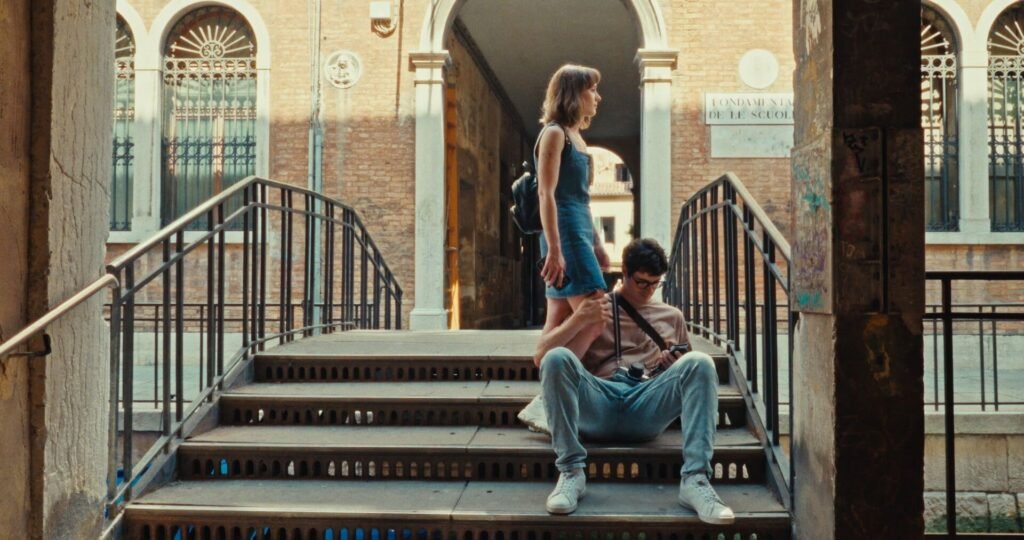



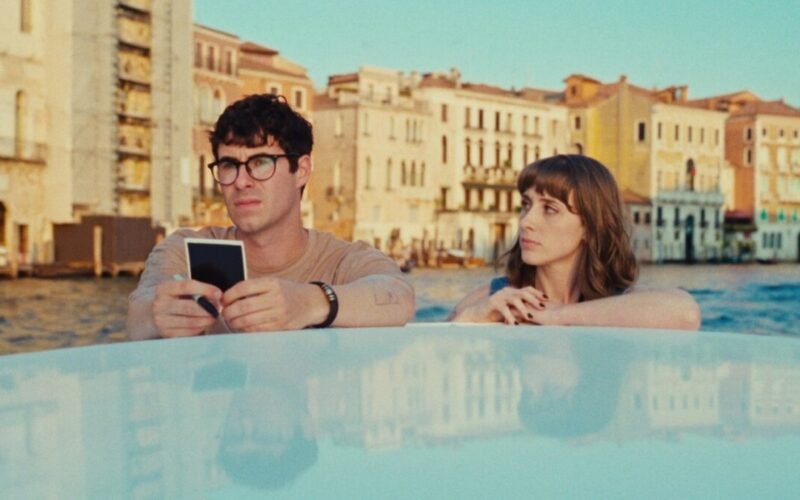
As old wounds resurface and unresolved tensions emerge, the couple is forced to confront the distance that has grown between them. Anchored by nuanced performances from Michael Ridley and Corrinne Mica, the film blends humor, heartbreak, and emotional honesty while using Venice itself as a reflection of the characters’ inner lives.
In this conversation with IndieWrap, Ridley and Mica discuss developing their characters largely over Zoom before meeting in person in Italy, creating the film’s authentic chemistry, working within a tiny crew in one of the world’s most iconic cities, and exploring the complexities of modern relationships.
Nate and Moriah in Venice unfolds almost entirely through conversations and unspoken tension between two people wandering a city filled with history and romance. How did each of you approach building a relationship on screen that feels so lived-in, layered, and emotionally unresolved?
Michael: We had about three months between coming on board and the start of production, which felt like such a gift. Corrinne and I filled those few months with as much character composition as possible. I remember we had these late-night calls where we would exchange script analyses with each other and kind of throw ideas and questions back and forth to build the qualities that were pretty foundational to who this couple is by the time you meet them in the film. We wanted a lot of their dynamic to reflect two people who had spent so much intimate time together while at the same time completely misunderstanding each other. By the time we arrived in Venice to begin working, that relationship felt like muscle memory to us.
Corrinne: All preproduction for these roles happened either on our own or over Zoom calls. Michael and I never had a chemistry read before being cast, and we met in person for the first time at the airport in Italy the day before we started shooting. Which sounds crazy, but I actually think it helped the performance in a way. The characters almost lent themselves to this online process.
They are each in their own world, trying desperately to be the version of themselves they envision and wanting desperately to be seen by their partner. But because they are blinded by their own perceptions, they are essentially strangers.
For me, there was a lot of trust involved and an understanding that all character work done on my end for Moriah couldn’t be so precious as to not be adaptable to Michael’s Nate.
The film has been described as an “anti-Before Sunrise,” where every conversation seems to push the characters further apart instead of closer together. Did that dynamic influence your performances, and how did you balance the humor, tenderness, and frustration within Nate and Moriah’s relationship?
Corrinne: What’s so interesting is that I actually feel I approached the relationship between Nate and Moriah as if it WERE Before Sunrise. I think if I had played into the “pushed further apart,” I would have lost the nuance of the dynamic, which all comes from both characters really bidding for connection.
On Moriah’s end, her humorous moments come from her brutal honesty, her frustration from
projection, and the tenderness is there because of love and shared trauma. In that sense, the feel of making this film is more different from the feel of the end product than anything else I’ve worked on. Some part of me knew there was a lot of comedy to be found between these two incredibly unlikeable people, but I had to be completely unaware of that while playing Moriah. She is deathly serious.
Michael: Nate and Moriah have a shorthand that makes their conversations funny, tender, and shocking sometimes in just a handful of sentences. But they’ve also gotten to this point in their relationship where they’ve lost touch with each other on a deeper level, and it frays any attempt they make at trying to be heard. Austin (Balke) pointed us in that direction deliberately from the first table read on. He towed that line for us while filming so we felt really cared for in the way we juggled the film’s tonal shifts.
Venice feels like a third character throughout the film — from its fogged windows and endless bridges to its quiet cafés and shadowed alleys. What was it like shooting in such an iconic city with such a small crew, and how did the environment affect your performances day to day?
Michael: Venice was a dream. We were quite lucky in that for such an exterior film, we never had to battle the weather, for one. It was blue skies until the day after we wrapped, when it rained like mad as we were all departing, appropriately. And the city itself is such an amazing and historic tapestry that you couldn’t help but want to put it all on front street when filming. Entire scenes were structured around Nate and Moriah kind of weaving their conversations around their surroundings in a way that made the film sing. We lived and shot in this apartment on Campo Santo Stefano, this incredible space that used to be the French consulate in the twentieth century, which is covered in frescoes by Pietro Antonio Perotti. We’d spend all day tearing through the scene, then stare wide-eyed at these murals all around us and go, “I can’t believe our job is to spend all day fighting in a place like this.”
Corrinne: Venice is gorgeous and will always be a special place for me because of this experience. In Moriah’s words, “my chakras were aligned.” The island is so peaceful. The architecture, the food. I had the sense of being the best version of myself there.
I’m no stranger to a small crew, but with a 9-day shoot, it was imperative to be on our A-game. It came with a need for flexiblity and play, and there’s a lot of freedom in that; no overthinking, just doing.
On the other side, there were locals and tourists everywhere so there was a level of awareness of surroundings that I haven’t had to practice while acting before. It was so strange to be locked in on Michael, bickering or crying, and trying not to pay attention to someone who had their iphone pointed at us. Also, shout out to the pigeons who were our constant companions.
Michael, Nate is portrayed as a filmmaker wrestling with personal and creative stagnation, while Corrinne, Moriah is navigating ambition, identity, and emotional vulnerability as an influencer. What aspects of these characters felt most personal or relatable to each of you?
Michael : Nate has aspects of so many young filmmakers I know who struggle with creating something that feels real and will arrest an audience. The moment I read the script, I could see them in Nate, in his appearance, in the way he carries himself, in the way he walks and speaks and thinks. I took pieces of those people and brought an idea of what they might look like in Nate to Austin, and he would refine them and incorporate them into the character he wrote.
Corrinne: Someone once told me we are all walking contradictions. I think about that and notice it within myself often, and it felt incredibly relatable with Moriah. She wants to appear so self-assured and aware but she also can’t be honest with herself. Since shooting this project, I’ve had a lot of change in my life and while I don’t condone or agree with her behavior, I do understand her feeling the need to muscle through and maintain the identity she’s created for herself.
As a creative person, I understand Nate’s inability to make a move. Whether it’s imposter syndrome, perfectionism, writer’s block, you name it. Sometimes a project feels so important that you can’t touch it.
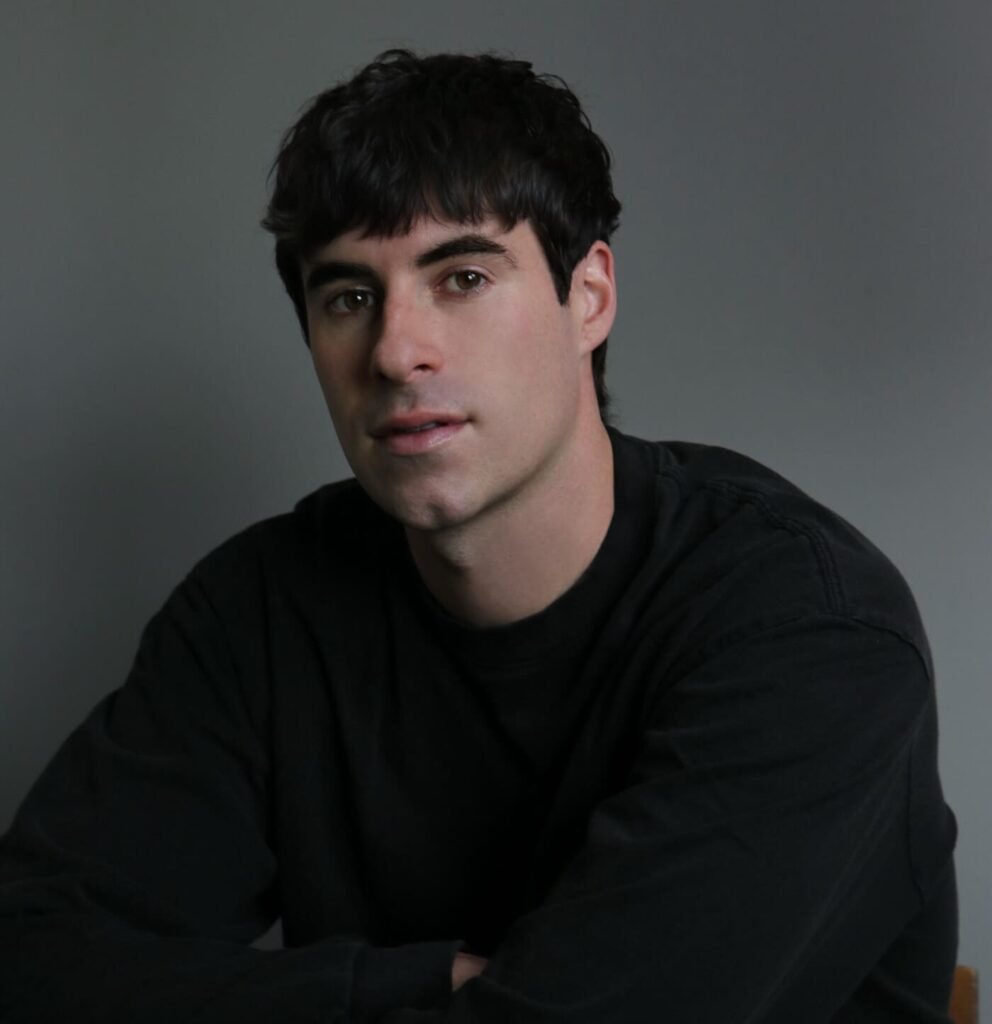
One of the film’s strengths is its restraint — so much is communicated through silences, unfinished thoughts, and lingering glances. Were there specific scenes where you intentionally held back emotionally, trusting the audience to fill in the gaps?
Michael: Austin was really adamant in his direction that we modulate how much we give the audience scene by scene, so that there’s a steady build in how much the viewer even knows about the central conflict Nate and Moriah are talking around rather than about at any given moment. There was a scene early in the film where Nate mentions something related to the loss of his mother, something which takes root in a surprising way later in the film. Austin wanted this early scene to reveal that as more of a quiet thought that Nate loses himself to in the moment, then snaps back to reality. It was effective as hell as a viewer.
Corrinne: Personally, I think it’s always about trusting the audience, and Austin’s script really allowed room for that. Scenes that specifically come to mind are the cemetery and the conversation on the balcony and at the piano before the big fight. You can clock when Nate and Moriah’s masks start to slip, when they realize it’s slipping, and the conscious choices to either put them back on or, in Moriah’s case, eventually weaponize the pain and grief that’s slipped through the mask.
The film explores how modern relationships are shaped by image, performance, and hyper-connectivity. How do you think Nate and Moriah present different versions of themselves to the world, and what do you feel the film ultimately says about authenticity in relationships today?
Corrinne: Moriah doesn’t have to deal with her inner life if she has enough external stimulus from online engagement or otherwise. She doesn’t have the bandwidth to deal with Nate’s insecurities because it shines a light on her own, which is why she is so adamant with him about pushing forward and doing something with himself.
At the end of the day, Moriah isn’t just presenting a different version of herself to others, she is presenting that different version to herself, too. And it’s been shaped by the people and content she sees on social media. She’s surviving by denying her internal life, and it’s annoying and so funny to watch, but also heartbreaking to realize.
In a culture that is primarily driven by social media, we’ve been able to curate what the world sees of us. It’s a safety blanket that hides insecurities, shame, and struggle. But if you fall for the lie that you’re presenting, you can’t live an authentic or intimate life with a partner. We’ve been sold this narrative that “putting on a brave face” is noble, but real bravery is allowing yourself to be vulnerable, to put yourself up for the risk of being rejected in the attempt to be truly seen.
Michael: I think the film actually takes the piss out of this idea that either one of them holds the key to authenticity in their relationship. The two of them both lament how disingenuous they perceive the other to be, while also themselves struggling deeply to connect with each other on a real and vulnerable level. While they both cast these outward avatars of people entirely in control, when the artifices are gone they’re two people who share a pain neither has the ability to express or heal on their own. If the film tells me anything as a viewer, it’s that the bravest thing you can do is to not hide your wounds from someone you love. You’ll never feel more exposed but it’s the most authentic foundation to build a relationship on.
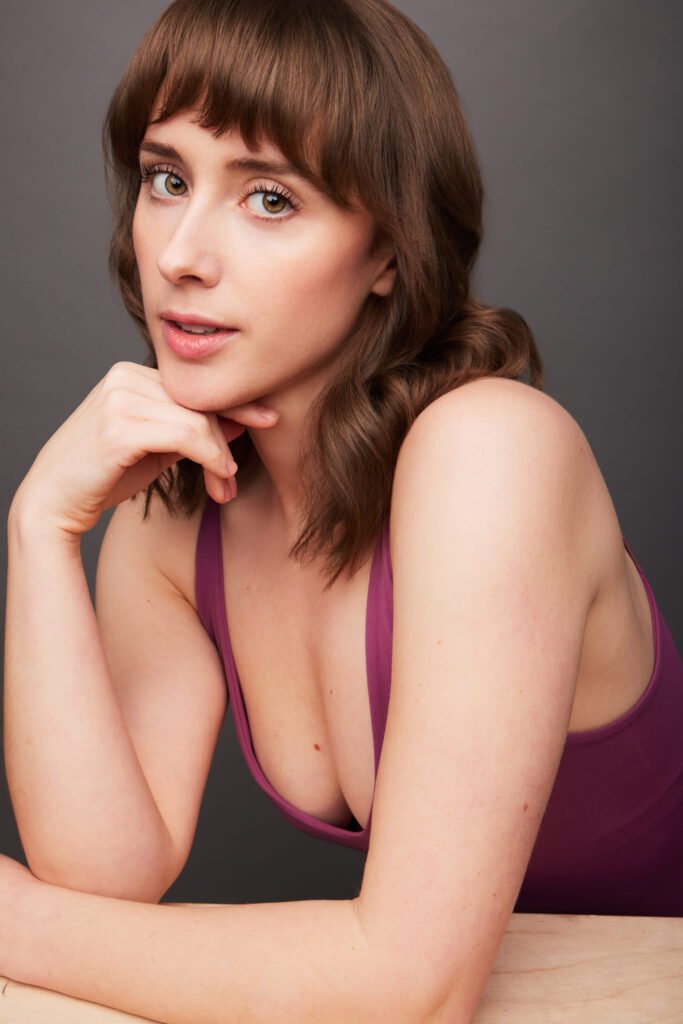
Reviews have praised the chemistry between you both for feeling authentic and never overplayed. How did you develop that natural rhythm together as scene partners, especially in a film so dependent on conversation and emotional nuance?
Michael: Pretty much from the moment we began shooting we never left each other’s side. We were in lockstep wandering the streets of Venice from sunup to sundown and letting Austin and (cinematographer) Francis Dillon guide us. Corrinne is an incredibly prepared scene partner who knows the character in her bones so with all of the history we gave Nate and Moriah prior to production, by the time we started working it felt as casual as kicking back with a best friend.
Corrinne: Part of my approach to a character is to map out core memories that will inform the behavior we’ll be seeing on screen and Michael and I came together and created those core moments for the relationship itself. Deciding what initially drew these two people together and then looking at both what has kept them together, has driven them apart, etc. The script didn’t have much direction regarding character interactions outside the dialogue, so Michael and I were able to find their physical life together.
The movie mixes grounded relationship drama with references to cinema, art, and even conspiracy theories surrounding films like Eyes Wide Shut. Were there any cinematic influences or relationship films that inspired your performances or helped shape your understanding of the film’s tone?
Corrinne: So many. Normal People, Marriage Story, Blue Valentine, The Before Trilogy, Eternal Sunshine of the Spotless Mind, Modern Love, One Day. I felt like I honed in on the idea of innate soulmates, chosen soulmates, and people who were never soulmates but trying to fit themselves in that box.
Michael: “Blue Valentine” and “The Worst Person in the World” both felt like they shared some connective tissue with “Nate and Moriah” from the moment I read the script. It was actually Corrinne though who pointed out after seeing the film for the first time that she felt it had a lot in common with Celine Song’s “Past Lives” as well, which was right on.
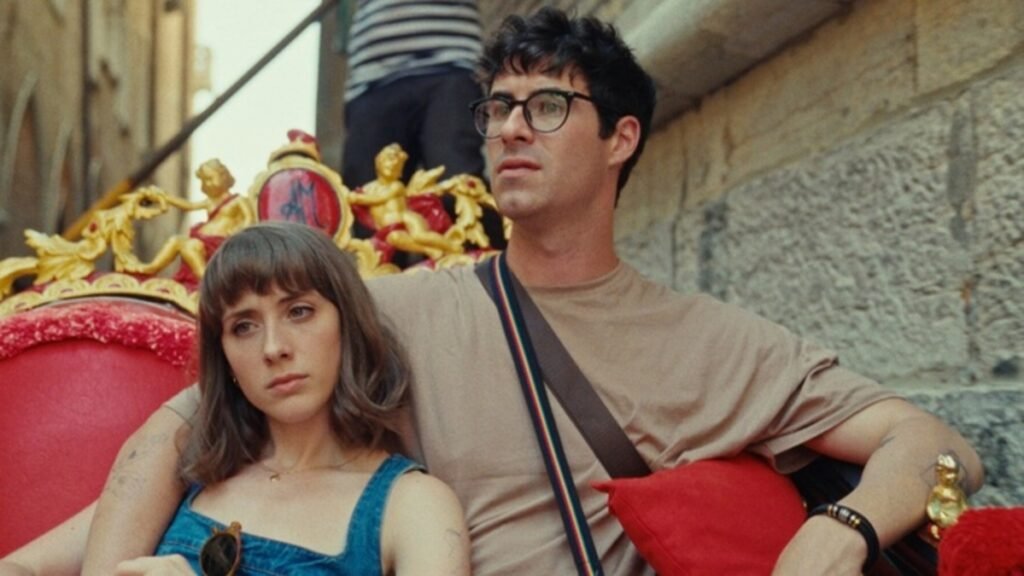
Corrinne, your background spans theatre, independent film, and directing, while Michael, your recent work has explored deeply introspective and emotionally vulnerable characters. How did your different artistic backgrounds complement each other during the making of Nate and Moriah in Venice?
Corrinne: I think we complemented each other a lot, just in the sense of being collaborative team players. There were no egos on this project. I loved that we spoke the same language in terms of rehearsals, not wanting to overrehearse anything and just trust the process. That being said, Michael was so good at going slightly off book and that is definitely a weakness of mine. I think that ability shines through in his performance of the ever-questioning Nate and in turn fed my interpretation of Moriah as so single-minded.
Michael: I came from theatre as well and it helped us kind of speak the same language as soon as we met, and pick up on each other’s subtext moment to moment. We could push and pull on each other in a natural way that gave both characters the opportunity to oscillate between interiority and openness together.
By the end of the film, audiences are left questioning whether Nate and Moriah should remain together at all — yet the emotional connection between them never fully disappears. What do you each hope viewers take away from the film’s ambiguous and emotionally complex ending?
Corrinne: I really hope people see how much we hurt ourselves and the people we love when we get in our own way. When we get so stuck in a certain narrative or belief system that we lose room for someone else’s. I hope people found themselves flip flopping between which character they were siding with while watching. And I hope people recognize parts of themselves in both characters and can sit in the discomfort of that recognition. It’s real eye opener.
Michael: I think I’ve said this to Austin and Corrinne from the beginning but, whether or not the two of them end up staying together, I hope the jaggedness and messiness of their humanity feels earned, and is something viewers can recognize in themselves even at its most uncomfortable or disquieting.