



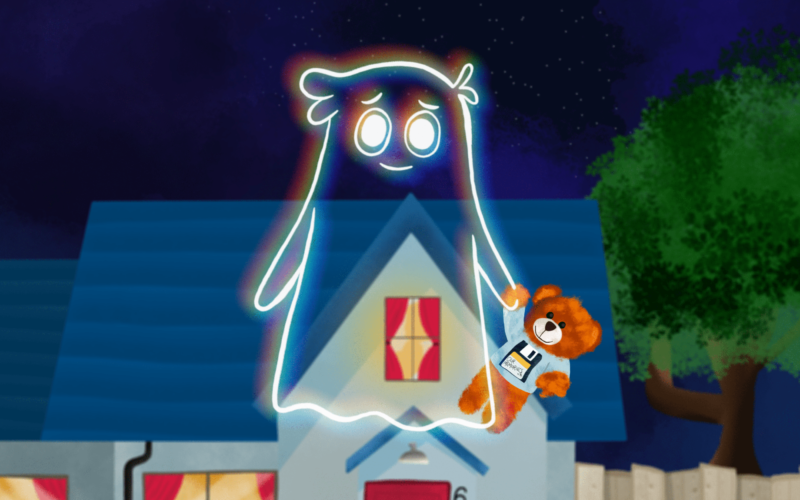
Mexican film writer/director Carlos Lerma, known for his internationally recognized films, has made a quiet yet impactful return to the world of filmmaking. He has emerged from a period of hiatus, which began shortly after his attendance at the Villanueva Showing film festival in Madrid in June 2023. He marks his comeback with “Treasure Haunt,” an animated short film that stands as the eighth installment in his original short film collection.
In “Treasure Haunt,” Lerma revisits a heartfelt theme previously explored in his festival- acclaimed work, “Faraway Fiesta.” The film delves into the touching story of a boy who transforms himself into a ghost, driven by a longing to be closer to a special person who is (pun intended) faraway in distance. Deviating from the more conventional themes of family. With Lerma’s signature touch, the film adds a delightful animated twist to this familiar storyline.
One striking feature of “Treasure Haunt” is its homage to Lerma’s hometown. Throughout the film, Lerma artfully showcases some of his favorite places, weaving them seamlessly into the story. Viewers will encounter moments like the ghost flying over Lerma’s favorite taco spot, “Tacos Primo,” and glimpses of “El Cerro de la Silla,” a prominent landmark in Monterrey, Lerma’s cherished hometown. Lerma himself shared, “I included the ghost of me flying over my favorite taco place, and you can see it again in the credits sequence.”
Reuniting with Lerma for “Treasure Haunt” is composer Holden Reid Magee, known for their previous collaborations on “Faraway Fiesta” and “Firefly.” Both of these short films received accolades during their festival runs, and Magee’s return promises to add depth and emotional resonance to the film’s soundtrack.
If you’re eager to delve deeper into the creative process behind “Treasure Haunt,” you’re in luck. We have prepared a set of questions for both Carlos Lerma and composer Holden Reid Magee, who have graciously agreed to share their insights and stories about their collaboration and this latest film.
CARLOS LERMA
Animation involves meticulous attention to detail. Can you share some of the technical challenges you encountered while creating “Treasure Haunt” and how you overcame them?
To begin with, I’m the only animator on my team right now. I don’t think people understand how challenging it actually is to create ten seconds of animation, let alone two minutes. The first challenge I always encounter is determining which scenes require frame-by-frame animation and which ones are better suited for computer animation. The hardest thing, for sure, was nailing the ghostly look. There were drafts of the character design where the ghost was entirely white instead of outlined, and some where the rainbow glow was absent.
Your films often carry a sense of nostalgia and longing. Can you share how personal experiences or emotions influence your storytelling?
Some of my films, especially all my animated films, are autobiographical with symbolisms to make them interesting. I represented a one-sided friendship with a robot trying to keep a sunflower alive. I represented feeling like a monster in a new place with a literal monster and firefly. With other projects like ‘Faraway Fiesta,’ I really just longed for a hug from my mom. With this new project, there are nights I just want a hug from special people I love seeing whenever I come home. The short film has no one in mind in particular, but it’s for sure a feeling I’ve had a lot, especially this week since coming back from Mexico this summer.
How does Monterrey, your hometown, continue to inspire your work as a filmmaker, and how do you aim to represent it in your films?
I’ve been wanting to incorporate ‘cool’ ways to showcase where I’m from. Being Mexican, I am truly proud of where I come from, and a significant goal of mine is to reveal more facets and corners of Mexico and my hometown, especially. But that’s reserved for upcoming projects!
As a director, how do you approach character development in your short films, given the limited runtime available?
It’s a challenge, especially in two minutes, to show character development. With these animated short films, I usually want my main character to have illumination/realization moments or a little goal they work towards with a twist. With ‘Treasure Haunt,’ you can’t say for sure where the ghost is going or what it’s going to do until the very end.
HOLDEN REID MAGEE
How did you approach creating the musical score for this animated short film?
I approached this project the same I do most: I watched the film and talked to the director. Then I closed my laptop and went back to my day-to-day life. Even when we have short windows to work, we have to allow time for the creative process to develop, and this film was no different. Once I went back to the piano in a few days things just kind of flowed naturally. Then I developed those ideas and worked with him [Carlos Lerma] to tell the story as best as possible.
What discussions or collaboration took place with the director to understand the film’s emotional and narrative needs?
When Carlos first calls me for projects, he usually already has most of it finished. Over the course of the following weeks or months we meet multiple times, over lunch or hunched over a desk to discuss the most important aspects of our story. As well as how we can convey those aspects to our audience through the score.
What software or technology did you use in the composition and production of the musical score?
Every project is different, but for Treasure Haunt, I wanted to focus on the emotional sides of the story. So, I started at the piano and watched the film and just kind of let the music write itself. I found a key that I liked and then a few notes. At that point I move over to my laptop and start working in my digital audio workstation (DAW). I use Apple’s Logic Pro X for all of my projects. Eventually, small gestures here and there turn into entire themes before you know it. And soon enough…you’ve got your film score.
What do you hope the audience will feel or experience when they hear the music in your animated short film?
I really just hope the audience can find something that relates to their life and experience in the film. My job as a composer for film music is solely to aid the filmmakers in their storytelling. Ultimately, if the audience is moved in a way that the director intended, my job was done well.