



Drawing from nearly a decade of personal experience as a fencer, Calkins crafts a character study that reaches far beyond sports, exploring the emotional weight of perfectionism and the elusive pursuit of validation.
Following its selection at the 2026 RiverRun International Film Festival, On Guard has been praised for its authentic portrayal of fencing and its nuanced exploration of the athlete’s mindset. In this interview, Calkins discusses turning personal memories into cinema, training actors for the demanding physicality of the sport, the influence of films like Raging Bull and Whiplash, and why the most compelling sports stories aren’t always about winning.
On Guard is deeply rooted in your own experience as a competitive saber fencer. At what point did you realize those personal memories could become a film?
When I got to college, I wasn’t able to continue fencing. There wasn’t a place nearby and even if there was, I quickly became too absorbed in the film culture to have the time to keep at it. So I had a lot of time to reflect on my relationship to fencing, and how it affected me over the last decade or so of my life. There were a lot of things I regretted, things I saw in a new light, and by the time I was preparing for my thesis I was looking for a story that was very personal to me. This combined with the exciting possibility to translate fencing into the cinematic language made it the story that I had to tell at this point in my life.
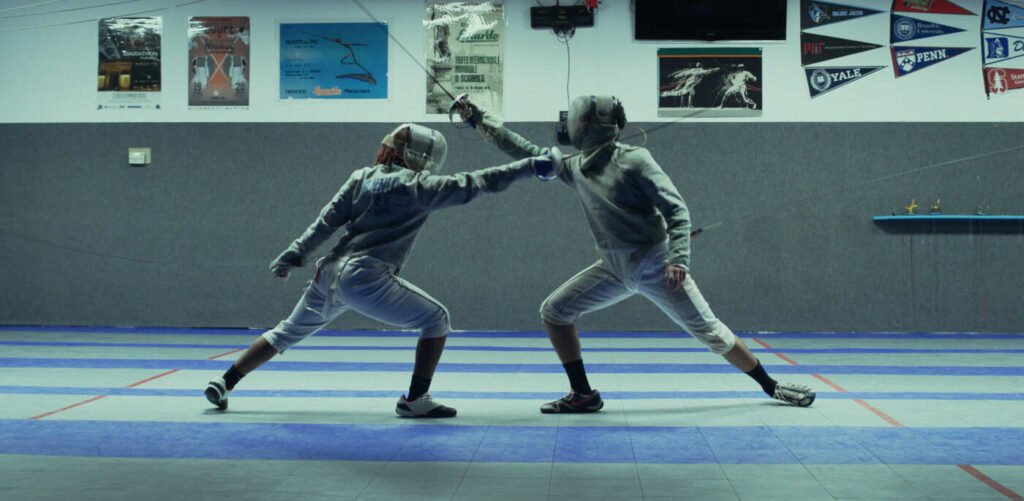
Jaime is a complex protagonist whose drive for perfection borders on self-destruction. How did you approach writing a character who is both difficult and deeply relatable?
I knew early on that I didn’t want to get into specifics about why she was driven to this self-destruction. When I was first sketching out the idea, I thought up various tragic backstories for her, but all of them felt forced and inauthentic. What felt more important to me, more truthful, was the behavior. And I wanted to take advantage of every moment to reveal something about her character. Not necessarily about her broader life, but how she thinks. That’s how it felt personal to me, and I just hoped that I could pull it off in a way that made audiences feel it too.
The film explores the psychological side of competition more than the sport itself. Why was it important for you to focus on sports psychology rather than a traditional underdog or victory story?
I wanted to make this film because I needed to express how this sport made me feel, and I wanted to tell a version, however exaggerated, of my story. And my story wasn’t a traditional underdog story. There was a lot of defeat and when there were victories, that just meant there was another match around the corner. Besides, at this point, there have been so many sports dramas made in the last 50 years at least, and most of them follow that underdog formula. At this point, there are newer more interesting stories that can be told in the sporting genre.
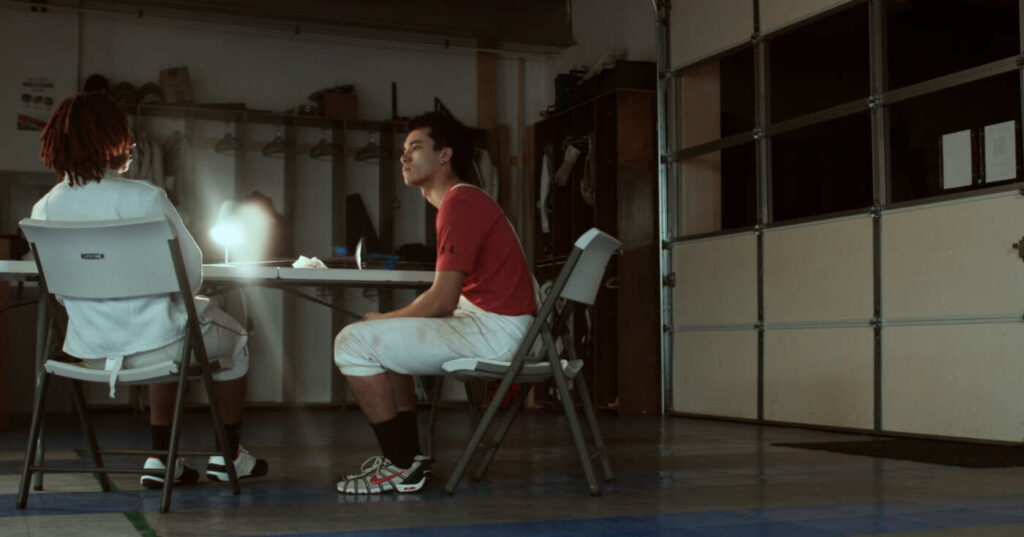
You have cited films like Raging Bull and Whiplash as inspirations. Were there any specific techniques from those films that influenced how you approached the fencing sequences in On Guard?
The way they used rhythm. Obviously in Whiplash, it’s literally about a musician trying to keep time, but in Raging Bull, the boxing sequences were designed to have a musical percussion to them, and I tried to have that same spirit in the fencing sequences. And they both are very rooted in the psychology of the main character. But more specifically, I took a lot of inspiration from the quick cut inserts from both films when I was trying to show things like how the blades or the feet were moving, and more from Raging Bull when I was plotting out the moments between the touches.
Training actors Makenzie Pridgen and Sean Mikesh to fence convincingly sounds like a major undertaking. What was the biggest challenge in balancing athletic authenticity with dramatic performance?
Well I was really lucky to have Sean and Makenzie there. They are both some really amazing collaborators, and they were already athletes before we started training for the film. The biggest challenge was just trying to get them to understand all the aspects of fencing that would be relevant to their characters. That includes all the physical stuff of course, fencing is a very precise and technical sport and it’s amazing how well they picked it up after only practicing for 4 or 5 months. But they also had to understand how their characters would be fencing depending on their emotional state. What kind of mistakes do they make when they’re not thinking clearly?
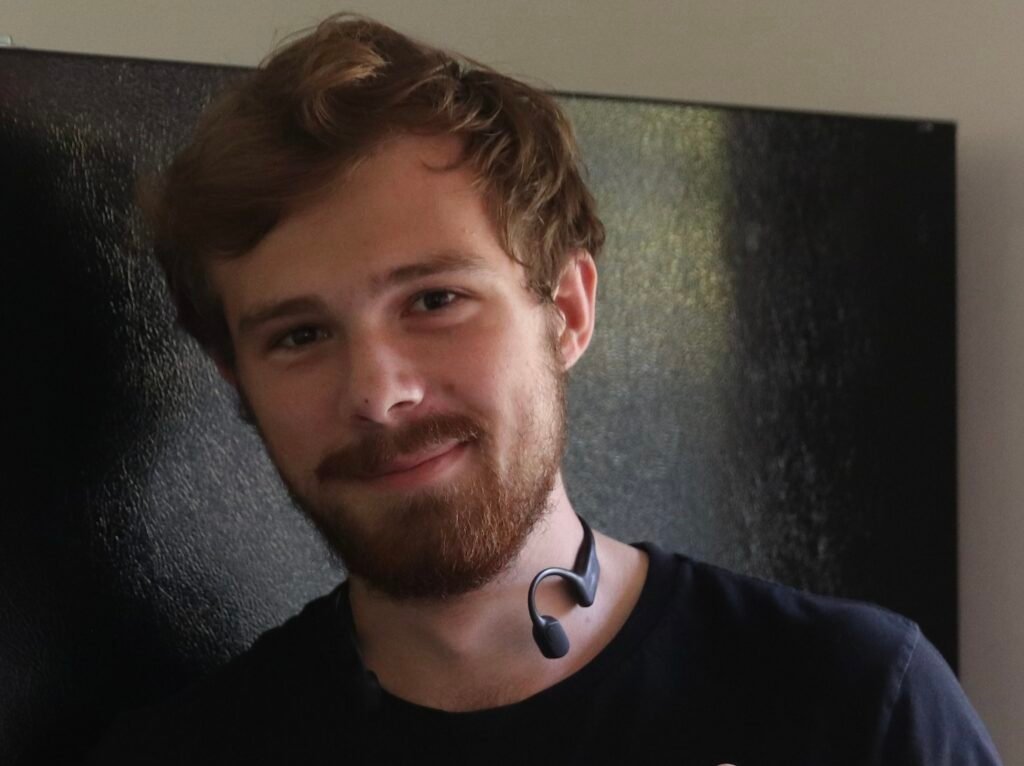
Much of the film’s tension comes from the contrast between Jaime and Taylor’s personalities. What interested you most about placing these two very different characters opposite one another?
What really interested me is how they are actually similar. Taylor understands Jaime because he’s been there before. He’s just naturally a lot more social and jovial than Jaime, who clearly struggles to make friends in the best of times. The really fun part is when we see Jaime bring that dark side of Taylor back out again, something he thought he was past. The story is really a tragedy for both of them where Jaime got the thing she was chasing and it wasn’t enough, and Taylor fell right back to the person he tried so hard not to be.
The fencing club becomes almost a character in itself, with its moody atmosphere and sense of isolation. How did you work with your cinematographer, Christian Kelly, to create that visual tone?
Christian is a supremely talented DP. I wanted to shoot a lot of the film on longer lenses, and have moody, high contrast lighting, and she got it immediately. She managed to create a tense distance between us and the characters that I was looking for. We did get very lucky with the location though. Just the overhead lights were almost perfect lighting-wise on their own, and Christian and Devon Rocke, our gaffer, did a great job of enhancing that. I also loved that it was a small, intimate space. There wasn’t really a place for either character to hide.
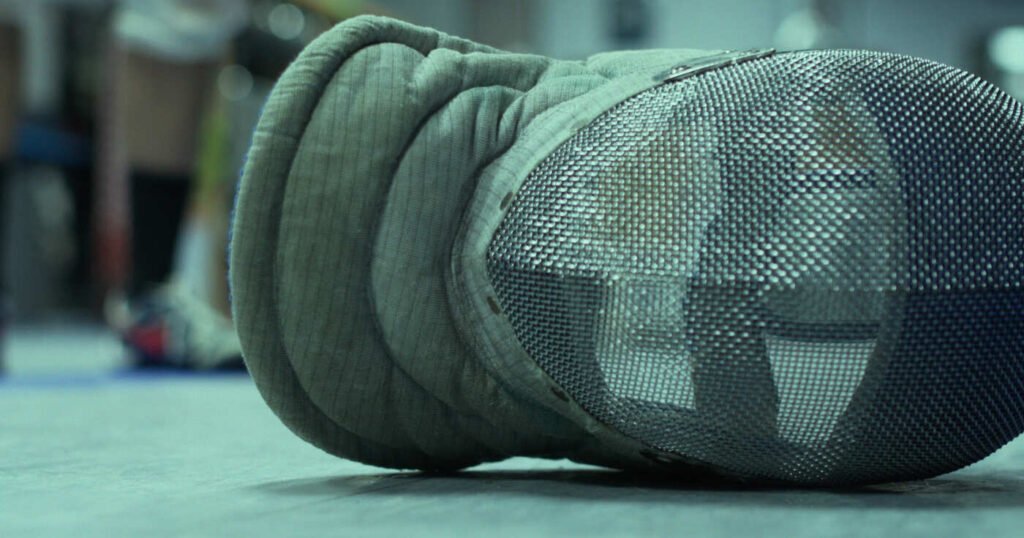
As both writer and director, how did your perspective on the story evolve between the script stage and the final edit? Were there any discoveries you made during production that changed the film?
I think as the process went on, I felt more and more strongly about how tragic the story was for the characters. Jaime is someone who struggles socially, and she has the opportunity to form a real connection with someone who is also in this small fencing community, and she loses it essentially for nothing. This idea really solidified for me when the composer Brandon Cericola was showing me the last few drafts of his score. For how grounded the film is intended to be, the music is very operatic, and I love how big it makes this small story feel.
Although the film is set in the world of fencing, its themes of obsession, self-worth, and validation extend far beyond sports. What conversations do you hope the film sparks among audiences?
I hope audiences talk about how they are chasing validation. It can be a really harmful cycle if you let it consume you, and ultimately what I was trying to express in the film was this feeling that validation isn’t something you can ever catch up to. It’s this goal post that keeps getting moved up the closer you get to it, always out of reach no matter what you do. So I hope it will get people to question what they’re chasing. And why.
On Guard began as your undergraduate thesis project and has now screened at festivals including RiverRun. Looking back on the journey, what has this film taught you about yourself as a filmmaker?
I think it’s become a real guiding light to the kinds of films I want to make. I had a really wonderful experience making this project, especially working with the actors for as long as I did. It was really fascinating to have designed the film very specifically from a cinematography and sound perspective, but still be informed by what the actors were doing. Getting to hear their thoughts about how they wanted to approach the scene really made me appreciate investigating the psychology of a character in a story, and that’s the kind of work I want to continue doing.