




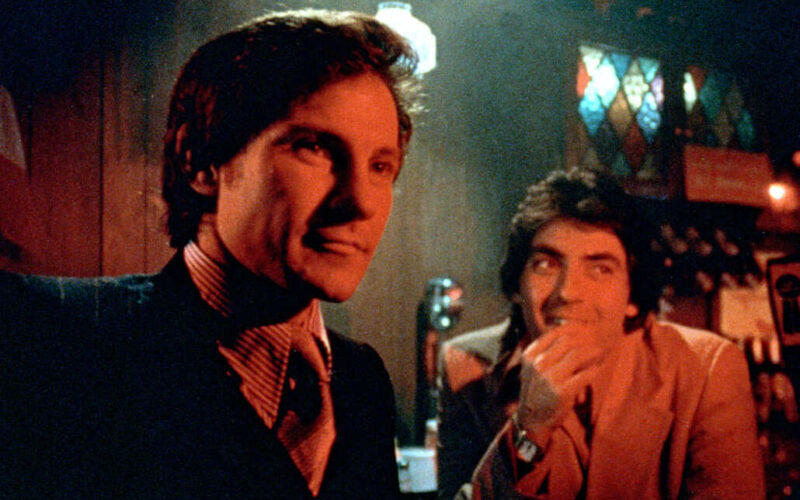
Shot on a modest budget and steeped in the Catholic guilt, urban chaos, and street-level grit that would define much of his career, the film feels less like a polished product and more like a confession. You can sense the urgency of a filmmaker with something to prove, someone turning the camera on his own world and refusing to look away.
At its center is Harvey Keitel’s Charlie, torn between ambition, religion, and loyalty to his reckless friend Johnny Boy, played with electric unpredictability by a young Robert De Niro. Their relationship is the heart of the film — equal parts loyalty and destruction — and it plays out against the claustrophobic backdrop of Little Italy bars, pool halls, and tenement streets. Scorsese doesn’t give us grand plot twists or sweeping arcs; instead, he lets the story unravel in jagged bursts, punctuated by fights, debts, and small betrayals that feel as messy as real life.
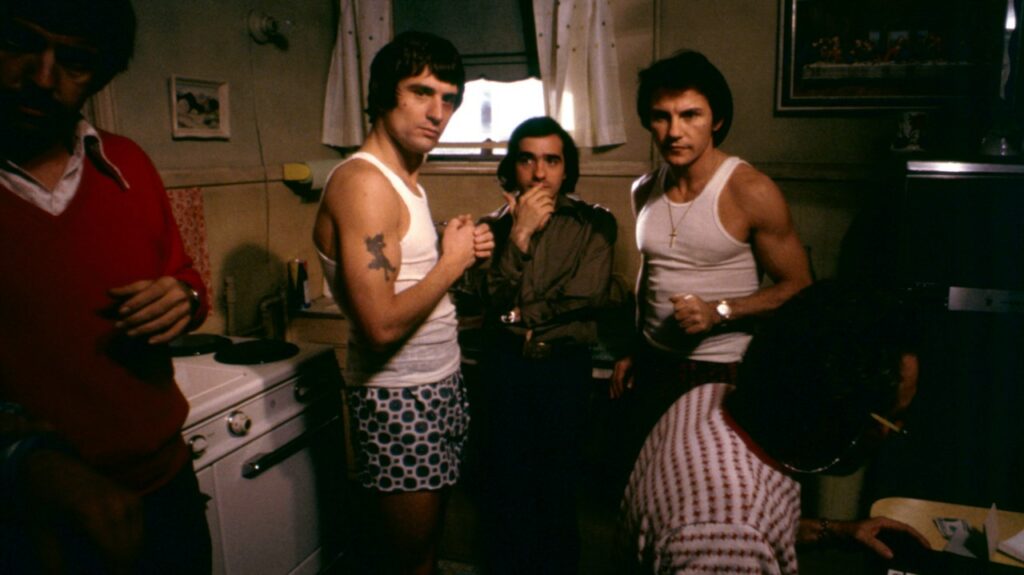
What makes Mean Streets timeless is its style. The restless camerawork, the sudden shifts in perspective, the iconic use of pop music — from the Ronettes to the Rolling Stones — all feel like a young director reinventing cinema on instinct. These choices weren’t slick; they were raw, intuitive, and deeply personal. The result is a film that still feels alive, less like a relic of the ’70s and more like a reminder of how thrilling independent filmmaking can be when it bleeds straight from the filmmaker’s own experience.
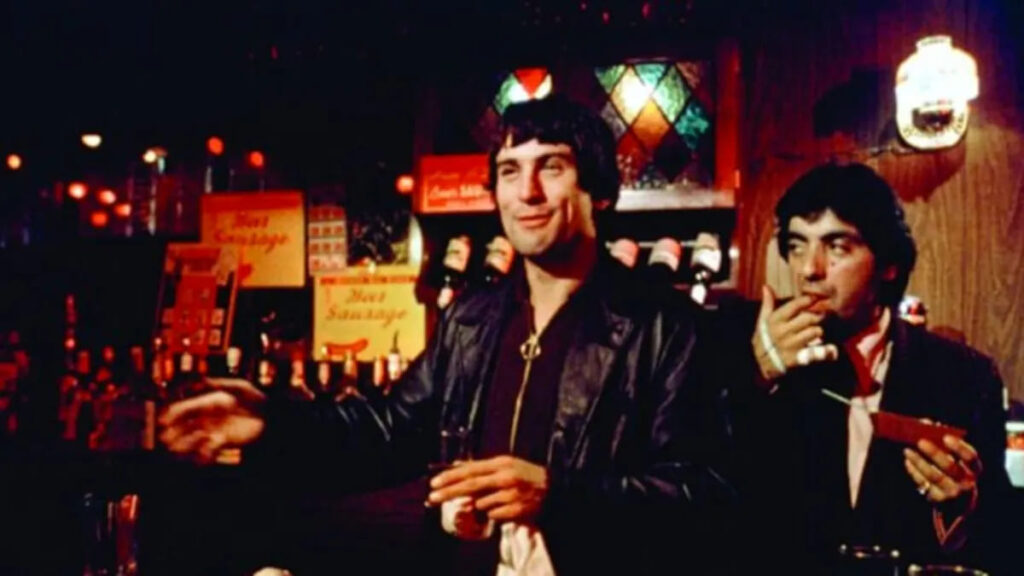
Watching it now, over fifty years later, you can feel the DNA of modern indie cinema pulsing through every frame. The handheld immediacy, the blending of documentary realism with narrative fiction, the way character takes precedence over story — these are choices countless filmmakers would borrow and reshape in the decades to come. But in 1973, they were nothing short of radical.
As a Sunday rewatch, Mean Streets isn’t comforting — it’s restless, messy, and full of nervous energy. But that’s exactly why it’s essential. It reminds us that independent film isn’t always about polish or perfection; sometimes it’s about urgency, voice, and vision. Scorsese gave us all of that here, long before the world knew his name, and the echoes of Mean Streets can still be felt in every indie filmmaker who dares to put their own world on screen.