


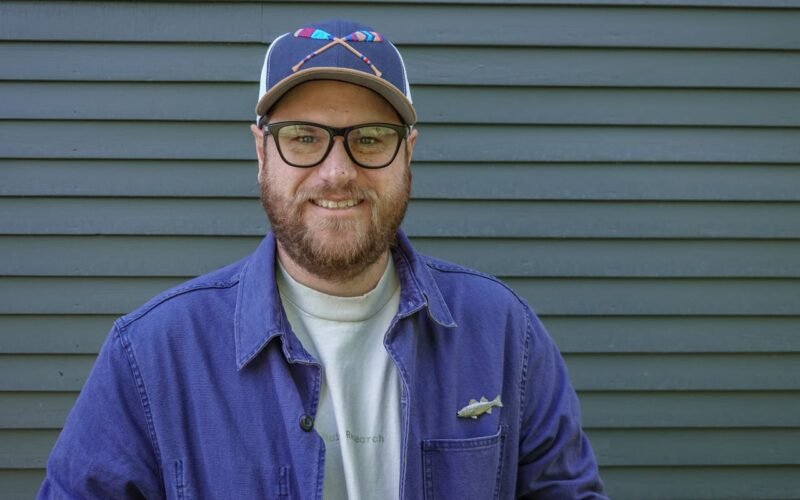
Following the film’s screening at the 2026 Newport Beach Film Festival, Buck speaks with IndieWrap about capturing Alden’s perspective, the importance of language, and his plans to expand the film into a series exploring parenting, accessibility, and inclusion.
Dragon Mom began with a different subject, and Laura initially came on board to help your team with language around disability. How did those early conversations influence the film you ultimately made, and when did you both feel ready to turn the camera toward her family?
Drastically. Those early conversations around the language of disability began with trying to be as dialed as possible with our language as a team, and that then became the entire backbone of the film. We had discussed early on having Laura and Alden be in the film, but it was really Laura speaking up and saying that there is enough of a story in their lived experience alone that made her our main subject. When I heard that from her, we pivoted to just focusing on them, and stripped away anything else added. One reason why I love this medium is because often times you set out to learn more about one topic, and end up uncovering a much richer story. I was very excited to explore adaptive skiing and am so grateful to have ended up learning about accessibility and what true inclusivity means. I love being able to spread that message through this creative story telling.
Your background includes filmmaking in the outdoor and adventure sports world. How did filming Alden’s introduction to sit-skiing challenge your own ideas about what makes an outdoor story compelling?
I don’t think it challenged my ideas, it affirmed them. I have long been an advocate that the story can be more important and more of an engine than the action or the visuals need to be in outdoor film making. Being able to also add ski filmmaking into an otherwise less active film was the idea all along. How can we make a compelling “ski inspired film” without action, powder snow, blue skies… just their lived experience? We’re proving that it is possible. It’s been great to be able to straddle the line of entertainment and advocacy. So much of the focus in outdoor sports filmmaking is to try and sell a product or experience, and doing so with dazzling imagery, athletics and locations at the “top of the game,” so to speak. I have been very focused for the last 9 or so years on telling human stories. Outdoor sports have been a huge part of my life, and so much of the experience of being outside isn’t the sickest, gnarliest thing in that sport. I believe that we can tell beautiful stories and also have it feel accessible to people beyond the endemic audience.
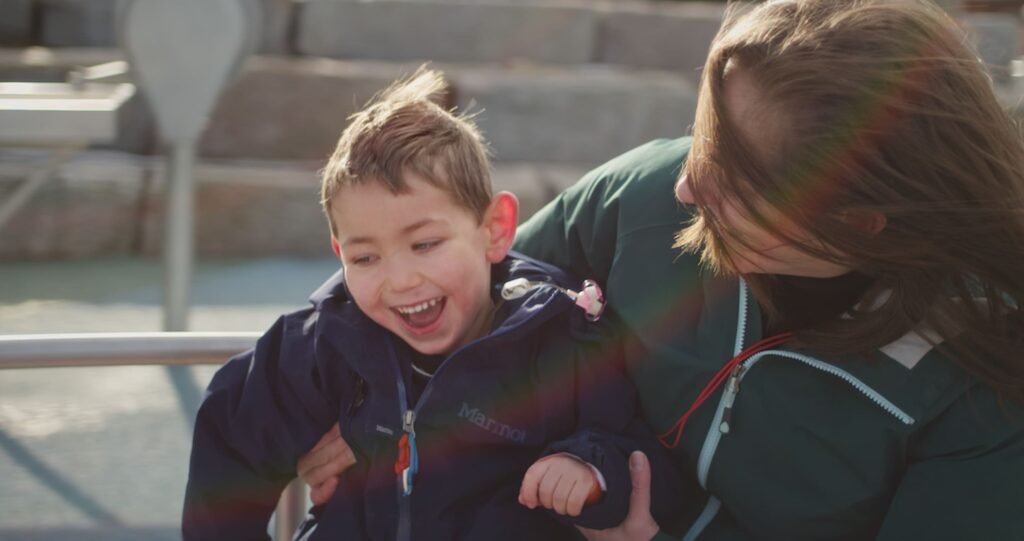
You’ve said that capturing Alden’s perspective was central to your conversations with cinematographer Matteo Moretti. How did you translate that intention into choices about camera height, framing, and whose reactions to follow?
This was a very deliberate series of conversations we had. Capturing Alden’s perspective in as many ways as possible was the goal. As any person who has used a wheel chair knows, that “up the nostril” view of others is very real. We wanted to capture Alden’s lived angles as much as possible and get his lived perspective as possible. Matteo is a wildly intuitive camera op, and Laura is also crazy observant, the two of them had an unspoken way of communicating that led to some of my very favorite shots in the film. For someone who hadn’t been on camera before Laura had amazing instincts and awareness of Matteo without ever letting it distract her.I learned so much from that and will take that into directing subjects in the future about how to keep living while a camera is moving around you in your own house.
Laura’s voice guides the film, while Alden communicates without spoken language. How did you make room for his preferences, personality, and responses to shape the story alongside his mother’s account?
At first mostly taking cues from Laura, who spends so much of her life trying to communicate with Alden, and get to know who he is. I spent a lot of time of time trying to understand all of the aspects of Alden and his lived experience, from the time he spends by himself, to the pace of his life, to the volume of other things around him. We tried to execute this mostly in the sound design and ambient sound choices, to hear all the other sounds that make his “voice”.
Filming family life, caregiving, and physical therapy requires a particular kind of trust. How did you and Laura establish boundaries around what could be filmed, and how did you respond when Alden needed space from the camera?
We started slow deliberately. Our first day of shooting was at Parlor Skis, and without Alden on purpose. In a lot of ways it was a camera test and just to see how Laura would respond, and she was so natural. Mark at Parlor is very comfortable in front of the camera and was a great guide, and Matteo is able to get close when the time is right and very intuitively knows when to provide space. Laura and I have been friends since childhood, and had built trust before. We deliberately kept it to the 3 of us most of the time. Alden was not shy at all in front of the camera, never seeming to want space from it. When he was tired and ready for a rest, that would usually indicate time to pause.
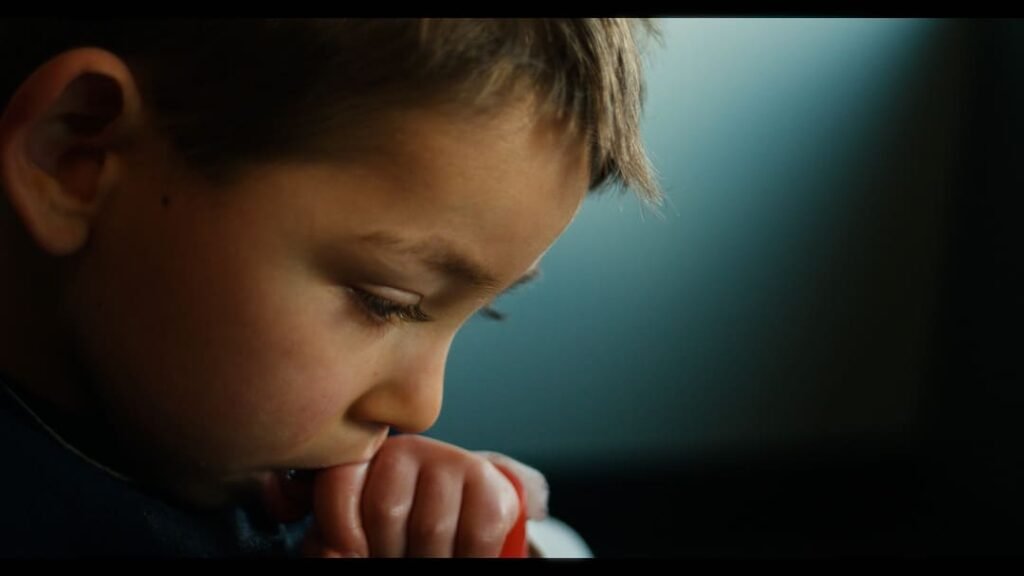
The film explores accessibility through experiences such as visiting a playground and getting onto the slopes. How did you decide how much context to give viewers about the barriers the family encounters, while keeping the story grounded in their daily lives?
I think by doing just that, sticking to their daily lives. By stripping away any added ideas of what they could or should do with their time, and just be with them.
Laura’s story holds gratitude, grief, joy, and exhaustion together. In the edit with Billy Montross, how did you preserve that complexity without placing pressure on her or Alden to become an inspirational example for the audience?
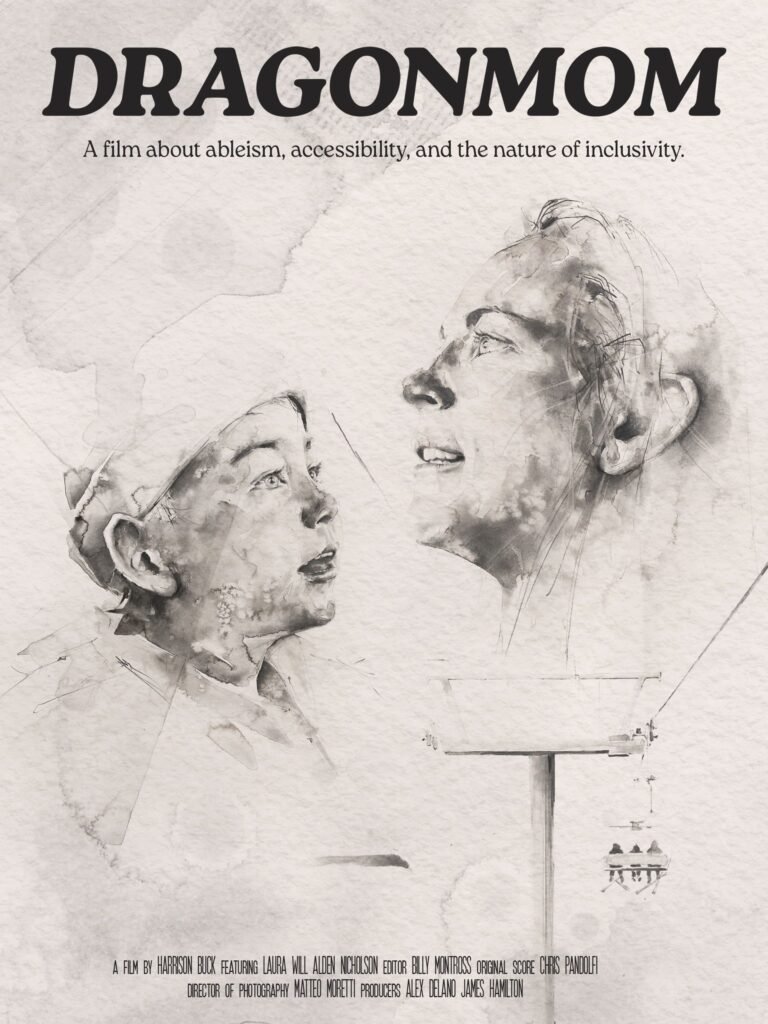
That’s another part of the process we spoke about as a team at length at pretty much every stage of this project. We vowed early to never use the word “inspiring,” in anything, not in emails, bios, the poster – the word is not used in the film. If someone is inspired by Laura or their lived experience, that’s great! I’m inspired by her constantly. But there was much care and attention to it not slide into being “inspirational.” Laura has made an impact on all of the team members. One way she has really imprinted on me is the huge importance of our word choices and the impacts those have.
You’ve described finding richness in the mud, melted snow, and muted colors of a New England winter. What did that visual environment allow you to express about the family’s relationship with the outdoors that more spectacular scenery might have missed?
I loved shooting deep snow on beautiful crystal blue bird mornings in Colorado, or epic Heli ski lines in BC. But, skiing in New England, with a young family, is just not that. In the outdoor industry we talk about “ski porn,” and I have become very disinterested in making that the focus, and instead believe closer to the real lived experience is the more interesting and therefore more impactful story. In New England we don’t get much fresh snow, it’s often cold and gray. That’s just life here, and yet per capita more happy skiers, I believe. In other parts of the country, you could have a perfect skiing day and all you hear are complaints. In New Hampshire, on a gray, cold, firm snow day, very few components. People here don’t need it to be perfect to enjoy that. I thought Abe Goodale’s water colors beautifully represent that. He uses a very muted color palette that reminds me of the colors of a puddle on Mass Ave, and yet there’s so much complexity, warmth and diversity even in those muted browns. There’s a lot to that metaphor to me that describes New England and therefore, New Englanders. On the “nice/mean” axis, New Englanders seem mean but are nice: they pull over to help fix your flat tire, but make fun of you the whole time.
Chris Pandolfi’s banjo-driven score is an unusual musical choice for this intimate documentary. How did you decide where music could deepen our connection to Laura and Alden, and where their voices or the sounds of their surroundings should carry the scene alone?
I’ve worked with Chris before, I shot multiple Infamous Stringduster music videos, and we have since become good friends. I had already delved into this metaphor about Abe’s water color palette, and was visualizing filming in Boston in the winter, feeling the mud puddle vibes, and there was this tonal, a-melodic, plucking that I kept hearing in my head. I reached out to Chris not sure if he’d be interested in designing a score, and thankfully he was! I was so excited about this score, and the process of working with Chris, I think it fits beautifully. He ended up writing 5, I think, separate vignettes, and Billy being the wizard he is, turned that into the beautiful score we hear in the film. Chris seemed to really enjoy the process as well, we are both super excited to get back to more work like this.
Now that Dragon Mom has screened at the 2026 Newport Beach Film Festival, what audience reactions or conversations have stayed with you, and how do you hope to build on that response to encourage greater inclusion in the outdoor and filmmaking communities?
I am super excited about the response the film has been getting at these film festivals, it’s been fantastic. What really gets me going is the response to wanting more of it. We are in development of a series about parenting, accessibility, and inclusion using Dragon Mom as the pilot, so I’m really looking forward to bringing more storytelling like this to a hopefully even broader audience.