

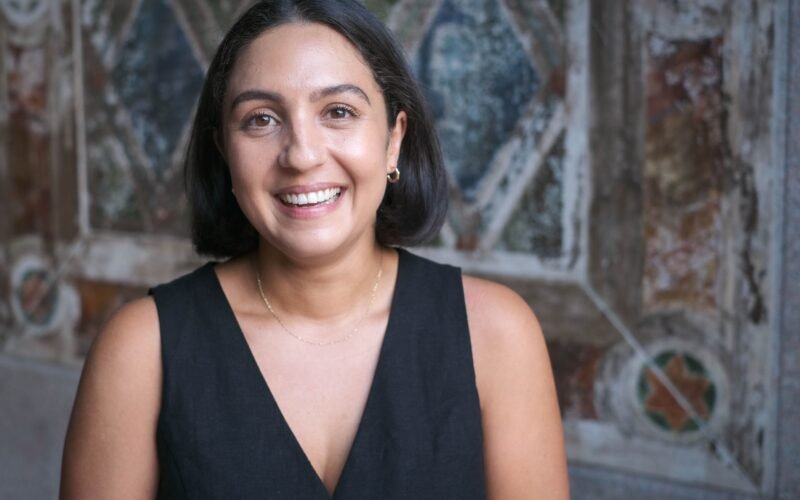
How did you first connect with Jessie Weber Kass and A Nice Lady, and what about Gwen’s story made you want to help bring it to the screen?
My producing partner, Julie Deffet, was connected to Jessie through a mutual contact. Jessie sent Julie the script, and we both liked that it put this imperfect woman at the forefront. I was also drawn to how spicy the story was, and to how this woman had many facets and unresolved issues that seemed to have compounded over time. I love that the story pulls at these different threads that are clearly new to her, and that her reactions are perhaps surprising to her as well.
You spent years curating films before moving into producing. Was there something in this script that caught your programmer’s eye, and how did that perspective inform your work on the film?
When I was programming short films, I would always look for stories about marginalized communities, made by folks from those communities, as well as stories about women, by women. So when I read A Nice Lady, met Jessie, and learned that she also wanted to bring together a women-led crew, including the producers, director of photography, and assistant director, I definitely wanted to be a part of the moviemaking experience with her. These qualities, along with the story, often resonate well with festivals and audiences alike.
Gwen craves connection, yet struggles with what happens when she lets people into her life. What conversations did you and Jessie have about preserving that complexity without making her either too sympathetic or too difficult to understand?
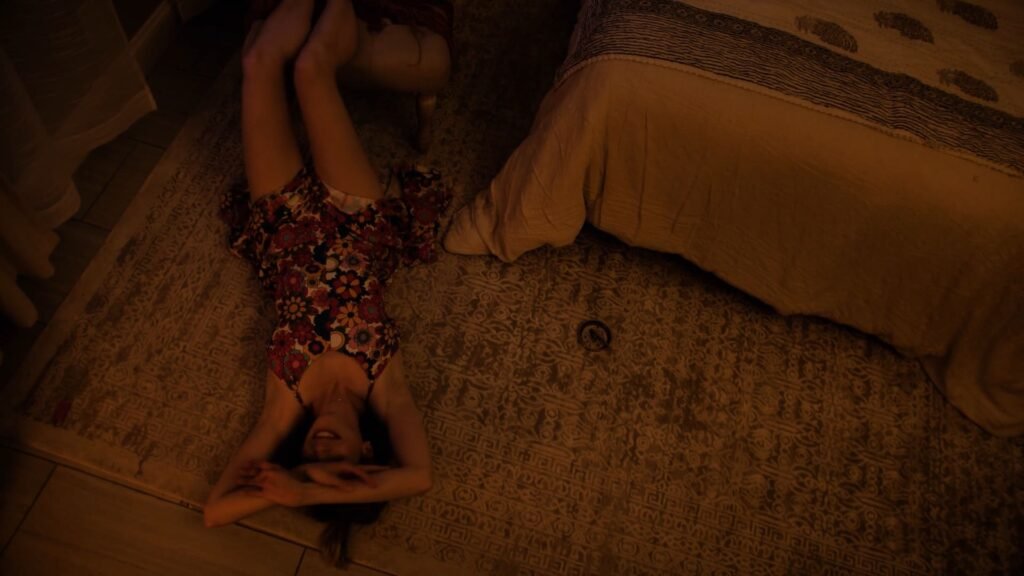
I think there was an understanding that Gwen’s struggles with connection and closeness, as well as her need for approval and validation, were always supposed to come across in a way that felt a little restrained, like she didn’t always have the words to express herself, but her actions really told the story a lot of the time. We had a conversation about how to make sure we were showing and not telling throughout the film, especially when it came to conveying how she saw the world through her own lens. That’s where some creative choices came into play, like the use of the fisheye lens and the sound of her labored breathing.
The film brings together loneliness, artistic ambition, and the lasting effects of past experiences within just 16 minutes. From development through the edit, how did you help identify what the story needed—and what it could leave unspoken?
This is an interesting question. As a producer, I am always trying to understand what the director is hoping will come across in a story, or in any given scene for that matter, and thinking about how to convey that in a way that is effective and sometimes more economical. Sometimes less is more, and in the case of A Nice Lady, so much of the energy and tone is set by the soundtrack and the visuals, which Jessie allowed to do the talking rather than having the actors say everything out loud.
Molly Bernard’s performance anchors the film, while the young couple introduces a very different energy into Gwen’s world. What was your involvement in assembling the cast, and what were you looking for in the chemistry between the actors?
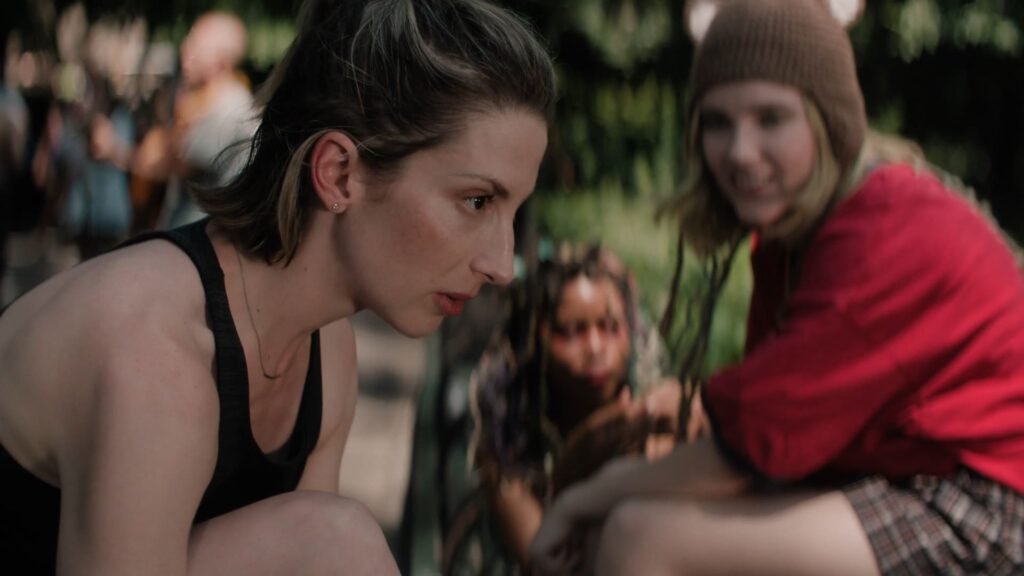
We worked with a great casting director, Stephen Vincent, who connected Jessie to Molly and brought us some great actors for the roles of Zephyr and Hilary. Jessie, Julie, and I sat in on auditions, and I even read lines with Luke and Pearl! We definitely wanted their innocence and naivety to come across, while also showing how self-assured the characters were, at least on the outside and when presenting themselves to the world. We wanted the young couple to feel entangled with each other, and Gwen and Zephyr to have a different connection that felt a bit more lustful. Yet they were also connected by a shared background of growing up in a highbrow world but feeling in the shadow of it all.
Central Park and Gwen’s rent-controlled Upper West Side apartment place the story in a very specific New York reality. What did it take to bring those settings to the screen, and how did the city shape your production decisions?
New York City plays a role in the film in many ways, and finding the right locations to match that was no easy feat! As for the apartment, we got very lucky, and the location was provided to us by a friend of the production. We did have our work cut out for us, though, since we needed to really build out the set and create an art studio within the apartment. We had a wonderful art director, Palakh Khetrapal, who worked diligently to bring that location to life. Having Gwen run and meet Zephyr and Hilary in Central Park was pivotal to the story, and you really can’t fake that. Luckily for us, you can get a permit to film in New York City parks for free or at a low cost. But shooting in such busy public spaces poses its own set of problems, like crowd control, a lack of bathrooms or places to change, no power, and having no control over sound and weather. With proper work in prep, we were able to make filming in these locations work really well for us, even as we battled a July heat wave! Our amazing crew managed to get all the equipment wrapped up just before a huge storm rolled in. The weather gods were definitely on our side that day!
Selling her art appears to offer Gwen a breakthrough, but it also complicates her relationships and sense of self. As someone working across independent film and commercial production, what interested you about the film’s relationship between creative recognition, money, and vulnerability?
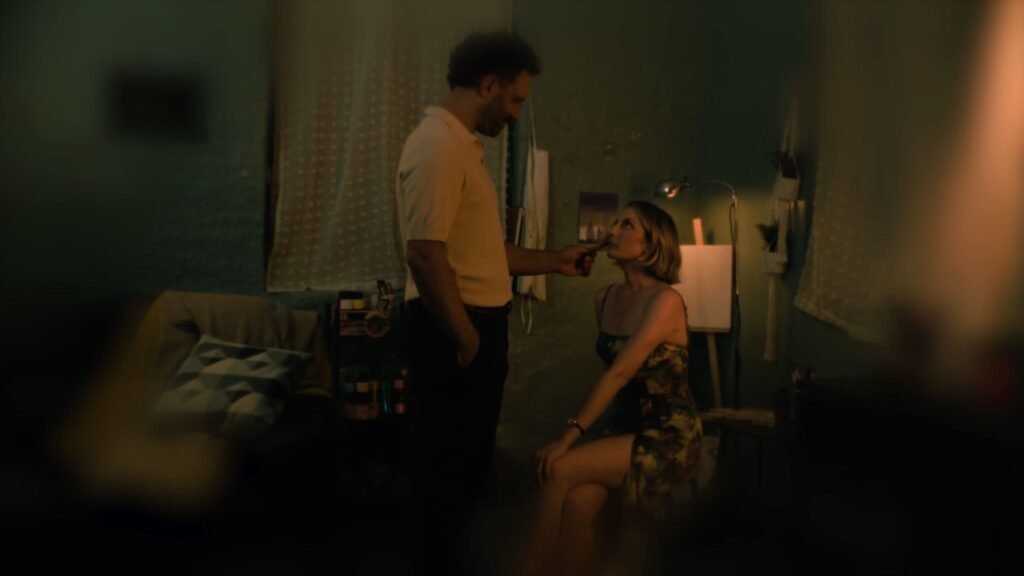
Gwen’s combative reaction to how much Zephyr and Hilary want to sell her paintings directly conveys how, at times, I think we can all equate the worth of our work with how much we’re being paid for it. I definitely struggle with this a lot working in the film industry, trying to determine when I should take on a job for a lower rate and when it’s important for me to ask for more compensation. It really always comes down to the job and the situation, and having a compass that guides you. Sometimes we have to take jobs for the money, and sometimes we forget payment is even involved because we love the project so much, but that can expose our vulnerabilities as well. In order to make decisions that feel true to myself, I try not to lead from a place of desperation, but from one of curiosity and being informed, as much as I can and A Nice Lady actually kind of touches upon how easily it is for these emotions to conflict with one another and pull us in different directions, which I think can be an exhausting reality and one interesting to explore though Gwen’s journey.
Producers often make crucial creative contributions that audiences never see. Can you share a specific moment on A Nice Lady when a practical limitation required a decision that ultimately strengthened the film?
Going back to my previous answer, always trying to understand what a scene is meant to convey, and how the director needs it to move the story forward, allows me to better see where and how we might have to pivot when it comes to practical and budgetary limitations, without compromising the story. There is a scene in the film where Gwen almost gets hit by a bike in Central Park and Zephyr saves her, initiating her attraction to him as well as strengthening her pity for Hilary and her pull to help them both. In the initial script that Julie and I read, Gwen was supposed to be hit by a car, but that would have involved much more complicated logistics and cost a lot more money. Rather than losing anything, the scene became simpler and more focused. All of the feelings and emotions still come across with her almost getting hit by a bike, and the scene propels the story forward.
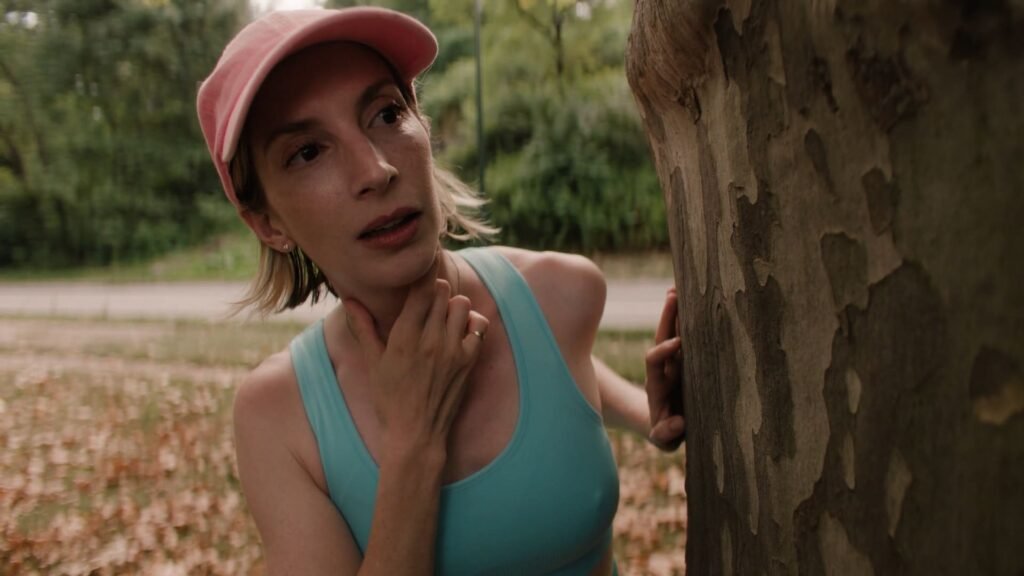
A Nice Lady had its world premiere at the 2025 Chain NYC Film Festival before travelling to other festivals. Having experienced screenings as both a programmer and a producer, what stood out about watching this film with an audience, and did any reactions surprise you?
Seeing a film on a big screen, especially one you played a role in getting there, is such a special experience. You feel attached to it in a way you don’t when you’re viewing it as a programmer or audience member. There is a sense of pride and accomplishment for me, and not to mention, you notice all the “mistakes” that no one else sees! Some of the audience reactions that surprised me were how much people were thinking about who the “villain” was, so to speak, and who was playing whom, versus how I perceived the story, which was more through a lens focused on Gwen’s journey, her imperfections, and her struggles.
You’ve described your work as a way of connecting artists with audiences. What do you hope viewers carry away from Gwen’s story, and what has making A Nice Lady clarified about the kinds of films you want to champion next?
I hope that audiences can walk away from A Nice Lady relating to the idea that we as humans are all complicated, that we make decisions by acting on our impulses without thinking them all the way through, and that sometimes those decisions have consequences, but they may not be the end of the world. Making A Nice Lady has clarified for me what is exciting when I’m looking for new stories to tell and new creators to work with. Narratives with an edge, that say something a little bit different or colour outside the lines, will always be the ones that draw me in. Alongside that, exploring complicated relationships and character-driven stories will remain a top interest for me.