



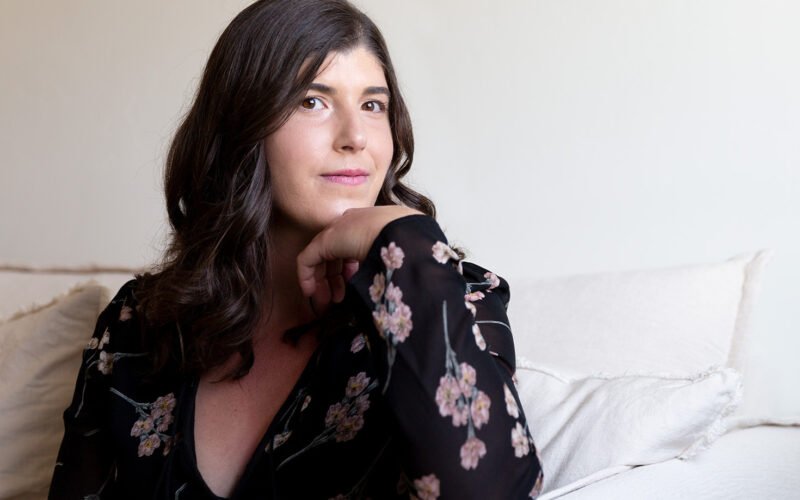
Created over three and a half years alongside the development of Bloom’s Montana-based studio The Sisters Bloom, the film became as much about building a new way of making animation as the story unfolding on screen.
In conversation with IndieWrap, Bloom discusses telling the story without dialogue, allowing the land to become a character of its own, the patience required by stop-motion, and her ambition to help make healthier, environmentally conscious practices a new standard for the industry.
The Farmer’s Daughter begins by looking at the land across generations before narrowing its focus to one father and daughter. What interested you in connecting the history of a family with the history of the soil beneath them?
In researching regenerative farming, it became clear that we cannot learn how to heal
the soil without understanding how it got to its current state. And we can’t talk about the
history of soil without including humans in the conversation. Farming is solely a human
activity so I wanted to show a brief history of how native prairie land evolved into a
modern conventional farm. As I developed the main storyline with the father and
daughter, it made sense to focus on one piece of land and one family farm, which tied
into the daughter’s ultimate motivation and desire to continue her family’s legacy.
The daughter isn’t simply trying to save the farm financially—she is challenging an inherited way of thinking about the land. How did you approach making that generational conflict emotional rather than simply ideological?
From the beginning, I knew this story would be character-driven and that meant giving the daughter a strong desire: to inherit her family farm. When her father puts the farm up for sale, it takes away her dream and motivates her to find a new way. In making her father first an opponent and then an ally, I was able to keep the story rooted in the daughter’s emotional journey with him as her foil.
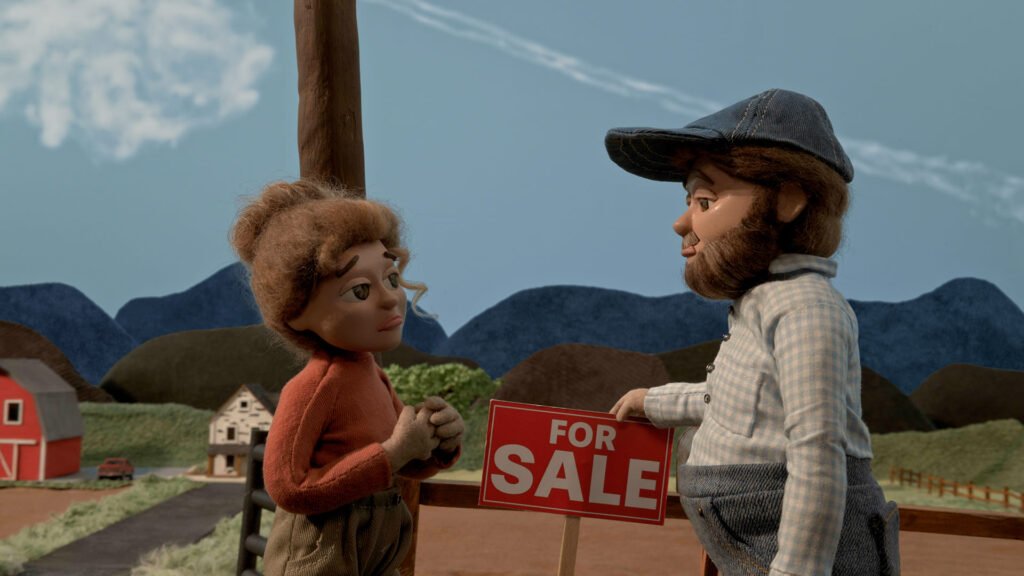
The film tells its story without spoken dialogue, relying on gesture, composition, sound, and music to communicate both family tension and fairly complex ideas about regenerative agriculture. What did that limitation allow you to express visually that dialogue perhaps wouldn’t have?
It was a personal challenge to tell this story without dialogue because I noticed in my writing that I was relying on dialogue as exposition, which is very common, but can weaken a story if overused. I was also aware that the amount of information I was learning about regenerative agriculture was too extensive to fit into a short film. So I decided to focus on the visuals and allow the land to become a character in its own right. In doing so, I felt there was less pressure to perfectly explain all the concepts and instead give a general idea of how the farm would transition through these new practices. Then it became about designing the characters to emote visually, especially through their eyes, and empowering the animators to find a nuanced performance that was not overly pantomimic.
Regenerative farming is a subject that could easily become instructional, yet the film remains first and foremost a character-driven story. How did you decide how much the audience needed to understand about the actual farming practices without interrupting the emotional journey?
In interviewing regenerative farmer Rick Clark, it became clear that transitioning a conventional farm to regenerative is a long and complex journey very specific to that piece of land. So I knew I wanted to focus on main principles and broad stroke changes, like wind break trees, no-till planting, and cover crops. Each new practice the daughter implements causes a reaction from her father that, at first, is in conflict with her desire and then in alignment. The true transition happens once her father gets on board with trying the new way.
You’ve described The Farmer’s Daughter as a “love letter” to regenerative farming. After spending years researching the subject and speaking with farmers such as Rick Clark, was there anything you discovered that fundamentally changed your own relationship with food, land, or agriculture?
Honestly, it radically changed my relationship with all three! I was already shopping at the Farmers Market for produce and asking about herbicides and pesticides, but I didn’t fully understand how farming practices affected the soil and, in turn, the nutrient density of our produce. I was shocked to learn that an organic farm could have poorer soil than a conventional one. And I didn’t really know anything about growing food. The biggest thing I learned was that regenerative farming is all about connecting with the land that grows our food. In observing the land, you learn what it needs to thrive rather than applying one-size-fits-all methods. So it became an invitation to get to know my farmers, to learn how to garden in my own backyard, and to have a newfound wonderment and gratitude for every fruit and vegetable on my plate. It also empowered me to buy goods from smaller businesses and farms transparent about their practices.
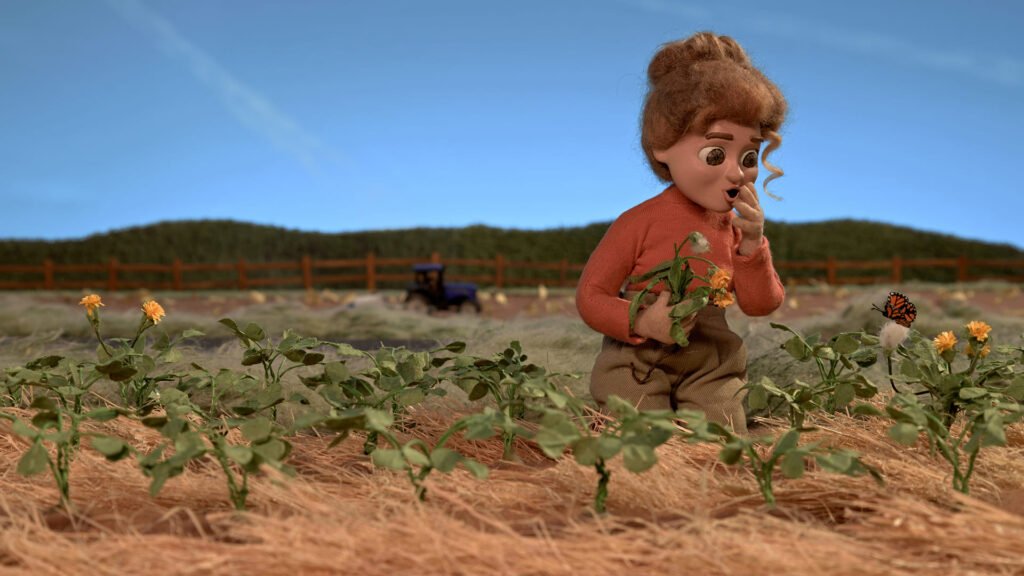
There’s an interesting parallel between the film’s message and its production: the daughter learns to work with natural systems rather than impose herself upon them, while your studio allowed natural materials to influence the design and fabrication process. Did you begin to see the making of the film itself as an extension of its story?
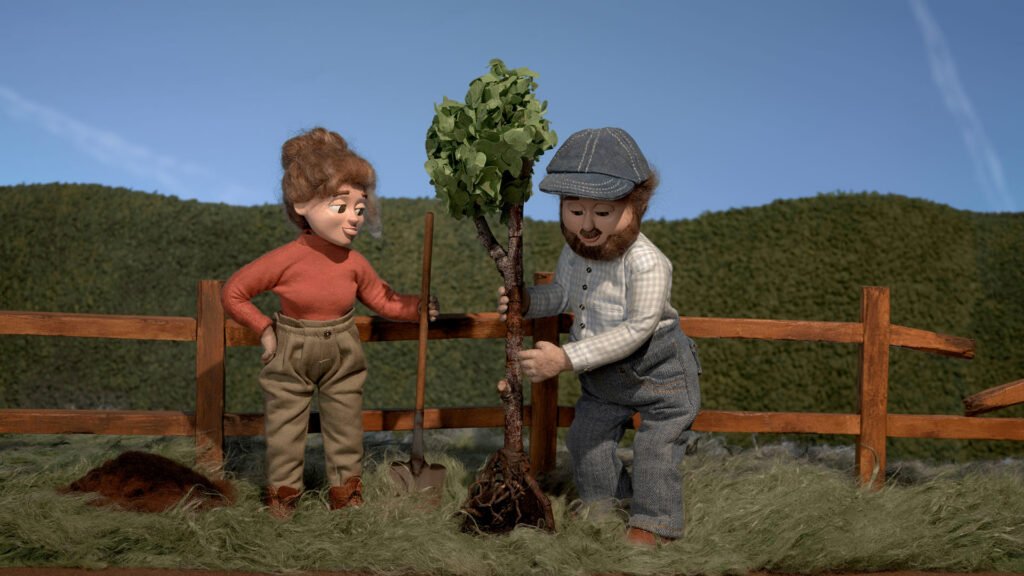
Absolutely. My studio, The Sisters Bloom, is on a mission to reform the stop-motion animation industry with non-toxic and eco-friendly materials and methods. Essentially, to create in alignment with nature. So it’s important to me that every project we take on embodies that ethos. As the production unfolded and the fabrication process was asking for a new material, I was able to find sources that came from regenerative and organic suppliers or that we could forage locally.
Stop-motion depends on extraordinary patience, and this production ultimately stretched across three and a half years. Were there moments when the film’s own themes of regeneration, persistence, and gradual change began to mirror what you were experiencing as a filmmaker?
Almost exactly! So much of the film and studio’s growth happened “underground,” so to speak, like roots growing deeper in the soil. We were working hard and making progress, but couldn’t really show anyone yet. There were times that hours or days were spent experimenting with a material or direction that didn’t work and many deadlines that had to be extended. I really had to allow the process to unfold in its own timing and not force my expectations upon it. So those themes were spot on to the film’s journey, but also guided us to move at a more feminine pace in an industry that is very much operating in a more masculine paradigm.
You deliberately leave visible textures in the wool, bark, clay, and other natural materials rather than pursuing the increasingly seamless finish associated with contemporary stop motion. In an era when digital imagery can imitate almost anything, what value do you think audiences still find in seeing evidence of the human hand?
I believe that everything has a frequency and that people can tell when something is natural or handmade. Our culture has become so disconnected from nature, but there’s also this beautiful remembering. When I watch audiences viewing our film, I can see a calmness settle over them. They are seeing textures their primal brain recognizes and they are listening to music that we tuned to 432Hz, the same frequency at which we hear nature. AI and digital media will never be able to capture that truly natural and handmade frequency that we can accomplish with our craft. Those are real tree branches and sheep’s wool in our film and, in using those materials, we have supported the suppliers who are healing the planet. Our society needs to stop seeing value in profit and convenience and start seeing it in our relationship to the natural world that sustains us.
This film effectively built The Sisters Bloom at the same time that you were making it—from developing new materials and training local artists to creating a studio in Montana. Looking back, what did The Farmer’s Daughter teach you about the kind of filmmaker and studio founder you want to be?
I have definitely experienced immense growth as a person and filmmaker throughout this process. When I started working on The Farmer’s Daughter I held a relatively dark worldview and had a lot of anger and despair over the current state of toxicity and degradation of the environment. In making the film, I realized it was not all on me to fix the world, but that I could start in my little corner. I had moments of intense stress, especially while getting the studio space ready for operation, but eventually saw that I did not have to do it all on my own. I slowly found an aligned crew who showed me I was supported and that this vision was bigger than me. I shifted from the mindset of “I have to do this” to “I get to do this” and my crew really mirrored that back in their excitement. It was important to me to not only omit chemicals from the production process, but also create a healthy work environment with clean water, nutritious snacks, no chemicals, and natural light to allow for optimal creativity. I want everyone coming through my studio to feel valued, safe, and supported. And I also want to be that guiding light that shows people that a better world is possible across all industries.
The Farmer’s Daughter was conceived as a proof of concept for a larger feature and for your broader vision of eco-conscious animation. Now that audiences are finally seeing the short at festivals such as Indy Shorts, what feels like the most important next step—for this story, for The Sisters Bloom, and for the kind of stop-motion industry you hope to help create?
A big theme that has followed me from the beginning of this process is connection. Attending these film festivals, it’s so great to talk with other filmmakers and animators who are excited about the idea of creating in alignment with nature. I love hearing that other people are thinking about this, especially professional fabricators at other studios.
Everyone wants the world to be a better place and my studio is creating a ripple in the stop-motion industry for others to take note of. Right now I want as many people as possible to know about The Sisters Bloom’s mission and that’s why I chose to share about our feature film while it’s in development. My goal is for the materials and methods we innovate to eventually become the standard practice, so a bigger and longer production with more people collaborating to develop new methods is the next step.