




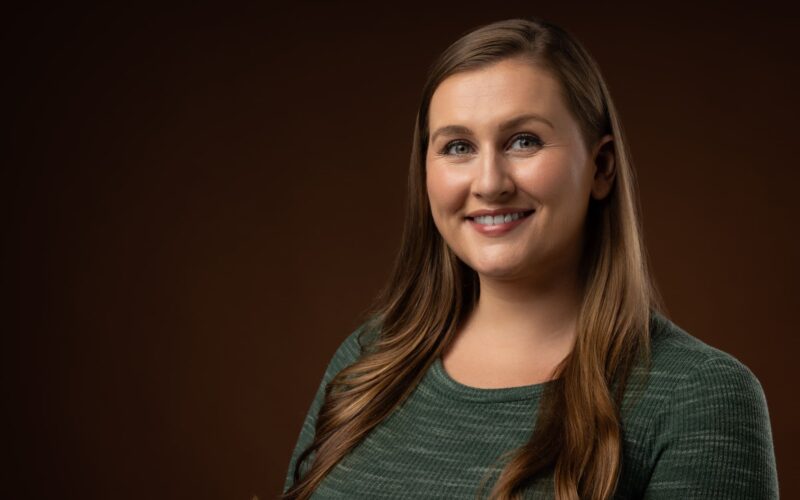
In this interview, Olivia discusses turning a true story into a fast-paced satire, creating a vibrant visual world inspired by the bisexual pride flag, balancing authenticity with comedy, and why she believes meaningful stories can be both entertaining and emotionally lasting.
The Closet takes the familiar “coming out” narrative and turns it on its head. What attracted you to exploring a situation where the fear of judgment comes from within the LGBTQ+ community rather than outside of it?
As a bisexual person, I’ve felt more scrutiny from my lesbian and gay community members than I have over my straight friends in years past. Biphobia is a real thing that happens within the LGBT community, though I don’t think there’s a lot of media representation around it. There’s a lot of nuance around being a bisexual person and I think it’s time we explore more of it.
The film packs a lot of humor, character dynamics, and social commentary into just five minutes. What were the biggest storytelling challenges in working within such a short runtime?
I think the biggest storytelling challenges were, how do we get the nuances of being bisexual and how we are perceived within the LGBT community without it coming off as cliché. I also wanted to be clear that Olympia, our main character, knew that she would be supported by her straight friend because we know that straight friends are either pro LGBT or not, and that we don’t always know how our gay/lesbian friends will respond to being bisexual.
Because the story is inspired by your own experience, how did you balance personal authenticity with the heightened, comedic tone of the film?
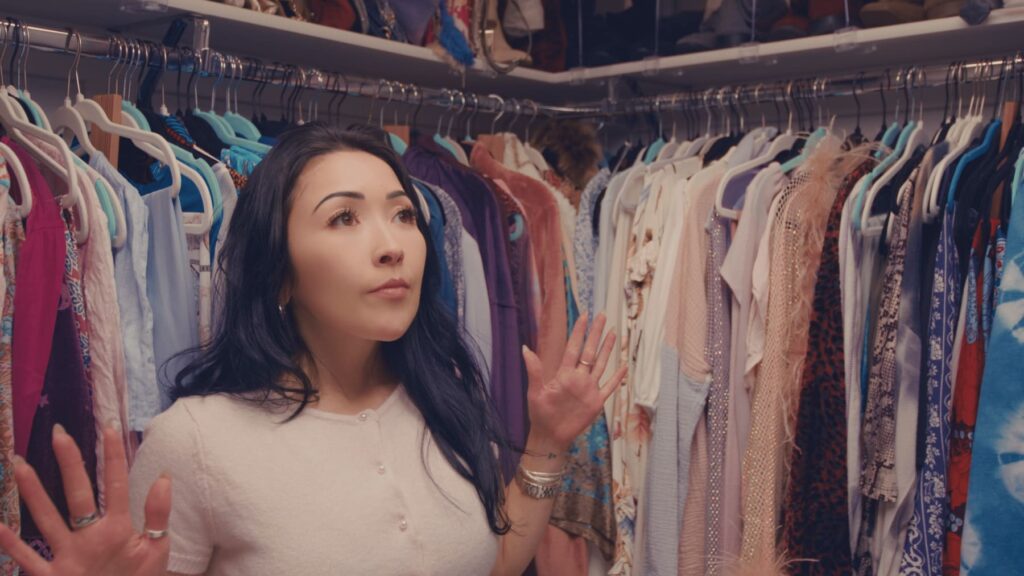
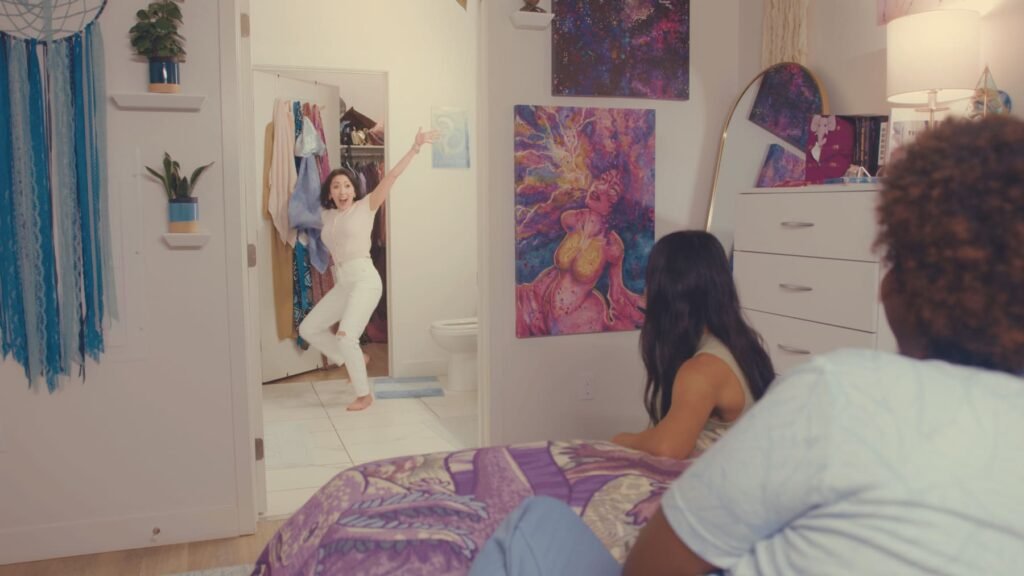
So the funny thing is, the humor of the film was actually the most authentic part from my coming out story. I literally jumped out of the closet to tell my friends I was bisexual back in high school. What I changed was the time, being later in life, that Olympia came out to her friends and instead of it being a bunch of straight high school girls, it was her mostly queer friends. Though I have no trouble telling anyone I am bisexual now, I know how nerve wracking it can be to tell people you love and not be sure of their response.
Olympia’s journey is both funny and surprisingly relatable, even for viewers who may not share her exact experience. How important was universal relatability when developing the character and the script?
Honestly, universal relatability was not a concern or priority of mine. I wanted Olympia’s character to be real and genuine and I’m so lucky that Amy Ward did such a great job bringing her to life. I think when you focus on a character being honest and genuine to the moment as the top priority it’s hard not to relate to those human experiences.
The film uses a bright, playful visual style that contrasts with the anxiety Olympia is feeling. Can you talk about your visual approach and how production design, costumes, and color helped shape the film’s identity?
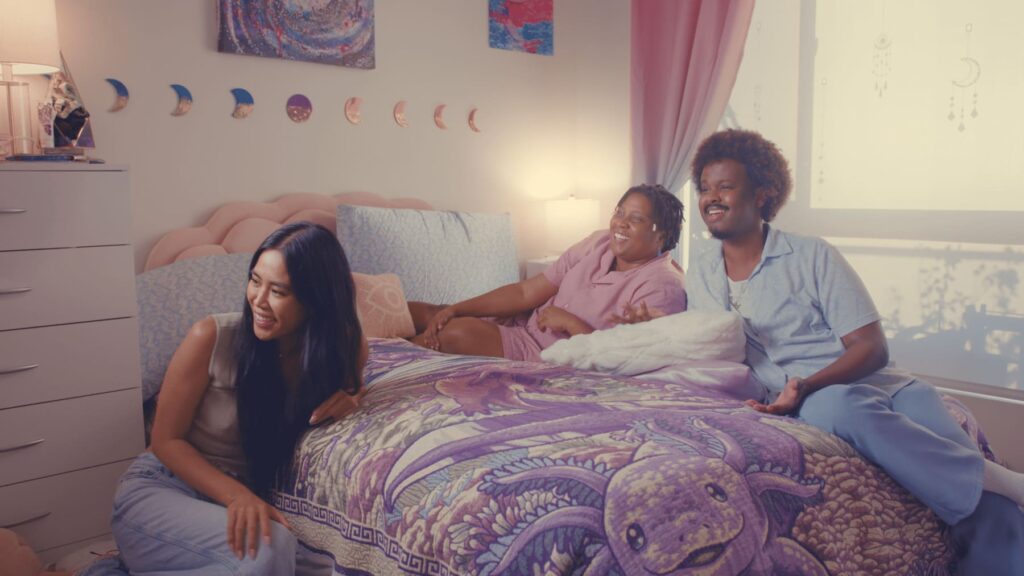
I knew I wanted to have a specific look and feel from the second the story came to me. Everything goes back to the pink, purple and blue of the bi pride flag, I wanted it to be present throughout the film. Being bisexual can easily be overlooked if we only focus on someone’s current partner or dating history. Though, for us, it is ever present, within us and around us, regardless of partner or no partner at all. It was also intentional that all the LGBTQ+ characters were wearing the bi pride colors, while the only straight was in green.
Gray serves as both a source of tension and comedy throughout the film. What interested you about exploring judgment and gatekeeping within friendship groups, and how did you approach that character without turning him into a simple villain?
I have a few friends like Gray, who are a little bit more judgmental, and may not be the most politically correct at all times, but we can still usually laugh with them. You just hope that their scrutiny is never turned towards you. I think a person like Gray is more surface level judgmental as a way of being opinionated, funny, and liking to hear himself talk. We as friends know that judgment never goes too deep, it’s just the spicy style of how he expresses himself. It was easy not to make Gray a villain because no one wants a friend like that, he just likes to push boundaries though his love for his friends is genuine.
You wrote, directed, edited, and produced The Closet. How did wearing so many creative hats influence the final film, and what did you learn from taking on such a hands-on role?
As a control freak, it was nice to be able to control every aspect of my film, but as a human, it was a nightmare! On this film, I also taught myself how to use premier pro and I gave myself a four day deadline. I don’t recommend anyone do what I did, but I definitely learned a lot. I am proud of what we created, but I will definitely be finding an editor in the future who understands my vision.
The film has already connected with audiences through its humor, but it also touches on real conversations around bisexual visibility and acceptance. Have any audience reactions surprised you since the premiere?
I love when fellow bisexuals tell me I’ve captured a nuance of our community that is rarely touched on, reinforcing the importance of representation. I think the biggest surprise I had with my film is that my international friends are not familiar with the concept of “coming out of the closet”. The closet, or even coming out, is a very American idea I’ve since learned, so I had to explain the significance of that to my African and European friends who saw my film.
As both an actor and filmmaker, how does your performance background inform the way you work with actors and build chemistry between characters on set?
My training as an actor reinforces that you only truly believe the character is real if they’re pulling from something genuine. I knew I needed them to feel like real friends on the screen, even though they only met that day so we worked on it. I made sure to have a bit of time on set before we started rolling to sit down with my cast and have them share with me, how they as their characters knew each other, and a few moments they had shared within their friendship. I also wanted the energy on set to be comfortable and fun because I knew it would carry over into the film.
The Closet feels like the work of a filmmaker interested in telling meaningful stories through an accessible and entertaining lens. Looking ahead, what kinds of stories are you most excited to tell next, and what themes continue to inspire you as a director?
I love being able to talk about serious moments, but still being able to keep it light. Life can be so hard and heavy, and the baggage doesn’t ever become any less we just become stronger. I want my work to be enjoyable while you experience it, but I also want you to carry it forward with you after it is over. This is where my background in food comes out, I want the first bite to be delicious, but I also want the complexity and depth of the experience to continue to develop within you.