





From its opening scene, MIRROR makes it clear that appearances cannot be trusted. Writer-director Wes B. Clark establishes an uneasy atmosphere before the opening credits have even appeared, delivering an early surprise that immediately draws the audience into the film’s world of fractured memories, buried trauma and shifting identities.
Recently named an Official Selection of the 2026 New York Lift-Off Film Festival, MIRROR follows estranged twin sisters Kara and Zara as they reunite following a death in the family. Their encounter quickly reopens wounds that neither sister has properly confronted. Zara left home to escape their difficult mother, while Kara remained behind and carried the burden of caring for her alone. The resentment between them is therefore immediate, but Clark gradually reveals that their relationship is even more complicated than it initially appears.

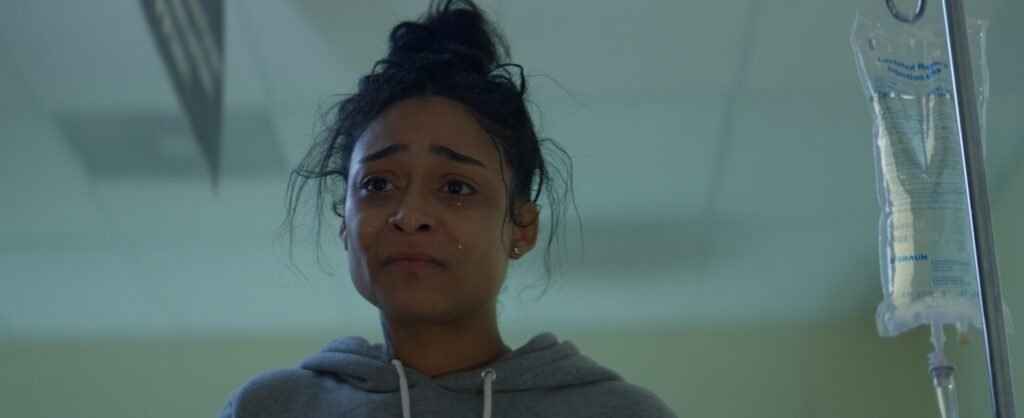
At the center of the film is an impressive dual performance from Alice Reys, who plays both Kara and Zara. The success of the entire story depends on the audience accepting the sisters as two distinct individuals, and Reys accomplishes this through far more than their physical presentation. Her voice, posture, expressions and energy shift subtly between the characters, giving each woman a recognizable personality and emotional history.
Kara carries a sense of exhaustion and suppressed anger, while Zara appears more impulsive and elusive. Even when the sisters occupy the same scene, Reys creates a convincing emotional distance between them. This is particularly effective during the more intense confrontations, which required the actress to perform both halves of the exchange separately while maintaining the rhythm and emotional progression of the scene. The technical construction remains discreet, allowing the performance rather than the visual effect to command attention.
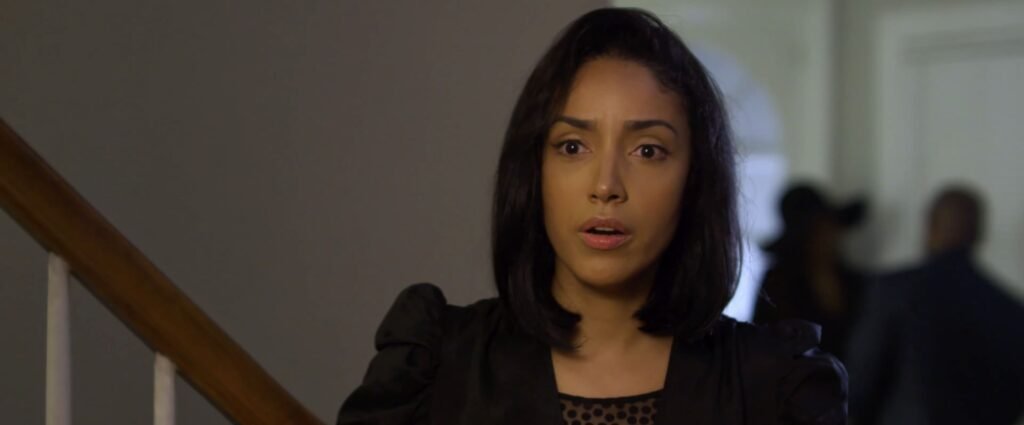
Atalia Lyrical is equally compelling as the younger Kara and Zara. Her performance brings genuine sensitivity to the childhood sequences and helps establish the emotional foundations of the adult sisters’ conflict. She plays these moments with an affecting combination of innocence, fear and vulnerability, suggesting careful direction from Clark. The younger and older performances complement each other well, making the connections between past and present feel psychologically coherent.
Clark demonstrates a strong command of flashbacks throughout the film. Instead of merely providing exposition, these passages gradually alter our understanding of the characters and their shared history. Memories emerge in fragments, and each new piece of information encourages us to reconsider what we have already seen. Because the sisters do not necessarily remember events in the same way, the past becomes an unstable space shaped by guilt, pain and self-preservation.
This fragmented structure is particularly appropriate for a story concerned with the unreliability of memory. MIRROR understands that trauma does not always return as a clear or complete narrative. It appears through impressions, emotional reactions and contradictory recollections. The film uses its shifting timeline to develop the sisters’ psychology while sustaining a persistent feeling that something important remains hidden.
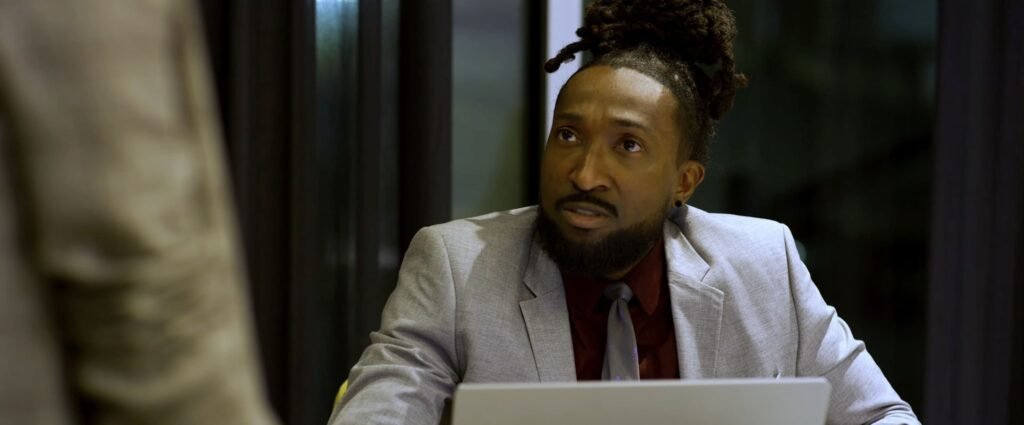
As the story progresses, the intimate family drama gradually transforms into a psychological thriller. A dangerous game of deception involving Kara’s boyfriend Nick, played by Kevin Renalto, further destabilizes the sisters’ already fragile relationship. What initially seems like an opportunity to repair a romantic connection becomes another expression of their rivalry and uncertain boundaries. Clark handles this tonal evolution effectively, introducing the conventions of the thriller without abandoning the emotional conflict at the heart of the film.
The suspense is supported by carefully constructed scenes and atmospheric lighting. Reflections, shadows and obstructed perspectives reinforce the uncertainty surrounding the characters without becoming overly obvious symbols. There are echoes of Brian De Palma in the film’s fascination with doubles, voyeurism, romantic manipulation and the instability of what the camera allows us to see. Yet MIRROR uses these familiar thriller elements to explore its own questions about identity and the stories people construct to survive painful experiences.
Devon Smith’s cinematography contributes significantly to the mood, while the editing by Smith and Clark maintains clarity across the multiple timelines and the scenes involving both twins. The filmmaking is especially resourceful in the way it creates the illusion of Kara and Zara sharing the screen. Rather than relying on elaborate visual effects, the production uses framing, over-the-shoulder compositions and precise cutting to make their interactions feel natural.
The supporting cast—including Lexi Calderon as Tara, Princess Bey as Shay and Kevin Renalto as Nick—helps ground the increasingly unpredictable narrative. Each character becomes connected to the sisters’ history or deception, expanding the consequences of a conflict that might otherwise have remained entirely internal.
MIRROR ultimately works because its central mystery remains tied to recognizable emotions: grief, abandonment, jealousy and the desire to be understood by the person who should know you best. The film’s twists keep the narrative engaging, but its most memorable element is the troubled bond between Kara and Zara. They may share the same face, but Clark and Reys reveal how radically two lives can diverge—and how difficult it can be to separate truth from the reflection created by resentment and trauma.
Led by Alice Reys’ ambitious and convincing dual performance, MIRROR is an atmospheric psychological thriller that makes creative use of its premise. Wes B. Clark combines family drama, fragmented memory and suspense to deliver a story in which identity becomes unstable and every reflection may conceal another version of the truth.