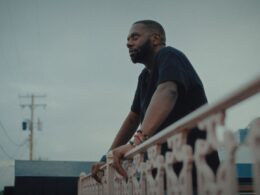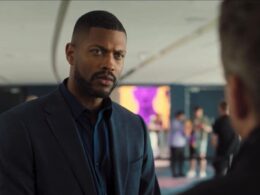




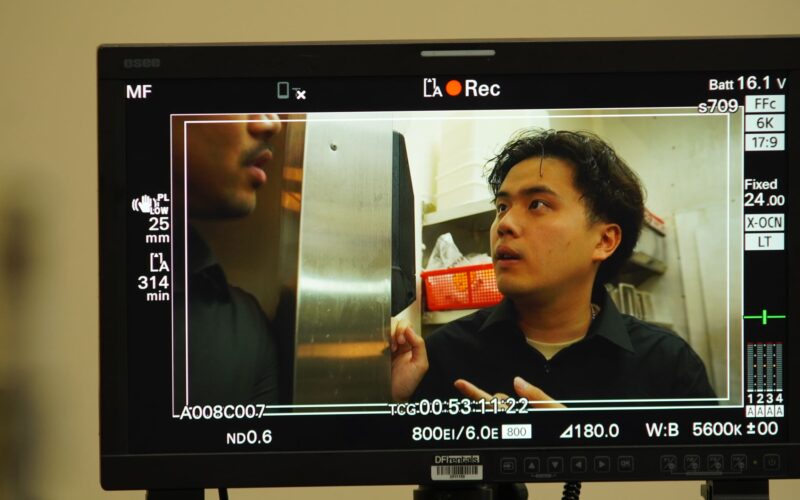
From producing the acclaimed short Glodok ’98—a culturally specific yet universally resonant portrait set against the backdrop of Indonesia’s 1998 crisis—to developing intimate, character-driven projects like Something Good Going On, Loh’s work is rooted in emotional truth and lived experience. Alongside his independent film slate, he has contributed to large-scale digital storytelling through vertical series such as Alpha Mate Unchained, which amassed over 10 million views, and through his role as an Associate Producer at Voicing Change Media, working on leading podcasts including The Rich Roll Podcast, The Proof, and Mentor Buffet.
Born and raised in Kuala Lumpur, Malaysia, Loh’s path into filmmaking was anything but conventional. His background in psychology, his experience as an international creative navigating the U.S. industry, and his growing presence across film, audio, and digital spaces have shaped a producing philosophy grounded in empathy, adaptability, and purpose-driven risk-taking.
In this conversation with Indie Wrap, Loh reflects on his journey from student sets to professional productions, the responsibility of culturally rooted storytelling, the lessons learned across emerging formats, and his vision for a more inclusive and emotionally honest future in media.
1. You began your journey studying psychology in Malaysia before making a leap into filmmaking in the U.S. Looking back, how do you think that psychology background still influences the way you approach characters, stories, or even producing itself?
Studying psychology trained me to pay attention to what’s happening beneath the surface such as motivations, contradictions, emotional blind spots. Even now, when I read a script or sit in on a creative discussion, I’m instinctively thinking about why a character behaves the way they do rather than just what they do.
From a producing standpoint, that mindset also applies to people. Producing is often about understanding different personalities, communication styles, and pressures, whether it’s a director under creative stress, a crew member burning out, or an actor navigating vulnerability. Psychology gave me a framework for empathy and observation, which I think is essential for creating an environment where good work can actually happen.
2. You’ve spoken about discovering producing almost by accident on a student set. What was the moment when you realized producing wasn’t just something you were good at—but something you wanted to do long-term?
There was a point on a student set where things were quietly falling apart, from scheduling, locations, and to expectations, I found myself naturally stepping in to connect the dots. I wasn’t the loudest person on set, but I was the one making sure people had what they needed to move forward.
What clicked for me was realizing I didn’t just enjoy solving those problems, I felt fulfilled by enabling other people’s creative work. Producing felt less like a job title and more like a responsibility I was already carrying. That was the moment I understood this wasn’t temporary; it was how I wanted to build a career.
3. As an international filmmaker building a career in Los Angeles, what were the biggest unseen challenges you faced that people outside the system might not fully understand?
One of the biggest unseen challenges is the constant balancing act between survival and momentum. As an international filmmaker, you’re not just proving your creative value, but you’re navigating visa limitations, financial uncertainty, and the pressure to justify your presence in the industry at all times.
There’s also an emotional layer people don’t always see. You’re far from home, building community from scratch, and learning an entirely new professional culture while trying to stay competitive. That experience forces you to become resilient very quickly, but it also sharpens your sense of purpose.
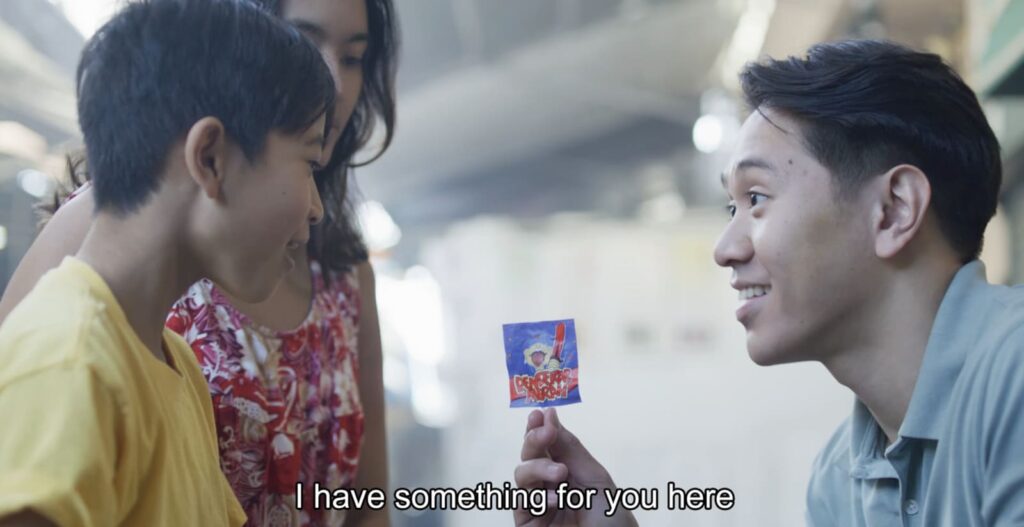
4. Glodok ’98 is deeply rooted in a specific cultural and historical moment. As a producer, how did you balance authenticity, scale, and budget—especially when recreating Jakarta within Los Angeles?
Authenticity was non-negotiable for us. Because the story is tied to real historical trauma, every decision, from production design to language to casting, everything carried responsibility. At the same time, we were working within a limited budget and shooting in Los Angeles, not Jakarta.
The solution was specificity. Instead of trying to recreate an entire city, we focused on emotionally accurate details: textures, signage, blocking, and lived-in spaces. As a producer, my role was to protect that authenticity while making pragmatic decisions that kept the project achievable. It was a constant dialogue between respect for the story and the realities of production.
5. The film has had an impressive festival run and awards recognition. How has the response to Glodok ’98 shaped your confidence or direction as a producer?
The response to Glodok ’98 was incredibly affirming, not just because of the recognition, but because audiences connected emotionally with the film. Seeing people from different cultural backgrounds respond to such a specific story reinforced my belief that specificity creates universality.
As a producer, it gave me confidence to continue supporting culturally rooted stories without diluting them for perceived marketability. It clarified the kind of projects I want to champion moving forward.
6. Your ongoing project Something Good Going On explores family, sacrifice, and first-generation identity with humor and tenderness. What drew you to this story, and how personal is it for you?
The story resonated with me because it captures a quiet emotional truth I recognize deeply, the tension between gratitude and resentment, love and obligation, especially within Asian families. What I love about Something Good Going On is that it doesn’t sensationalize those dynamics; it treats them with warmth and humor.
While the story isn’t autobiographical, the emotional landscape is very familiar to me. Producing this project felt like a way to honor those lived experiences while also creating space for laughter and empathy.
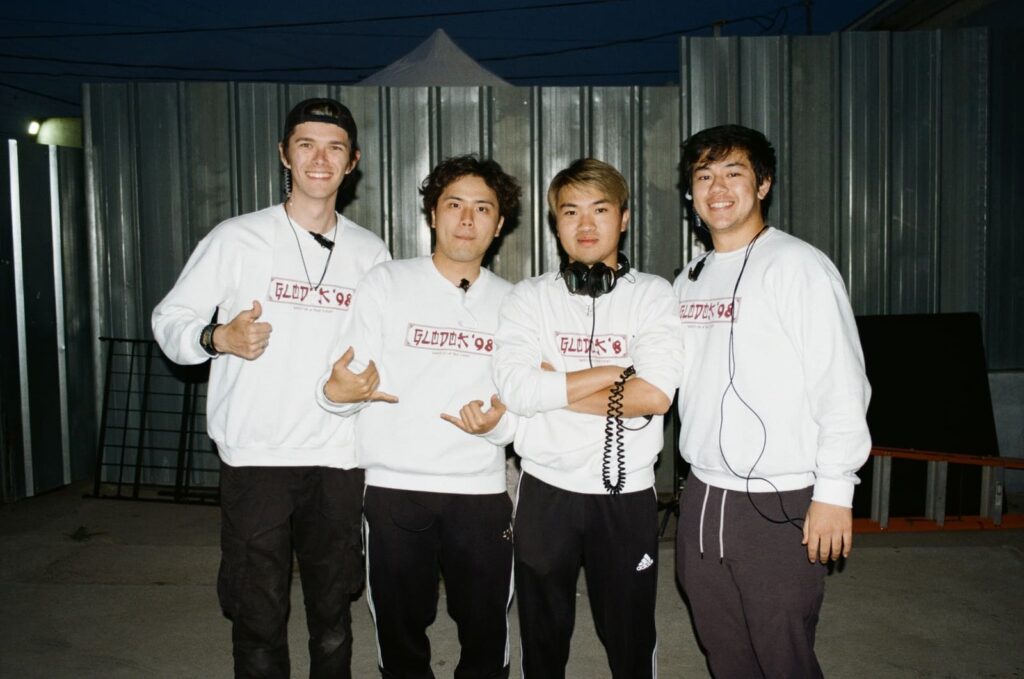
7. You’ve worked across very different formats—from festival shorts to vertical dramas with millions of views. What have vertical series like Alpha Mate Unchained taught you about storytelling, pacing, and audience engagement?
Vertical storytelling is incredibly efficient in which you learn very quickly how to hook an audience, maintain momentum, and deliver emotional payoff in compressed timeframes. Working on Alpha Mate Unchained taught me how audience behavior directly shapes storytelling choices.
While the format is different, the fundamentals remain the same: clear stakes, emotional clarity, and character-driven momentum. That experience sharpened my instincts as a producer and made me more adaptable across platforms.
8. At Voicing Change Media, you’re contributing to high-profile podcasts that reach massive global audiences. How does producing in the audio and digital space differ from film, and what skills translate across mediums?
Producing audio strips storytelling down to its core, the voice, pacing, and emotional honesty. Without visuals, every choice becomes intentional. What translates directly from film is structure, collaboration, and audience awareness.
Working in podcasts has strengthened my editorial instincts and sharpened my communication skills. It also reinforced the importance of trust, between the host, the producer, and the audience, which is essential across all mediums.
9. Risk-taking seems to be a recurring theme in your journey—from moving countries to experimenting with tone and format. How do you personally decide which risks are worth taking?
I try to distinguish between reckless risk and purposeful risk. The risks I take are usually tied to growth, which is creatively, professionally, or personally. If a decision aligns with my long-term values and pushes me into discomfort in a meaningful way, I’m more likely to take it.
Moving to the U.S., choosing producing, and exploring different formats all felt uncertain at the time, but they were driven by clarity rather than impulse.
10. You’ve also stepped into acting and voice work, including ADR for a Marvel project. How has being on the other side of the camera changed the way you produce or communicate with performers?
Being on the other side of the camera has made me more mindful of vulnerability. Performance requires trust, safety, and clarity. Experiencing that firsthand has changed how I communicate with actors . I’m more precise, more patient, and more attuned to what they need emotionally, not just logistically.
It’s made me a better producer because I now understand the performance process from within, not just from the outside.
11. Looking ahead, what kind of projects do you want your name to be associated with in the next five years—and what impact do you hope your work will have on the industry and the communities you represent?
In the next five years, I want my name associated with projects that are emotionally grounded, culturally honest, and creatively ambitious, regardless of format. Whether it’s film, digital series, or audio, I’m drawn to stories that create empathy and expand representation without being didactic.
I hope my work contributes to an industry where international and first-generation voices aren’t seen as niche, but as essential parts of the storytelling landscape.