



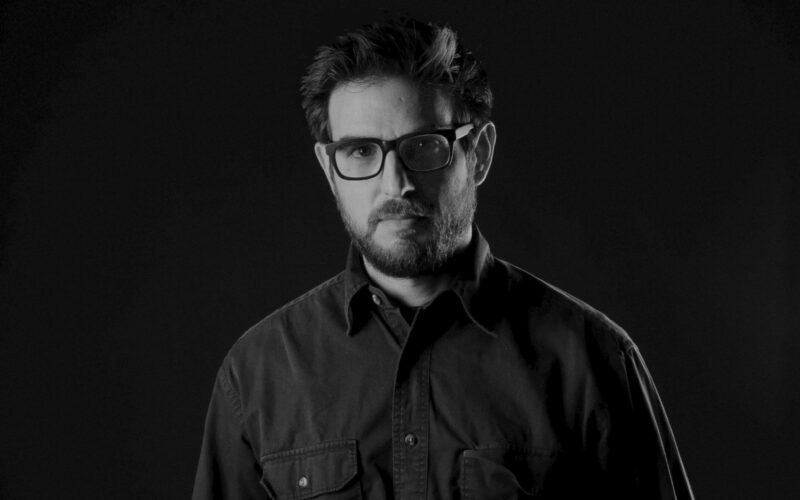
In our conversation, Alavi discusses making pain tangible through practical effects and sound, finding humanity in Alex’s predicament, and the larger story he hopes to tell in a feature.
Bad Tooth grew out of a toothache you couldn’t afford to treat during an industry slowdown. When you began turning that experience into fiction, what did you want to preserve about how it felt, beyond the physical pain?
What I wanted to preserve was the shame and the isolation, not just the pain. It’s humiliating to be undone by something so small, and the dark comedy and helplessness of that humiliation is what I wanted to capture. A toothache is an infection, which seemed like a perfect metaphor for festering neglect. It also seemed like a compelling, universal problem to suffer from. A toothache is primal.
You’ve described cynicism and neglect as quiet infections. How did you approach Alex’s responsibility for his own situation while acknowledging the economic pressures that limit his choices?
Alex is a victim of the system, sure, but I didn’t want to let him off the hook, so I tried to make both true in the same scene. The economics set the conditions, since he can’t afford the dentist, but every escalation after that is his choice. The film never lectures about healthcare. At the end he blames himself for skipping flossing while the EMT is the one who brings up the cost, and that gap is where I wanted people to sit.
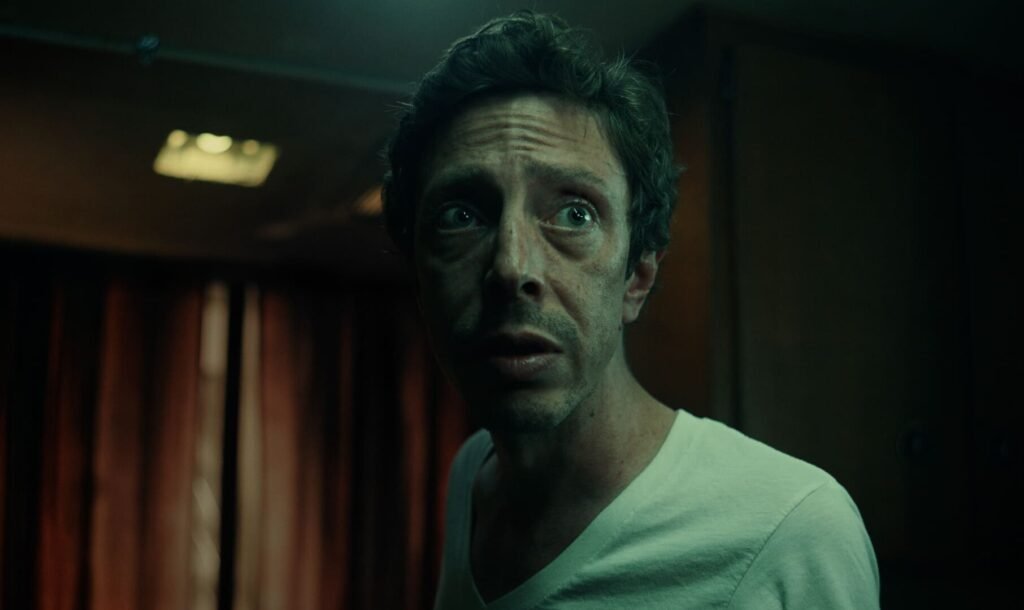
Your path into filmmaking began with work as a fire department EMT. Has that experience influenced how you depict a body in distress, or how you approach the vulnerability of someone like Alex?
Not consciously. But my early EMS work did change how I look at the body. It became a kind of human landmark, a microcosm of the natural world, and I think that shaped how I wrote Alex and what happens to him.
You wrote Alex with Joshua Burge in mind. What did he bring to the character that surprised you, and how did you work together to make Alex feel like a person with a history beyond this one terrible night?
Josh has a physicality and timing that can’t be taught or rehearsed. He has stories on his face that carry all the background writing no one will ever see. Early on we talked about my ideas for the feature script, which gave him a wider picture of who Alex really is. After that we stopped talking about any of it and just focused on the moment in front of us.
You wanted the film to carry an underlying comedic streak without becoming “horror with jokes.” Was there a scene where finding that balance proved particularly tricky, and what helped you get it right?
That’s a good question, and I don’t think there was one scene. I don’t remember ever trying to be funny on set in the classic sense, where you go for the laugh. The humor is inherent to the character and the script. The writing lays it out, and the actors make it work by reacting to each other honestly. It stays dry because nobody is playing it as a joke.
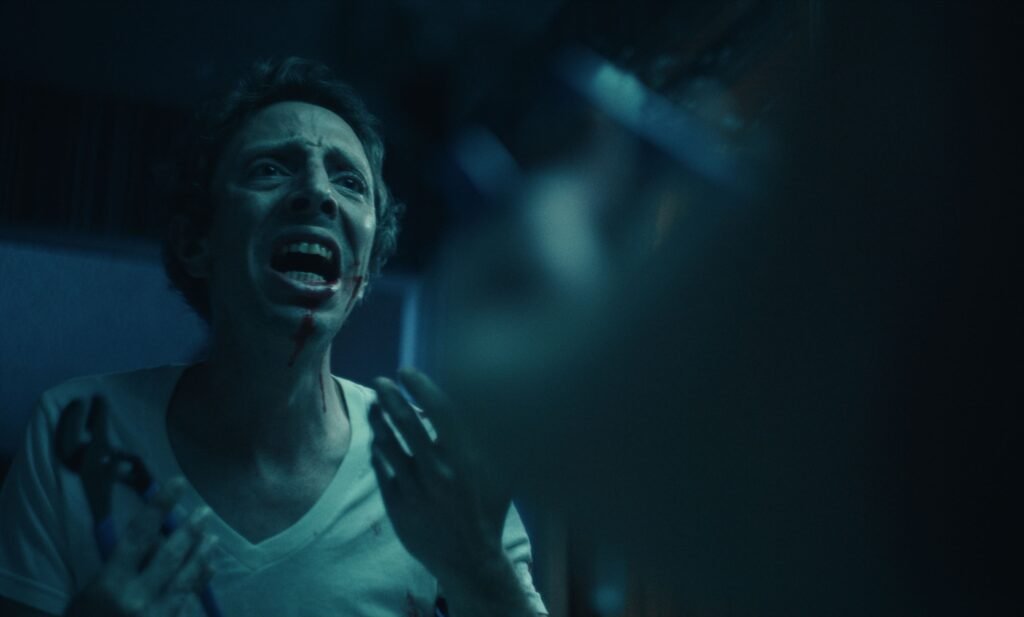
The creature emerges from something painfully ordinary but also carries the weight of Alex’s self-neglect. Working with your creature effects team, how did you translate those ideas into its appearance and behavior?
The main thing was not to create an alien or otherworldly creature. I wanted the design built from human flesh and anatomy. Early designs had sharper, more jagged teeth, but they felt alien to me. Human teeth feel born of Alex’s own body. Chip is his infection made visible, not an exotic creature from another world, but one born of the world inside him.
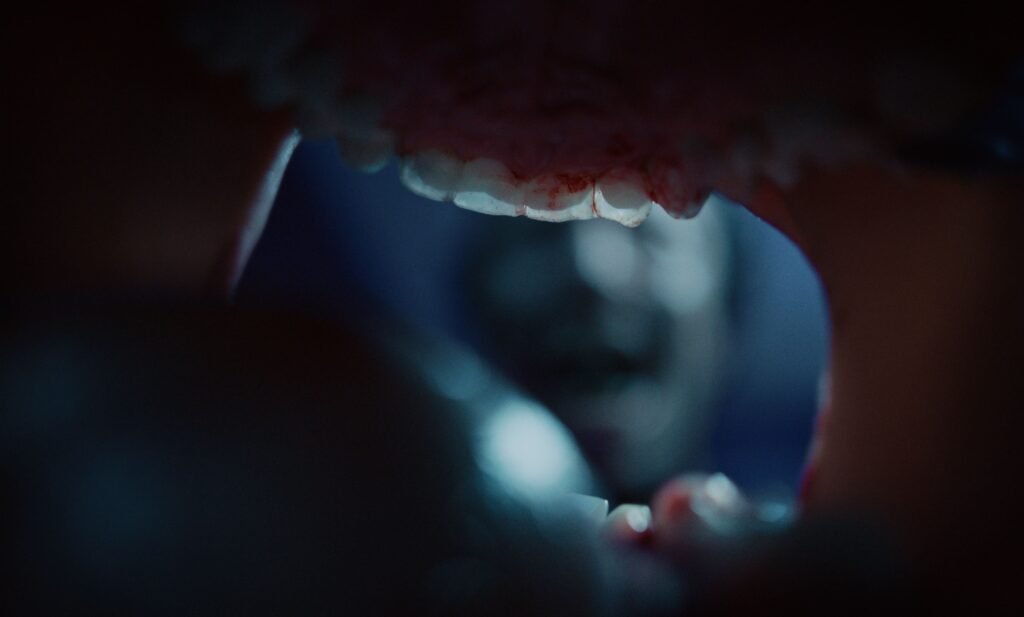
One of the film’s striking practical constructions is a scaled recreation of Burge’s mouth. What possibilities did that physical set open up for you and cinematographer Stephen St. Peter in placing the audience inside Alex’s experience?
I always envisioned that shot while writing the script, so we knew it would need to be part of our FX budget. A scaled mouth let us put the camera where a camera can’t normally go. Because it was a real, physical set, we could build the inside of Alex’s mouth as an actual space, with real light, wet surfaces, and texture, and push in until the audience is inside the pain instead of watching someone have it. Stephen and I wanted people to feel the toothache from the inside before the creature ever appeared.
Tooth pain is often invisible to everyone except the person experiencing it. How did you approach sound design to make that private sensation tangible, and how did you decide when to hold back versus push the audience’s discomfort?
Since nobody else can feel a toothache, sound was how we let the audience in. We kept it subjective, so you hear what Alex hears inside his head, like the crack that rings in his skull, and we let sound arrive before picture, so the creature is something you hear in the dark first. I arranged the music, but Will Storkson’s mix is what makes it work, bringing out the unsettling, ASMR-like qualities and keeping everything organic and of the space.
You also edited the film, including finding solutions when the effects coverage didn’t match what you had planned. Can you talk about a moment when a production limitation led you to discover a different, and perhaps more effective way to tell the story?
Practical effects take time on set, and that time is hard to justify when the cast and crew are standing around waiting. The climactic bathroom scene with the pliers was much more elaborate on paper, and we couldn’t fit it into the schedule. So in the edit I rebuilt it as a compression, going from wide to tight with the cuts accelerating, which is not how I wrote it. Sometimes circumstance dictates that you have to kill some darlings.
Following its world premiere at LA Shorts, Bad Tooth was selected for Sitges. As you bring the short to audiences and develop the feature alongside it, what are you most curious to learn from viewers’ responses, and what part of Alex’s world are you most eager to explore further?
The response has been positive everywhere we’ve played, which surprised me after ten months alone with this footage. Viewers are picking up on the larger world, and I want to tell how Alex gets here and the decisions he makes. Alex is cynical, but the feature isn’t. It’s the story of a guy caught up in a system, like sand in the gears.