



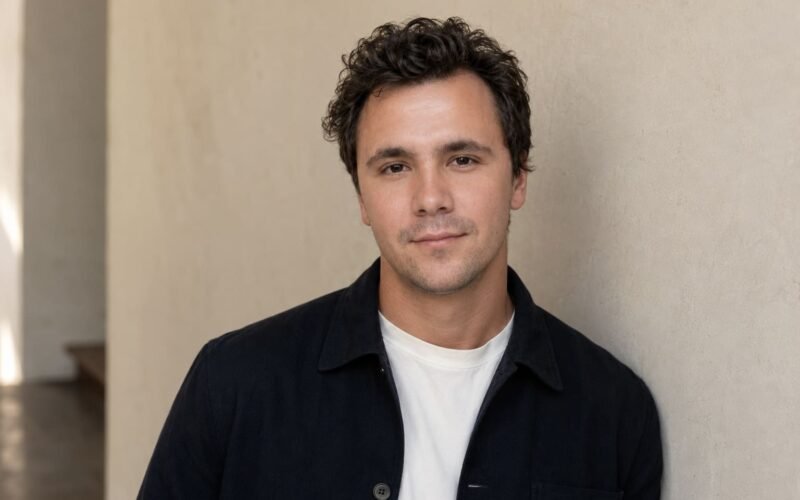
Starring Elya Baskin and Laraine Newman, Dance with Me blends emotional drama with psychological thriller, using memory, music, and suspense to explore what remains when recognition begins to disappear. Following the film’s premiere at the 2026 LA Shorts International Film Festival, Paskhover spoke with IndieWrap about transforming family history into fiction, directing Baskin and Newman, and finding a cinematic language for memory and loss.
Dance with Me comes from an intensely personal part of your family history. When turning your grandparents’ experience into fiction, how did you decide where autobiography should end and the freedom of filmmaking could begin?
My grandfather’s experience with his childhood trauma, the way it stayed vivid through dementia while many later memories faded, and the toll it took on my grandmother, are very real. At times he was confused and sleepy, other times he became aggressive, even towards the people he loved most. Some nights he’d wake up screaming in German. I tried to draw on details about their relationship wherever it made sense. My grandparents loved music, and just like Sasha and Anya, they met at a dance.
In the film, we decided Sasha and Anya were never able to have children, which kept the story intimate between them, and at the same time raised the stakes, because all they had was each other. My grandmother had more than that. My mom did whatever she could to help take care of my grandfather so she wasn’t alone. One time he wandered off in the middle of the night and left the apartment. My grandmother woke up in a panic, and I remember my mother drove straight to their place to help her find him.
Thankfully, the climax of the film never happened, though my grandfather did own a gun from his days working as a security guard. When he got sick, he no longer felt comfortable keeping it in his home, so he gave it to my mother.
The film begins in the language of an intimate relationship drama before gradually moving toward psychological thriller territory. What interested you about using suspense to explore dementia and traumatic memory rather than approaching the story as a more conventional drama?
The tonal balance is always tricky to nail in a story like this. The subject matter is very sensitive, and it’s obviously personal to me. I wanted to tell the story authentically, and the psychological thriller elements felt like an honest way into Sasha’s subjective experience. From the inside, his condition can be disorienting and frightening. Familiar faces become strangers, and his senses can betray him. That’s basically the language of a thriller.
The suspense aspect comes from the audience knowing something the characters don’t. We leaned into that when we cross-cut between Sasha’s experience and Anya’s to really play up the disconnect between where they are mentally. So when she comes home at the end and searches the apartment, the audience understands what she’s walking into and she doesn’t. If people are on the edge of their seats in that moment, it’s because they’re invested in the relationship and our stylistic choices are working.
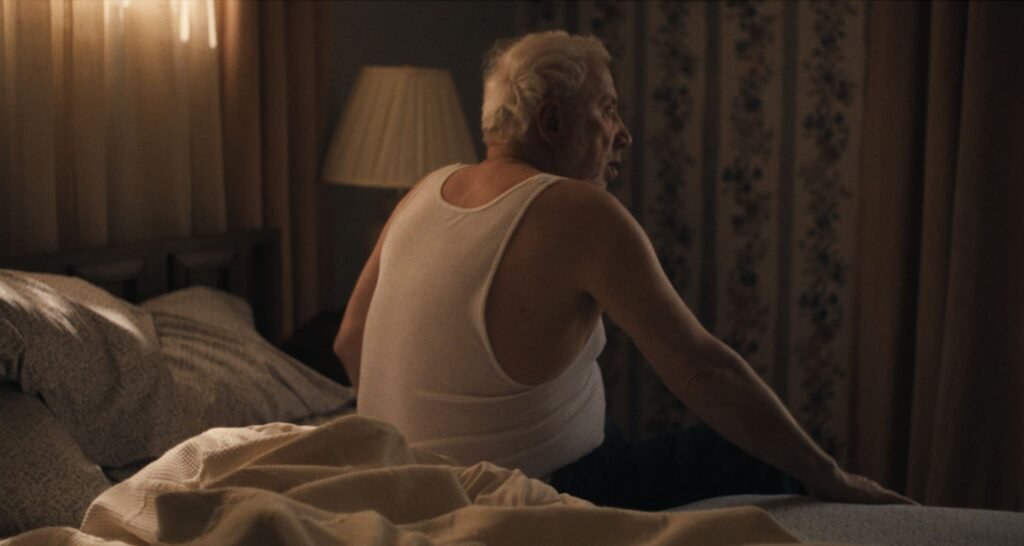
Sasha is experiencing several layers of time simultaneously, with memories of the Holocaust intruding upon his present. How did you approach representing his subjective reality without reducing dementia to a narrative device?
The intersection of childhood trauma and dementia is at the core of Sasha’s experience, and it’s something we don’t see on screen too often. I spent a lot of time researching other Holocaust survivors who developed dementia. I also interviewed a couple psychiatrists who specialize in these kinds of cases, and they confirmed a lot of what we wanted to do.
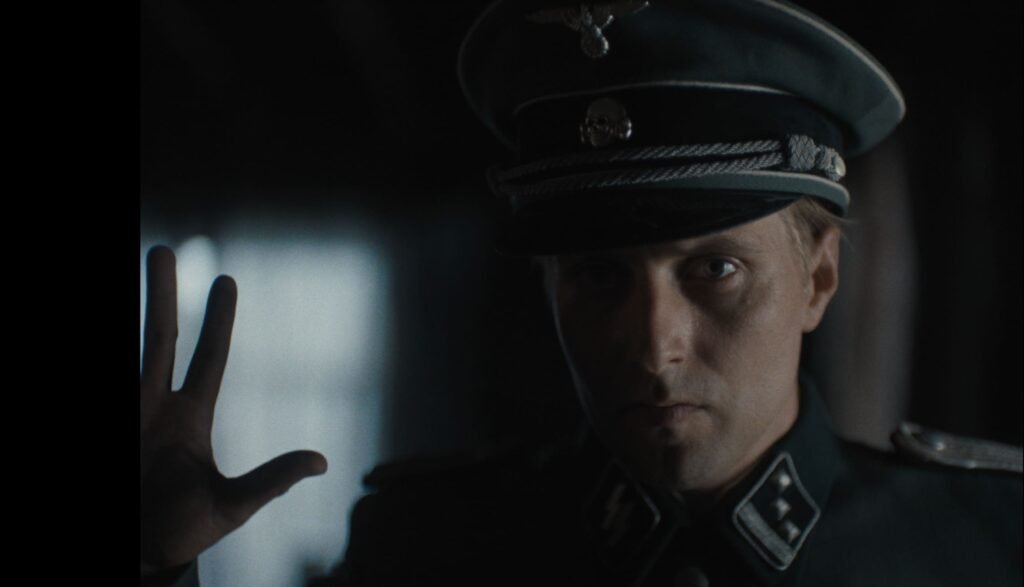
In that fluid mental state, innocuous everyday moments could trigger that childhood trauma, something as simple as locking eyes with two strangers through a window.
So we were very careful not to invent anything that didn’t feel honest. Sasha’s episodes are all grounded in real memory, set off by specific triggers that mirror his past. It’s a dark kind of déjà vu.
Your grandfather rarely spoke about what happened to him at Pechora, yet those memories resurfaced later in his life. Did making the film change the way you think about silence — particularly the silence that can exist between generations after trauma?
My grandfather spoke about what happened to him, but never at length. When I’d come over as a kid, he loved to stuff me with food, and I remember one time I wasn’t interested in eating what he’d cooked. He told me he hoped I’d never have to know what it was like to cry at the sight of a loaf of bread. That moment stuck with me. It felt so far from anything I could imagine.
More than anything, writing the film changed the way I understood my grandfather. I contextualized the parts of him I understood less, particularly the anxiety a person carries when so much of their core life experience involved life and death stakes. As a young kid, I didn’t always understand why some small things could feel so big to him.
As part of my research I read Man’s Search for Meaning by Viktor Frankl, where he spends a lot of time trying to make sense of the superhuman resilience that the survivors demonstrated, and their ability to connect to faith and light amidst unspeakable darkness. There’s a passage where he describes how the death rate in his camp spiked between Christmas and New Year’s, because so many prisoners had been holding onto the hope that they’d be home for the holidays, and when the holidays passed, many of them lost the will to live. It made my grandfather’s strength, his capacity for love, his integrity, all the more remarkable to me.
Laraine Newman and Elya Baskin bring very different histories and screen personas to the film. Once you saw them together as Anya and Sasha, did anything about their chemistry change the way you originally understood the relationship?
I knew this film would lean heavily on the performances of our lead cast, so I didn’t want to commit to making it until we found the right actors. We were very lucky to get Elya and Laraine, who were both our first choices for those roles. I trusted them, but they never did a chemistry read, so there was always this question of how they would play together. From the first minute of our rehearsal, it felt like they had already lived in this relationship for a long time. It was really special to watch.
I’m not sure anything really shifted in how I saw the relationship. They just deepened and elevated what was on the page. They made it real.
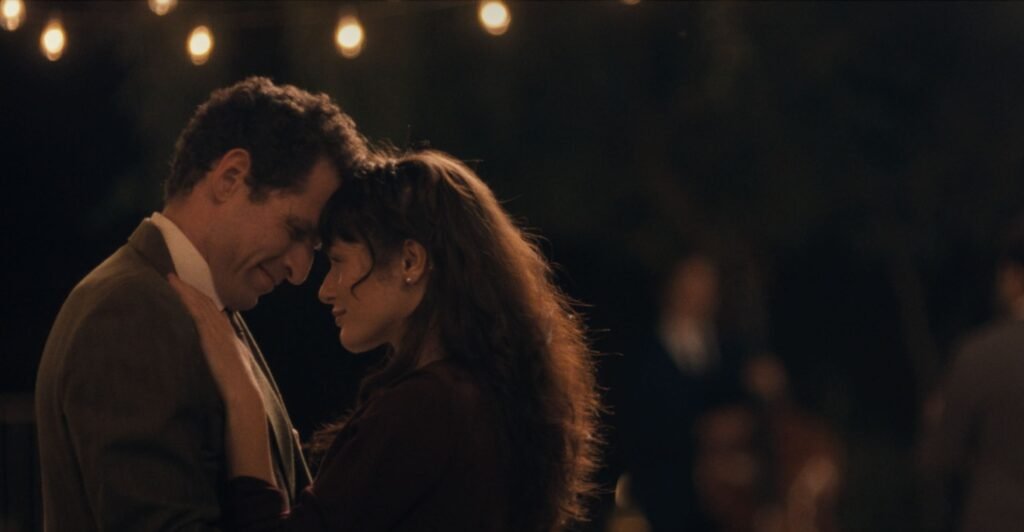
You mentioned that the production became stronger when you moved away from carefully planned storyboards and allowed Laraine and Elya greater freedom with the blocking. Was there a particular scene or spontaneous choice from them that fundamentally changed what you thought the scene could be?
I don’t think any scene had changed on a fundamental level, but we avoided traps that could’ve easily made a moment feel false or unjustified. By the time we got to set, the actors and I had discussed the script pretty extensively. The climax was the hardest scene in the film to block, and as we got closer to shooting it, something just didn’t feel right about the version we initially planned. I was so relieved to have actors who were willing to dig in and work it out together, because that collaboration is what got the scene where it needed to be.
There’s a million ways to do a scene. It’s a lot of back and forth on minute details that really make or break whether a moment lands the way you want it to. It’s always a great feeling to yell cut and then look around at the rest of the crew. You can feel the energy shift when the performance makes them feel something.
The period sequences had to evoke history while also functioning as fragments of Sasha’s memory. How did you and cinematographer Evan Weidenkeller develop a visual distinction — or connection — between memory, present reality, and the moments when the two begin to collapse into one another?
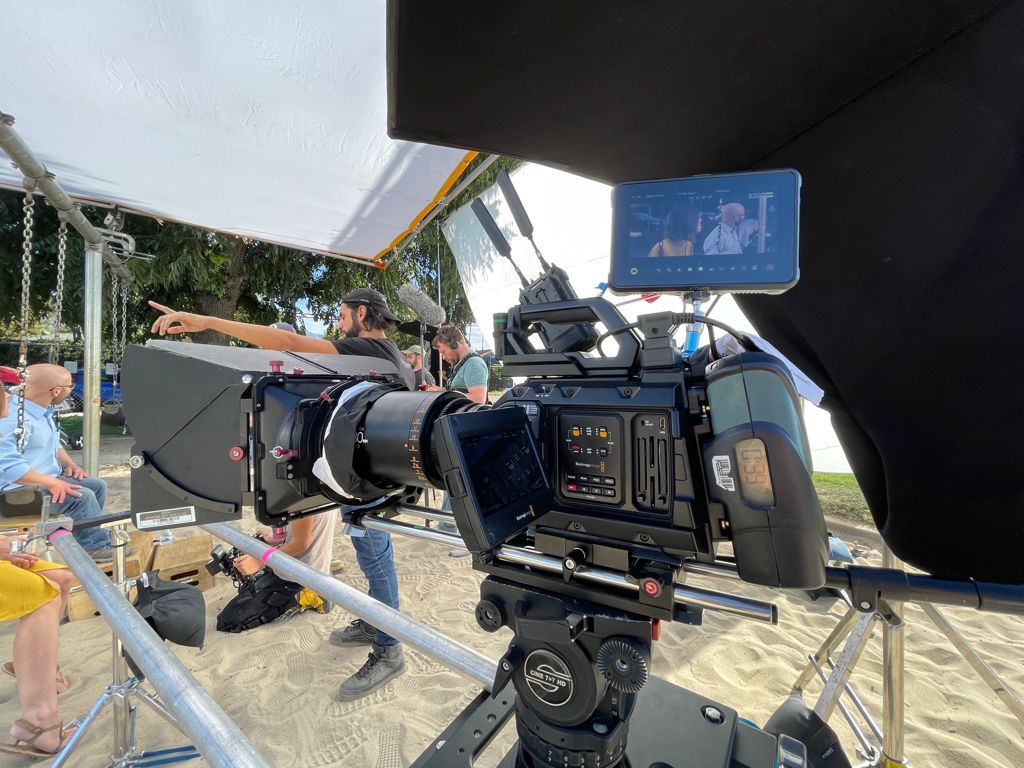
So much of the film is that dance (no pun intended) between light and darkness, each one bleeding into the other, so we never wanted a hard visual wall between past and present. We shot on one camera with one set of lenses the entire time, and the visual language was driven by emotion rather than period. The 1941 sequence starts composed, a smooth dolly and everything else on a tripod, and the moment the boy sees the Nazi officers it breaks into handheld, chaotic camerawork and fragmented editing. When Sasha panics in the present, believing they’ve come for him, we shot and cut it the exact same way, because in his mind that’s when and where he is. The one distinction we did keep was in the light, but primarily for the 1941 sequence. Evan lit that very cold and lowkey, in a building with no power, and the present tended to be more warm and not quite as contrasty.
Music is central to Dance with Me, both narratively and emotionally. What conversations did you have with composer Forrest Gray about using music as something that can connect Sasha to love and memory while also becoming increasingly unsettling?
The conversation with Forrest started with the waltz. We wanted to use that central cue as an opportunity to plant a single leitmotif that the audience could learn and hear throughout the film. We gave the same exact sequence of notes different treatments. Different keys, octaves, and instrumentation. In the climax, the waltz theme starts slow and heavy before escalating, and the horns and strings build this dreadful wrapper around it. Then the record player clicks on, the dread cuts out, and all you hear are the soft piano notes, which were really there all along buried in that darker treatment.
The film premiered at the 2026 LA Shorts International Film Festival, in the city where you were born and developed as a filmmaker. What did it mean to finally present such a personal story to an audience, and was there a reaction or conversation after the screening that stayed with you?
The LA Shorts premiere was really special. Putting something this personal out there was a different kind of challenge. After the first couple of drafts I shelved the script. I got some tough notes and I didn’t think I’d be able to pull it off. I also never expected to draw such an incredible cast and crew to really elevate it into something special.
The journey of making a film or any piece of art can be so turbulent. You go from excitement to despair very quickly, through each phase of the process. There was a moment in an early cut that I felt myself getting emotional at the ending. I just hoped the audience would feel that same emotion when we finally screened. We got a very long ovation after the credits, and a lot of people said they cried. It really felt validating to see that in just fifteen minutes, we could give people that type of emotional experience.
You’ve described yourself as being drawn to love, loss, and memory through genres such as suspense, mystery, and science fiction. After Dance with Me, what kinds of stories are you interested in exploring next, and do you see this film as pointing toward the kind of filmmaker you want to become?
I spent a lot of my childhood watching the great thrillers and sci-fi films of the 80s and 90s with my mom. I decided I wanted to make films after seeing The Dark Knight. I wanted to tell stories that could captivate a large audience in a similar way.
But over time I’ve tried to figure out what’s unique to me and what I bring. For a long time I didn’t think my own experience was very interesting. I grew up in Los Angeles and was lucky to have a comfortable childhood. But I’ve always tended to feel emotions very intensely. At times it’s felt like a burden, but I think it’s also the reason I’m drawn to telling stories. The films I love entertain, but above all they make the audience feel something, and that’s what I strive to do with whatever I make next.
With Dance with Me, the emotional core came primarily from my grandparents, though there are pieces of me in there too. I’m developing a couple of features right now, and one day I’d like to dig into the world my family came from, the wave of Soviet immigrants who landed in America and the community they built around each other.