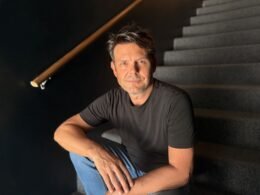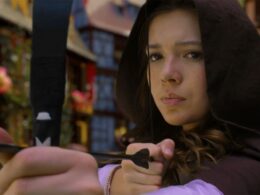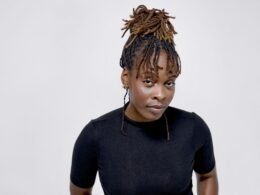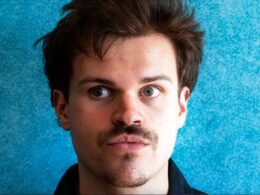



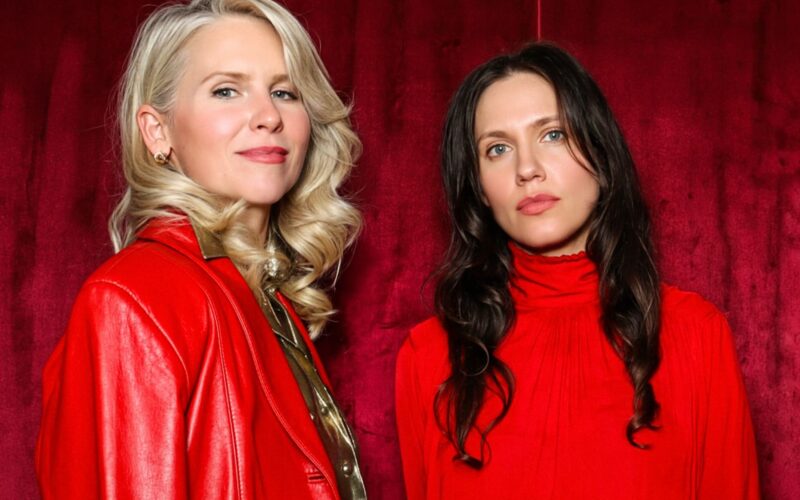
Featuring performances from Mara Wilson, Sheila Carrasco, Jocelyn DeBoer, Ben Geurens, and Trilby Glover, alongside a score by Amy Ileen Wood featuring original music from Fiona Apple, Floored balances absurd humor with surprisingly heartfelt observations about womanhood and community. We spoke with Bradanini and Alpren about the personal experiences behind the film, collaborating as a directing duo, and finding comedy in some of life’s most complicated transitions.
Floored explores motherhood, aging, and identity through a wildly satirical lens. What first sparked the idea for the film, and when did you realize comedy was the right way to approach these themes?
Marchelle: Aging and become a parent (particularly in such a painfully self-aware ecosystem like Los Angeles) is rife with absurdities both depressing and hilarious.
Emily: Equal parts both. We’re constantly bombarded with contradictions and expectations and marketed solutions of how to be a mother, women and creative. We thought attacking these themes through the satirical lens of a group of women who can’t reveal their deepest insecurities and pain would make for an interesting dynamic to explore on screen.
You’ve described the film as a “love letter” to the bond you formed as new mothers. How did your personal experiences shape the emotional core and tone of Floored?
Marchelle: Becoming a mother – especially later in life – is such an identity shift. It can be a bumpy transition and I was profoundly helped by finding a group of new mothers in a way I never expected.
Emily: Yeah, I found the power of a group of moms almost begrudgingly. It was only when I had to confront that identity schism that I realized how deeply I needed other mothers. Motherhood is an inherently creative act— born out of love and devotion. For me, it eclipsed the drive to constantly create, pursue and stay in motion. Losing that sense of perpetual striving threw me on my head.
The film mixes absurd humor with very real emotional pain and societal pressure. How did you balance the chaos and silliness with the deeper commentary on womanhood and isolation?
Marchelle: I feel like underneath the silliness and chaos is a grounding of real pain and fear each woman possess, no matter how garish, privileged or disconnected they present. They use humor as a shield to avoid interrogating the origin of their physical and mental struggles.
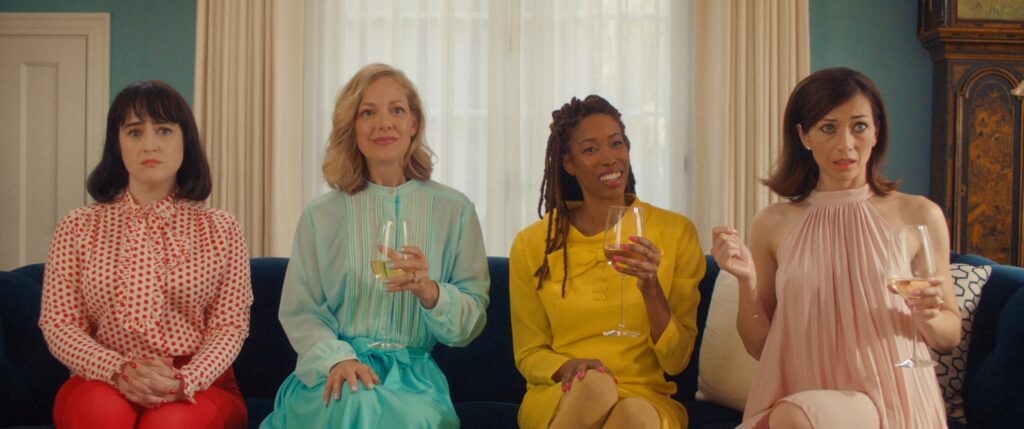
Hollywood’s obsession with youth and relevance is central to the story. What conversations were you hoping to provoke by centering the film around an aging actress navigating that pressure?
Marchelle: Time comes for us all – no matter how hard we try to ignore or fight its presence through creams, upper blephs, new age healers or fad supplements.
Emily: Facts. And using a female actress felt like a particularly cruel lens through which to explore impossible societal standards. Saddle, the younger actress in the film, will be no different from Eleanor in 20 years. Hollywood can’t feed itself enough with youth. There’s little appetite for anything else. Even as societal understanding of beauty changes, “aging out” is pretty consistent around here.
Mara Wilson’s casting feels especially meaningful given her history as one of the most iconic child actors of her generation. What made her the perfect fit for Floored, and what did she bring to the character of Jane?
Marchelle: Mara is the quintessential child actor of my generation and there wasn’t a better person who could confront our audiences relationship to aging than seeing her as a full fledged adult.
Emily: She has a brilliant delivery and sardonic wit utterly void of bullshit. Her authenticity and self-awareness brings so much to the performance. Jane feels like me: reluctantly joining the motherhood coven and then way better off for it.
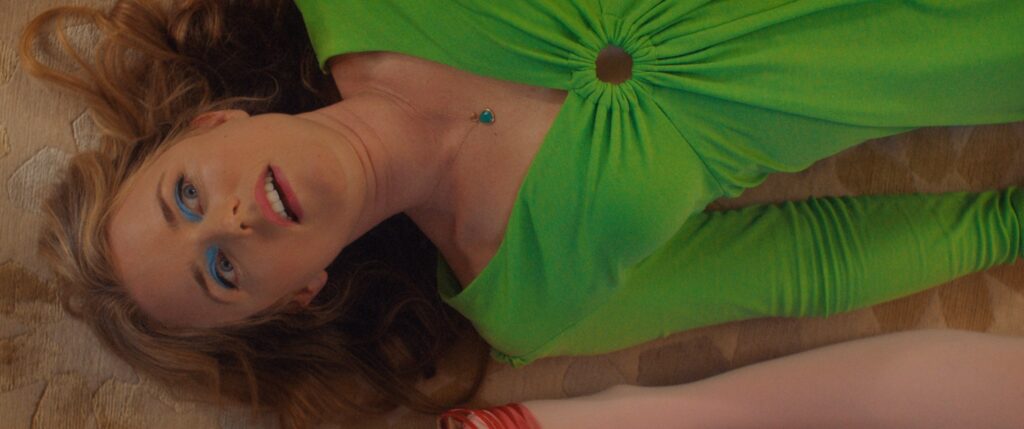
The visual identity of the film feels heightened, colorful, and almost feverish at times. Can you talk about the visual inspirations behind the film, from Russ Meyer to Pedro Almodóvar, and how those influences shaped the world of Floored?
We love the technicolored worlds and larger than life heroines of both Meyers’ Beyond the Valley of the Dolls and Almodóvars’ Women On The Verge of a Nervous Breakdown. The sensuality and brokenness of these women felt authentic to the themes our story explores and all the more so through our female gaze and those of department heads which were all women as well.
The score by Amy Ileen Wood featuring Fiona Apple adds a raw and rebellious energy to the film. How important was music in establishing the emotional and comedic rhythm of the story?
Marchelle: Amy’s percussive score really sets the emotional spine of the narrative. The yelps and falsetto notes of Fionna gives voice to the primal rage and anxieties which fuels our protagonist to her very bold decision at the end of the film.
Independent filmmaking often comes with unpredictable obstacles, and your production story certainly proves that. Looking back, how did those intense challenges ultimately shape the final version of the film?
Emily: Making shorts, you’re already working on an impossible timeline. And that’s in the best of circumstances.
Marchelle: We already had a by the minute production schedule on day 2, before we even shot a frame, one of our actresses fell ill and required an ambulance. She’s okay!
Emily: Obviously we stopped production. But she needed to go home. So then we found
ourselves a half day down and missing a character.
Marchelle: We were able to fly-in a talented friend that happened to be just blocks away without ever reading a line. She was thrown into hair and makeup and she just… did it.
Emily: Renee. Bless.
Marchelle: That was an intense one.
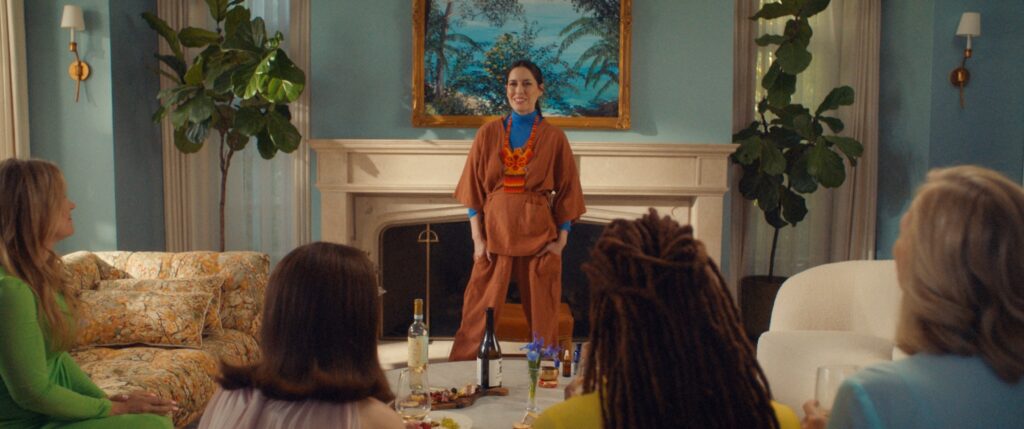
Floored explores the modern culture of healers, wellness trends, and self-improvement rituals. What interested you about examining that world through satire?
Marchelle: It’s often difficult to pick out the charlatans from actual healers, never more so than now.
Emily: We didn’t want to pass a value judgment on our healer played by the brilliant Sheila
Carrasco, but just explore that world and the fine line between mantra and multi-level marketing scams.
As Plan D, you bring together backgrounds in music, writing, performance, and filmmaking. How does your creative collaboration work as a directing duo, and what do you feel each of you brings to the partnership creatively?
Marchelle: I think fundamentally, Emily and I both felt a need to create something and found a kinship in missing that creative outlet. I’m very much a visual thinker who doesn’t look back and Emily is fastidiously dedicated to detail and performance and rigorously examining if things can be better. I think it makes for an exciting collaborative partnership as we really have different ways of looking at things. Plus she’s super smart and a great hang even if it all falls apart.
Emily: I drive her crazy. She makes me better. It’s taken just one film to find a workflow that really supports the process and capitalizes each of our strengths. We’re also both doers. I think most of Hollywood is filled with people who say they want to do things, but for 10,000 very good reasons, do not. And the years roll on. We aren’t afraid to fail, ask questions, and miraculously we’re both pretty egoless. And listen, if it’s all garbage in the end, she’s still my best friend.