



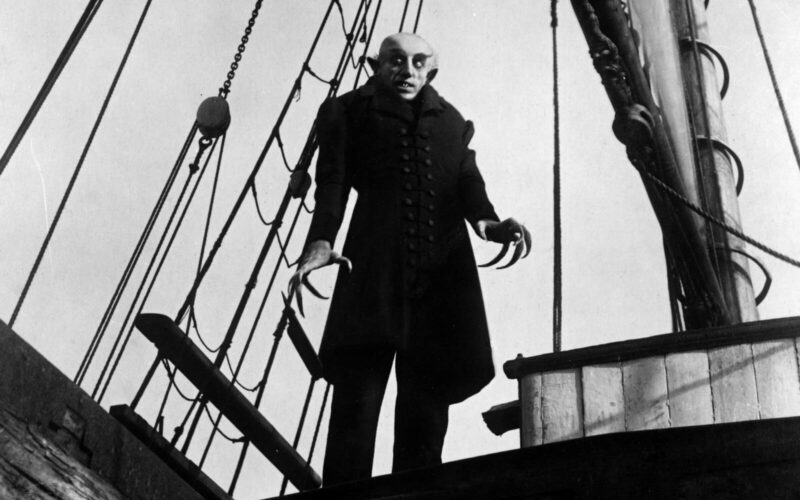
Nosferatu is a silent German Expressionist adaptation of Bram Stoker’s Dracula, albeit an unauthorized one. Unable to secure the rights to the novel, the filmmakers altered names and details, with Count Dracula becoming Count Orlok. Despite these changes, the narrative closely mirrors Stoker’s original story, following a young man lured into the sinister world of a vampire intent on spreading his plague-like influence.
Max Schreck’s portrayal of Count Orlok remains one of the most chilling in cinema history. Unlike the suave, aristocratic vampires of later films, Orlok is grotesque and rat-like, with elongated fingers, a bald head, and a gaunt face. His terrifying presence, enhanced by shadowy cinematography and exaggerated movements, embodies the uncanny and primal fear that define true horror.
The film’s use of light and shadow exemplifies the German Expressionist movement, creating a dreamlike quality that heightens its unsettling atmosphere. From Orlok’s eerie silhouette ascending a staircase to the stark contrasts of moonlit landscapes, every frame is meticulously crafted to evoke dread. These visual techniques influenced not only the horror genre but also the broader language of cinema.
Despite its groundbreaking artistry, Nosferatu faced significant legal challenges. Stoker’s estate sued the filmmakers for copyright infringement, resulting in a court order to destroy all copies of the film. Fortunately, some prints survived, ensuring that this cinematic masterpiece was not lost to history.
Over the past century, Nosferatu has inspired countless adaptations and reinterpretations. From Werner Herzog’s 1979 remake starring Klaus Kinski to Robert Eggers’ upcoming reimagining with Willem Dafoe, the film’s enduring appeal underscores its profound impact on the portrayal of vampires in popular culture. Its influence can also be seen in everything from the gothic imagery of Dracula films to the visual aesthetics of modern horror.
Nosferatu remains more than a film; it is a cultural artifact that transcends time. Its themes of contagion, otherness, and mortality resonate as deeply today as they did in 1922, offering a reflection on societal anxieties that remains eerily relevant. For fans of horror and cinema alike, revisiting Nosferatu is not just an exploration of film history but also a journey into the origins of the fears that continue to haunt us.
As we approach another year of honoring Nosferatu’s legacy, it is a reminder of the enduring power of storytelling, innovation, and the ability of art to capture the darkest corners of the human experience. In the shadow of Count Orlok, cinema found a way to immortalize fear itself.