



Long before the wave of ‘90s indie auteurs, Jarmusch proved that you didn’t need spectacle or stars to make something unforgettable. You only needed mood, rhythm, and characters who felt like they existed before the film began and kept existing long after it ends.
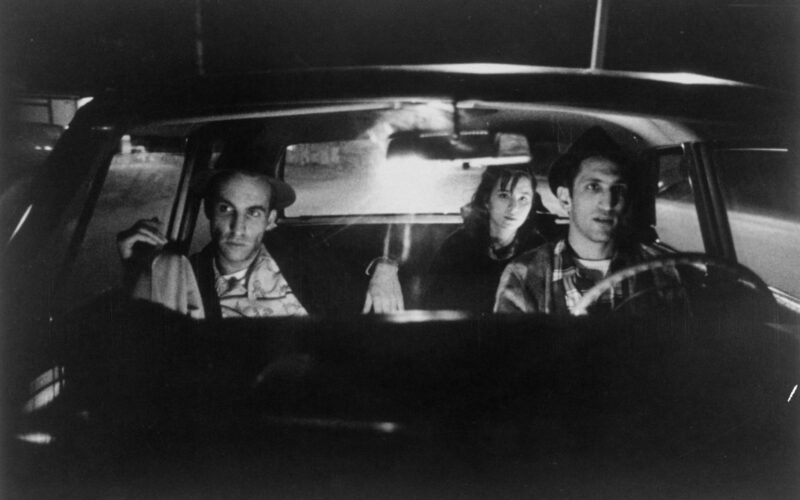
The film drifts between New York, Cleveland, and the edge of Lake Erie, following Willie, his visiting Hungarian cousin Eva, and his friend Eddie in a series of static, perfectly framed scenes. Nothing much happens — and yet everything happens. They talk, they wait, they stare at the horizon, and they keep moving, even when they don’t seem to know why. Jarmusch builds an entire world out of boredom, silence, and small gestures, and somehow makes it hypnotic. It’s cinema slowed to the speed of real life, each scene cut to black before you expect it, like a photo being tucked back into a box.
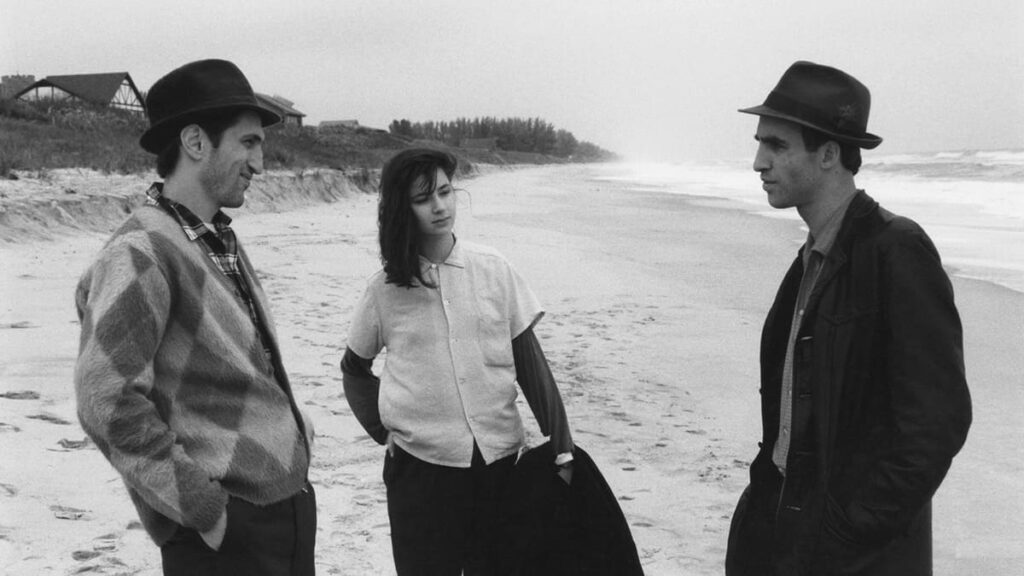
There’s a strange, bone-dry humor that runs through every moment. These characters aren’t chasing dreams or drama — they’re just trying to figure out what to do next. That refusal to force meaning onto their journey is exactly what gives it meaning. In 1984, when American cinema was drenched in gloss and spectacle, Stranger Than Paradise felt like a whispered rebellion. It showed that an indie film could be defiantly minimal, that it could exist outside the system entirely and still leave a permanent mark.
Watching it now, over forty years later, it still feels startlingly fresh. Its grainy texture and deliberate stillness are a reminder of how much space cinema can give us when it stops trying to impress. It’s a film about outsiders made entirely by outsiders, and that spirit still echoes through independent filmmaking today.
As a Sunday rewatch, Stranger Than Paradise isn’t comforting in the traditional sense — it’s quiet, strange, and leaves you sitting with your thoughts. But that’s its power. It invites you to slow down, to notice the small moments, to rediscover how much beauty can exist between the lines. It’s not just a film to watch — it’s a film to inhabit, even if only for a while.