




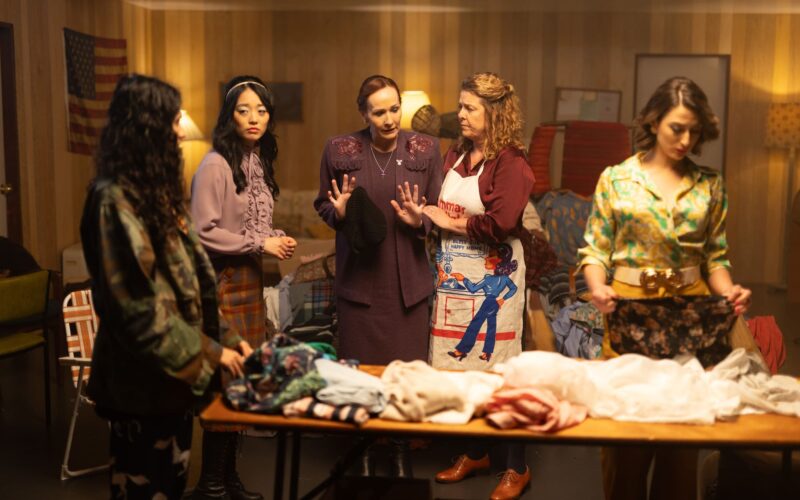
Adapted from the acclaimed stage play by Bo Wilson, the film follows five women gathered in the basement of a small Southern church in 1977, initially united by a charitable mission—sorting donations for flood relief. What unfolds is something richer and more surprising: a layered portrait of friendship, judgment, faith, forgiveness, and the unspoken truths that surface when people are forced into proximity.
From the outset, what stands out is the cast. Every performance feels lived-in and grounded, with each actress bringing a distinct emotional truth to the ensemble. Kathryn Hartman, Libby Fleming, Helen Kim, Kelly Monisse, and Dilroop Khangura form a group dynamic that feels authentic almost immediately. Each character is clearly defined, emotionally legible, and easy to connect with—no small feat in an ensemble-driven, dialogue-heavy piece.
Even in the film’s sharpest comedic exchanges, there’s depth and vulnerability beneath the humor. The laughs never undermine the emotional stakes; instead, they soften the ground for moments of genuine surprise and intimacy. Secrets emerge organically, not as plot devices but as emotional inevitabilities.
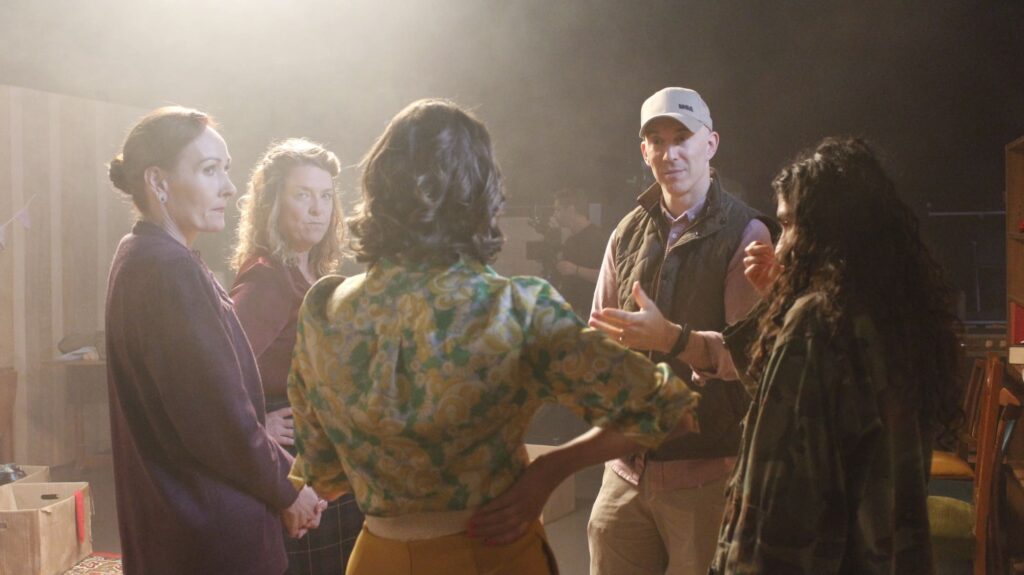
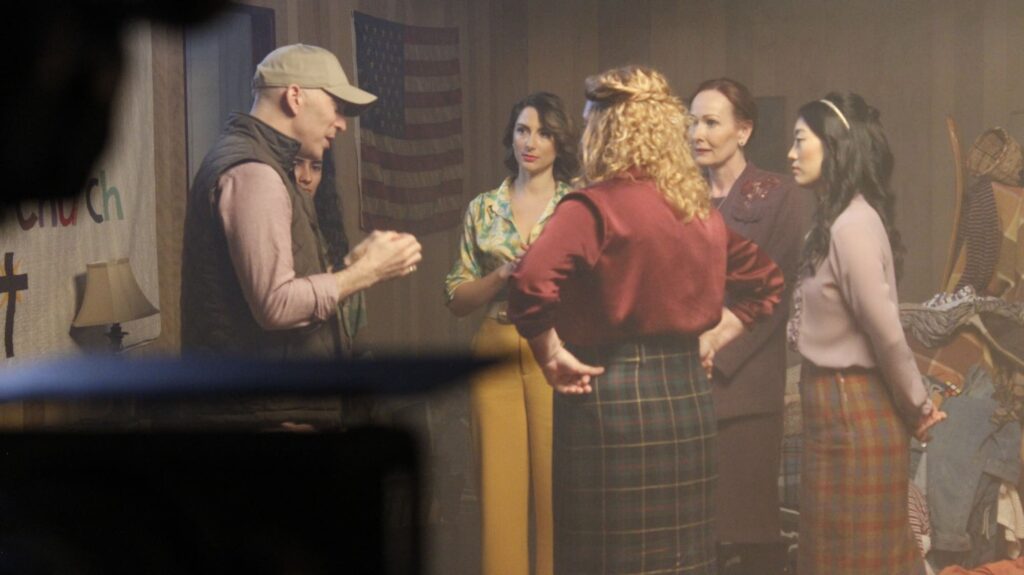
Visually, the film is deceptively strong. The basement of the Second Trinity Victory Church has been crafted to feel cinematic, textured, and alive. Shot at Sydney Film School’s Waterloo Studios, the controlled setting becomes an advantage rather than a limitation. The filmmakers use space, blocking, and movement to avoid theatrical stagnation, grounding the story in a tangible, believable world.
What’s particularly admirable is how the film embraces its theatrical origins rather than disguising them. A rare balance is struck between the intimacy of a stage play and the language of cinema. The handheld camerawork, the continuous flow of performance, and the decision to lean into the “live” energy of the material give the film a unique identity—something closer to a captured experience than a conventional adaptation. It’s confident in what it is and never tries to be something else.
That confidence extends to the film’s tone. While clearly faith-adjacent, The Charitable Sisterhood of the Second Trinity Victory Church never feels preachy or exclusionary. Its focus remains firmly human: flawed people, moral contradictions, kindness mixed with judgment, and the complicated ways community can both support and suffocate. Faith is present, but always filtered through character and circumstance rather than doctrine.
As a debut feature, the film feels remarkably assured. There’s a clarity of vision here and a sense that everyone involved understood exactly what kind of film they were making and why it mattered. It’s an indie experiment that succeeds not because it’s loud or disruptive, but because it’s honest.
The Charitable Sisterhood of the Second Trinity Victory Church is proof that cinema doesn’t always need reinvention—sometimes it just needs attention, care, and a group of performers allowed to breathe. Warm without being sentimental, funny without being glib, and quietly moving in ways that linger, it’s a confident and deeply engaging piece of independent filmmaking.
With a limited theatrical release planned for later in 2026, The Charitable Sisterhood of the Second Trinity Victory Church already shows the kind of warmth, humor, and audience connection that independent cinemas often look for when championing thoughtful, character-driven films.