



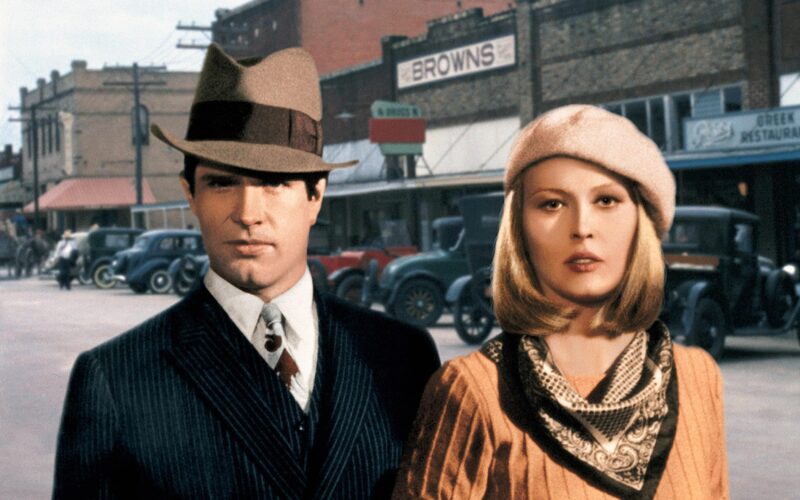
Warren Beatty is a legendary figure in Hollywood, known for his work both in front of and behind the camera. One of his most iconic roles was as Clyde Barrow in the 1967 film “Bonnie and Clyde”. Directed by Arthur Penn, the movie told the story of the infamous outlaw couple and their string of robberies and murders during the Great Depression.
“Bonnie and Clyde” was a groundbreaking film that helped to usher in a new era of Hollywood filmmaking. The movie was controversial at the time of its release due to its graphic violence and sexual content, but it was also a critical and commercial success. It received ten Academy Award nominations and won two, including Best Supporting Actress for Estelle Parsons and Best Cinematography for Burnett Guffey.
The film is often cited as the first of the “New Hollywood” era, which lasted from the late 1960s to the mid-1980s. During this time, Hollywood underwent a major transformation in terms of its storytelling, style, and subject matter. Films became more complex, more socially conscious, and more daring. The era gave rise to a generation of filmmakers who challenged traditional Hollywood norms and pushed the boundaries of what was considered acceptable on screen.
The making of “Bonnie and Clyde” was not without its challenges. Warren Beatty, who was also a producer on the film, faced opposition from the studio, which was skeptical of the film’s violent content and unconventional style. Beatty also clashed with the film’s screenwriter, Robert Benton, over the direction of the story. However, Beatty’s persistence paid off, and the film was ultimately greenlit.
The cast and crew also faced challenges during filming. The Texas location where much of the movie was shot was plagued by rain and flooding, which made it difficult to complete certain scenes. Additionally, Faye Dunaway reportedly had a difficult time working with Warren Beatty, and the two had a strained relationship on set.
Despite these challenges, the film was completed on time and on budget. Its innovative editing and visual style have been emulated countless times, and its influence can still be seen in contemporary cinema.
“Bonnie and Clyde” inspired a new generation of filmmakers and paved the way for many of the films that would come to define the New Hollywood era, including “The Graduate” and “Easy Rider”. The film’s impact on American cinema is immeasurable, and it is a testament to the power of bold storytelling and innovative filmmaking.
As we celebrate Warren Beatty’s birthday, we should remember the important role he played in bringing this groundbreaking film to life. “Bonnie and Clyde” is a true classic of American cinema, and it is a film that has stood the test of time. Its influence can be seen in countless movies that followed it, and it remains a touchstone for filmmakers and audiences alike.