




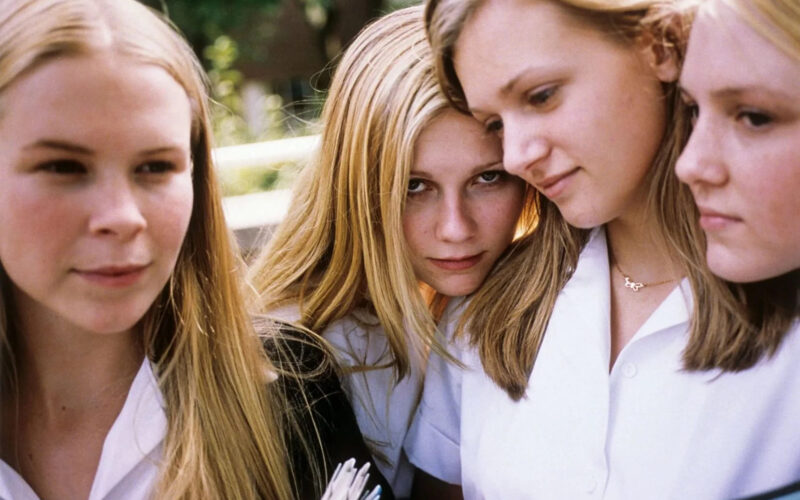
Set in 1970s suburban Michigan, the film tells the story of the five Lisbon sisters through the eyes of the neighborhood boys who adored them. It isn’t a mystery in the traditional sense — from the first frame, we know the sisters will die by suicide — but rather an elegy. It’s not about what happened, but how that moment shaped the memory, mythology, and emotional lives of those who remained.
Kirsten Dunst, in her breakout role as Lux Lisbon, radiates in a performance that feels both untouchable and heartbreakingly human. Her scenes are filled with longing, rebellion, and a fragile intensity that lingers in the air long after. Coppola directs with the gaze of someone who understands the weight of girlhood — the danger, the pressure, the beauty, and the silence around female pain.
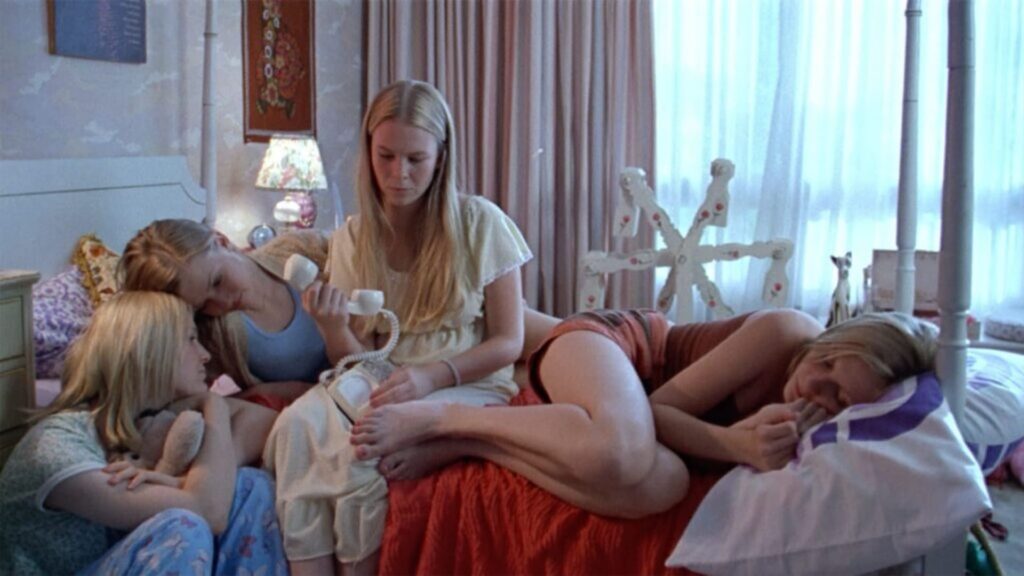
On rewatch, The Virgin Suicides feels even more lyrical. The voiceover narration (courtesy of Giovanni Ribisi) floats like a half-remembered diary entry. The pastel palette, the slow dissolves, the soft light — everything is wrapped in a cocoon of nostalgia. Air’s ethereal score completes the mood, making the entire film feel like a memory set to music.
What makes the film endure is its refusal to explain or sensationalize. The Lisbon sisters aren’t reduced to objects of tragedy; they are mysteries, yes, but they’re also individuals suffocated by a world that never truly saw them. Coppola’s gift is in letting that tension breathe — between the romanticized and the real, between the gaze and the girl.
This Sunday, revisit The Virgin Suicides. Not for answers, but for the atmosphere. For the ache. For the reminder that some stories aren’t meant to be solved — only felt.